

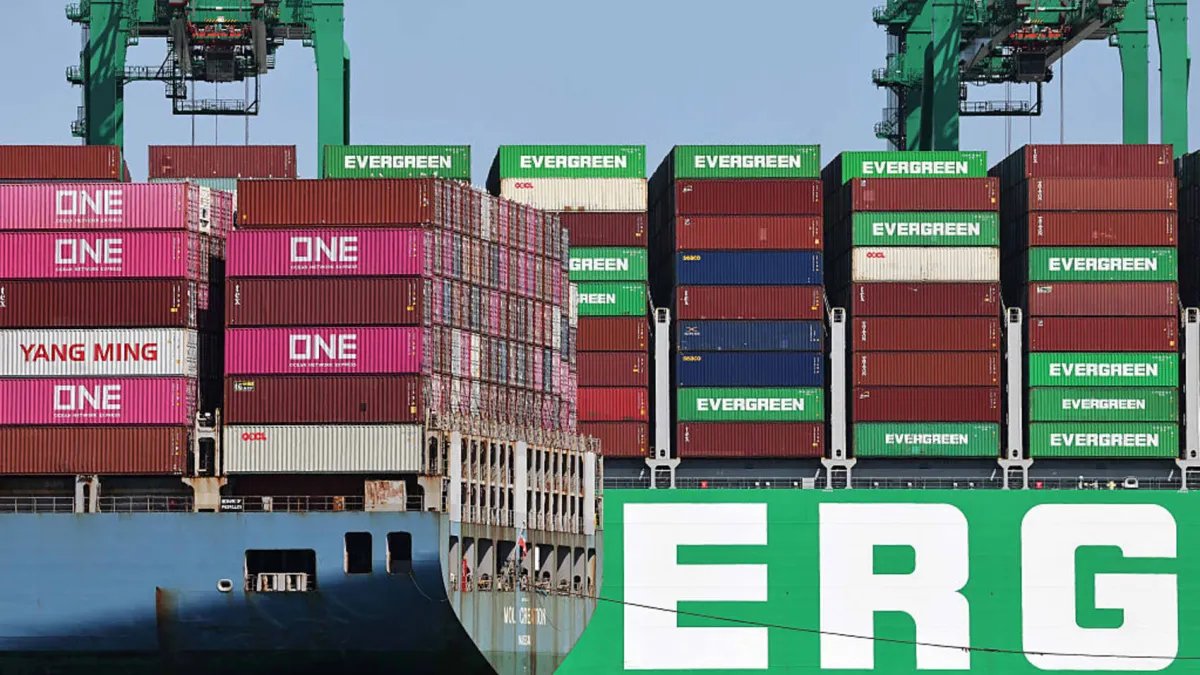
LA Ports Get Ready for Changes After Tariff Ruling by Justices
Supreme Court Rules Tariff Authority Lies With Congress, Invalidating Trump’s Reciprocal Tariffs
The U.S. Supreme Court has ruled that President Donald Trump’s reciprocal tariffs are unconstitutional, asserting that the authority to set and change tariffs resides solely with Congress. The decision, delivered in a 6-3 ruling, has been met with relief by port authorities in Los Angeles as they anticipate the implications for trade and supply chain operations.
Los Angeles and Long Beach port officials emphasized the need for consistent trade policies, as they are essential for planning investments and maintaining efficient cargo movement. Gene Seroka, Executive Director of the Port of Los Angeles, stated that the ruling impacts approximately two-thirds of the tariffs collected thus far, introducing new uncertainties regarding potential refunds from the U.S. Treasury for tariffs already paid. He noted the recent announcement of a new 10% global tariff, which raises questions about its implementation timeline.
"This decision came during the Lunar New Year when many Asian factories are closed, and it remains to be seen how this will affect trade flows," Seroka remarked. He reaffirmed that the Port of Los Angeles stands ready to handle fluctuations in cargo.
Noel Hacegaba, CEO of the Port of Long Beach, highlighted the importance of a stable tariff framework for businesses, which enables better planning and operational efficiency. He expressed hope that the ruling would enhance supply chain certainty, stating, "Freight can’t wait — and certainty helps keep it moving."
The Supreme Court’s decision stems from the use of the 1977 International Emergency Economic Powers Act (IEEPA), which Trump cited to impose extensive tariffs, labeling international trading practices as unfair. In response to the ruling, Trump announced his administration would pursue a global 10% tariff, which he described as a necessary measure for economic and national security, calling the court’s decision "deeply disappointing."
Trump’s tariffs were projected to generate significant revenue, with past estimates suggesting they could have contributed around $3 trillion to reduce the national debt. However, according to recent data, approximately $142 billion is expected to have been collected from the tariffs enacted under IEEPA through 2025.
Without the IEEPA tariffs, the average effective tariff rate on consumers is anticipated to be 9.1%, the highest rate since 1946, excluding 2025. Researchers predict short-term price increases of about 0.6%, impacting households across various income levels.
Alan Morrison, lead counsel for Consumer Watchdog, described the ruling as a "resounding victory for the principles of separation of powers," emphasizing that the decision reaffirms the congressional authority over tariff regulation. William Pletcher, the organization’s litigation director, echoed this sentiment, asserting that no president should be able to impose taxes without congressional approval.
The ruling not only alters the landscape for current tariffs but may also have lasting effects on trade policy in the United States.