
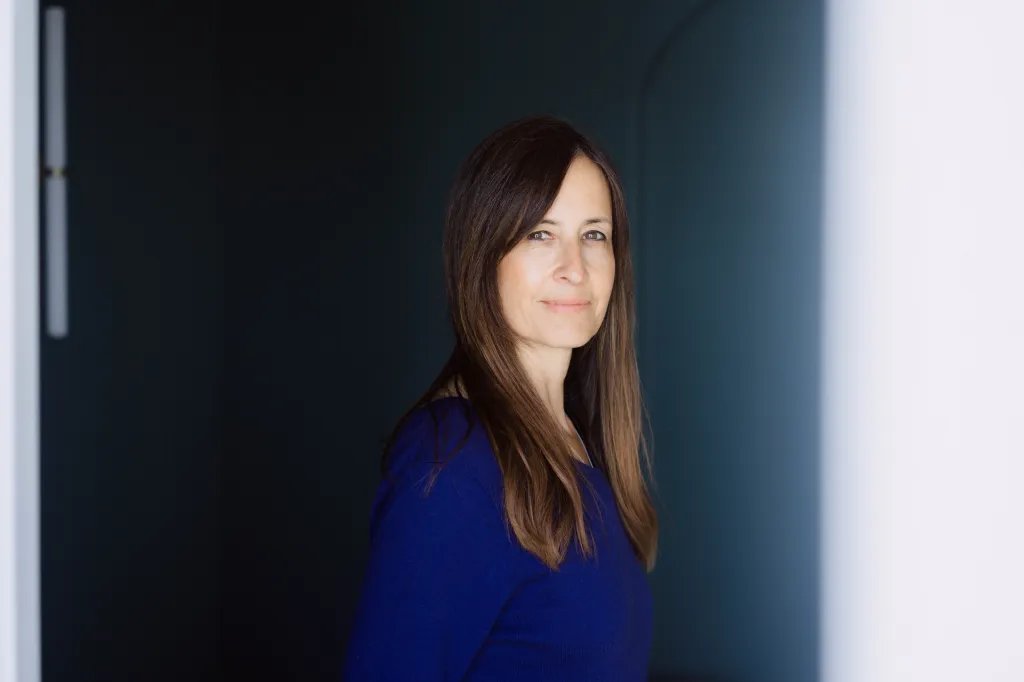
EFM Head Tanja Meissner Celebrates Record Attendance at Post-Pandemic Event Boosted by New Animation and Innovation Activities
Tanja Meissner, head of the European Film Market (EFM), has declared this year’s event the busiest since the onset of the COVID-19 pandemic. Accreditations are projected to exceed last year’s figures by at least three percent, though final numbers are yet to be confirmed.
In her second year in this role, Meissner attributes the increase in attendance to a series of innovative initiatives designed to engage the industry.
Among the new offerings are the EFM Animation Days, created in partnership with France’s Annecy International Animation Festival, and the EFM Frontières Focus project, organized by Montreal’s Fantasia International Film Festival. These events complement the established DocSalon and Berlinale Series Market.
Additionally, the newly introduced Producers and Innovation Hub features the EFM Beyond strand, which explores cross-media intellectual property, alongside the Cross-IP Accelerator Programme and Film-to-Game Accelerator.
“It’s always a gamble, you never know how it will go… We invited a lot of new people, not with nights or anything, but we reached out to people telling them about our new animation focus, the fact we were doing more on cross-IP and engaging more with the game industry with a different kind of capital and new creative energy. A lot of people showed up,” Meissner said.
The Animation Days proved especially fruitful, featuring 28 early-stage animation projects seeking co-production partners and sales agents. Notable projects included I, Chihuahua! and Fifteen Dogs.
“The Animation Days ended up being an incredible success. We organized a lunch — these matchmaking events are super important for our industry — and it was so packed that people were standing outside. Every showcase and pitching session was full,” Meissner noted.
Other highlights featured case studies on The Last Whale Singer, The Amazing Maurice 2, and the animated doc-series Fritzi’s Journey.
Meissner acknowledged that the timing of the Animation Days, scheduled for February 12, was a calculated risk.
“Sellers and buyers are already in place, but a lot of producers and institutions arrive on Friday, so we were asking them to come one day earlier. They showed up. I talked to many first-time animation producers, and they loved it. I think the EFM is well positioned to foster a networking atmosphere among industry branches like documentary and series, which specialized events may find challenging,” she explained.
Meissner emphasized that these initiatives are not intended to compete with specialized events like Annecy, but rather to enhance their contributions.
“I don’t want to step on anyone’s toes. I often get asked whether I see Cannes or TIFF as competitors, but they’re not. It’s crucial to have events throughout the year. I used to be a sales agent, so I understand the landscape well,” she added, drawing from her two decades of experience in film sales in France.
“You need to build momentum around projects every two to three months. When I succeed as a market, other markets benefit too… this reflects the collaborative spirit of the independent film industry,” she asserted.
Meissner highlighted that the focus on animation arose from the increasing number of animation sales companies participating in the market.
“This focus didn’t appear out of nowhere; we have many companies selling animation from Asia and Germany, where the industry is thriving. The Germans, British, and Canadians, who sent large delegations, are pleased with the initiative,” she noted.
She explained that attracting new attendees from underrepresented sectors of the audiovisual industry makes strategic sense, especially as traditional attendees, like sales companies and distributors, have begun to downsize their teams on-site.
“Some sales and acquisition companies are sending fewer representatives, so we need to adapt. While larger companies continue to have substantial attendance, not everyone can maintain the same presence,” Meissner remarked.
Sales & Acquisition
Despite the new initiatives, the essential function of the market centers on sales and acquisitions, encompassing both high-profile projects and independent films.
“It’s not only about major English-language packages; significant European deal-making is also taking place,” said Meissner. “While I haven’t spoken to many sales agents yet, the buyers I encounter indicate they are finding and purchasing titles for both pre-sales and festival showcases.”
Meissner clarified that, although she maintains a connection with festival director Tuttle, she strives to remain neutral regarding the selection process.
“There is a paper wall between us. The festival handles curation and selection, and I make it a point to remain unaware of that, as I engage neutrally with all participants in the market. Every film from every genre is welcome,” she affirmed.
With accreditations on the rise and the main hubs, Gropius Bau and Marriott Hotel, reaching full capacity, Meissner is actively exploring additional venues nearby.
“We have more requests for exhibition space than we can accommodate. I’ve been looking into this, but I also need to consider cost-efficiency, as I don’t want to increase prices,” she said.
Meissner also addressed speculation concerning a potential move away from Gropius Bau, declaring it remains an advantageous location.
“I believe Berlin is still an excellent location for business. It’s compact, fostering serendipitous encounters. Many people share that these chance meetings often lead to the most significant connections,” she concluded.