
Winter Olympics: A Blend of Familiar Favorites and Exciting New Twists on TV
As the Winter Olympics unfold in Milan-Cortina, viewers are discovering parallels with the upcoming 2024 Paris Olympics, alongside notable changes both behind the scenes and in broadcast practices.
The two-week event commenced on Friday with an eclectic opening ceremony and several initial competitions, but the heart of the Games officially kicks off this weekend, concluding on February 22.
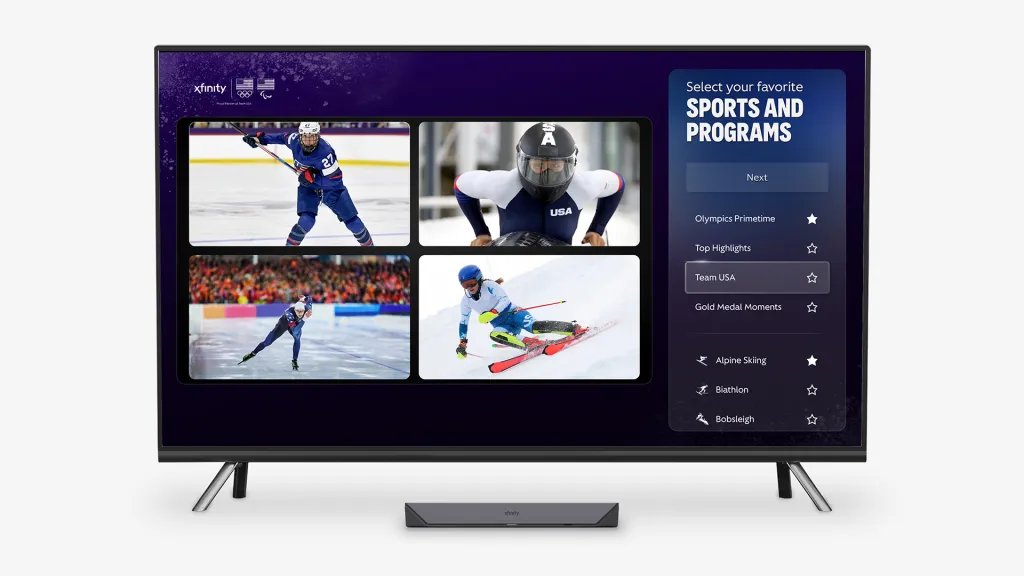
Comcast, which has held Olympic broadcast rights for over 30 years, continues to innovate in technology and advertising. This year, in keeping with tradition, its Xfinity service has introduced new features and offerings linked to the Olympic coverage.
NBCUniversal is maintaining its extensive coverage of the Games, with NBC and Peacock serving as its core platforms. Recently, a significant corporate restructuring saw most of NBCU’s previous cable network portfolio spin off into Versant, a newly established public company.
Watch on Deadline
This transition includes sports-focused networks like The Golf Channel and USA Network, where familiar sports franchises are extending their presence. NASCAR, once under NBCU, is now a Versant entity, with most races airing on USA. However, four NASCAR races will still be broadcast on NBC, which will handle advertising sales for Versant networks.
Looking ahead, the direction of Versant remains uncertain. Recent leadership changes aim to explore non-cable revenue sources as executives have relocated to a new Midtown Manhattan headquarters and sought partnerships for news and sports programming. The unpredictable nature of the cable landscape adds further complexity, particularly as Warner Bros. Discovery navigates its own restructuring, while Comcast secured its Olympics rights through 2036 last year.
For the current Winter Olympics, coverage will be prominently featured on USA and CNBC, albeit without the typical peacock logo. Viewers can expect approximately 3,200 hours of coverage, including a record 700 hours on linear television, with an additional 2,500 hours on Peacock. This includes the revival of the Gold Zone, initially launched for the Paris games.
Peacock will not feature “A.I. Al Michaels” this time around but will offer enhanced personalization tools for a customized viewing experience. As highlighted in a recent press event emphasizing “Legendary February,” which includes the Olympics, Super Bowl, and NBA All-Star Game, Peacock will introduce Rinkside Live, providing close-up views of figure skating, alongside familiar features such as Discovery Multiview and interactive scheduling.
Xfinity will also leverage AI for highlights and provide quick access to stats and medal counts. Additionally, viewers can take virtual “flyover tours” of various competition venues and enjoy exclusive interviews with American athletes participating in the Games. “The Olympic Games capture the attention of the nation like no other sporting event, making them a perfect stage to showcase what Xfinity does best when it comes to live sports,” stated Vito Forlenza, VP of Sports Entertainment, Connectivity & Platforms at Comcast, adding that this strategy allows fans to engage on their own terms.
CNBC will air Olympic highlights on weekends and weeknights after business programming. Curling, a fan favorite, will be featured daily until the gold medal game on February 21.
Versant’s USA Network is branded as “the 24/7 home of Team USA,” continuing its legacy from previous Olympics. Coverage will include morning alpine skiing finals and follow with freestyle skiing, snowboarding, and hockey events.
Notable athletes like Lindsey Vonn and Mikaela Shifrin are expected to be major draws for Team USA in skiing. Remarkably, Vonn is competing despite recovering from a ruptured ACL and meniscus. Her early downhill race on Sunday carries significant anticipation as she aims to medal in her super-G event later in the week, potentially becoming the first U.S. woman to achieve this since 2010.
Shifrin, meanwhile, is set to compete in only three events this time, down from six in the previous Olympics, following a disappointing performance that resulted in no medals and three unfinished events.