
Thierry Frémaux Shares Insights on Oscar Changes, Thelma & Louise Poster Debate, Berlinale Criticism, AI, Red Carpet Selfies, and More
Cannes Film Festival Director Addresses Key Issues Ahead of Ceremony
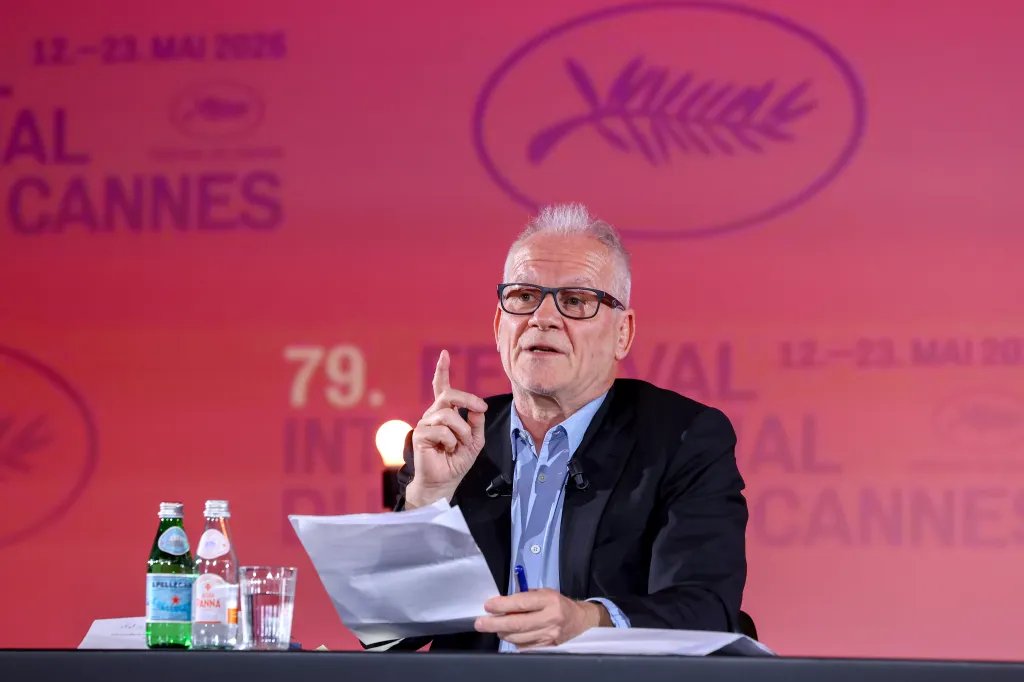
CANNES, France — Thierry Frémaux, the director of the Cannes Film Festival, held a press conference on Monday, a day before the festival’s opening ceremony, addressing various pressing topics including artificial intelligence, Oscar submission rules, and gender parity in film.
During the session, Frémaux faced detailed inquiries about the festival’s handling of complex political questions, especially in light of the Berlinale’s recent controversies. When asked if the Cannes jury was prepared for such discussions, Frémaux offered a nuanced perspective.
“The question raised in Berlin is one that regularly comes up at the festival,” he remarked. “It’s hard to make a comparison because we are living in different times.”
He also defended filmmaker Wim Wenders, who faced backlash after suggesting that artists should "stay out of politics." Frémaux stated, “I think he was subjected to criticisms that weren’t really justified. He wanted to say that politics should be on the screen. That’s what we say at Cannes.”
Emphasizing the festival’s stance, Frémaux noted that while filmmakers in the Official Selection may choose to express political views, it is not the festival’s role to engage in political discourse. “Art, and cinema in particular, are instruments of peace,” he said, underscoring a commitment to avoiding confusion amid geopolitical tensions.
Gender Parity Concerns
Frémaux acknowledged anticipation surrounding gender parity in the festival lineup. Only five of the 22 films vying for the Palme d’Or this year are directed by women, a decline from seven in 2025. This has drawn criticism from gender parity group Le Collectif 50/50, which accused the festival of “feminism washing” due to an image featuring Geena Davis and Susan Sarandon in the poster.
In response to a journalist’s inquiry about the disparity compared to the Berlinale, which achieved closer to gender parity this year, Frémaux explained, “At no moment would we have chosen an image of Geena Davis or Susan Sarandon to make ourselves look feminist.” While acknowledging past shortcomings, he highlighted Cannes’ commitment to addressing gender issues, referencing its 2018 signing of the equality charter initiated by Le Collectif 50/50.
Frémaux revealed that 28% of films submitted this year were by women, while female-directed films accounted for 34% of the overall selection. “Today we’re seeing more and more women directors coming into cinema,” he noted, pointing to the gradual, albeit slow, progress. He emphasized the need for the entire film industry to support gender parity, advocating for greater representation of women’s perspectives in cinema.
Changes in Oscar Submission Rules
This year’s festival coincides with recent changes announced by the Academy of Motion Picture Arts and Sciences regarding eligibility for the non-English language Best International Feature Film category. Films can now gain eligibility by winning the Palme d’Or or top prizes at other recognized festivals.
Frémaux welcomed these changes, indicating that they elevate the status of international films in the Oscar race. “When people say that America is turning inward, it’s not true,” he said, asserting that Hollywood is opening up to global cinema. He addressed how the new rules would allow a country with multiple strong films to have more representation in the category.
While questioned about the possibility that these rules could influence the jury’s decisions, Frémaux stressed the individualized nature of jury members, indicating that the selection process remains diverse and personal.
Perspectives on Artificial Intelligence
Frémaux also shared his thoughts on the implications of artificial intelligence in filmmaking. “Artificial intelligence is what the electric bicycle is to the bicycle,” he observed, emphasizing the need for caution and understanding as the technology evolves.
He noted recent decisions by the Oscars, including the ruling that AI-generated characters cannot be nominated for acting awards. “We are on the side of the artists, the screenwriters, actors, and voice actors,” he affirmed, calling for legislation to regulate AI’s impact on the industry.
Addressing speculation that an AI film might be featured this year, Frémaux clarified that no such submissions had been received. “We stand with everyone whose job could be negatively impacted by artificial intelligence,” he concluded, reinforcing the festival’s commitment to supporting human creativity in an increasingly complex technological landscape.