

The Success of ‘The Magic Faraway Tree’: A Heartwarming Fantasy Film Inspired by Enid Blyton’s Novels, With More Sequels Coming Soon
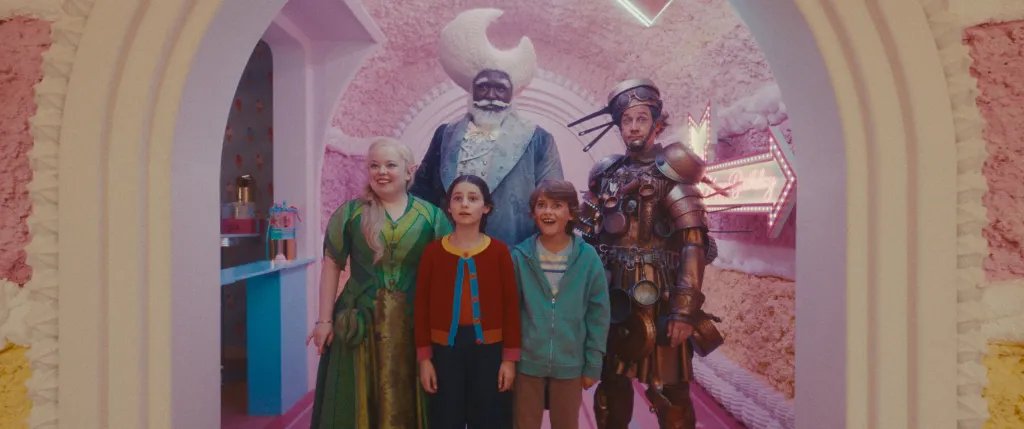
This week, audiences are embracing Ben Gregor’s film adaptation of The Magic Faraway Tree, featuring Andrew Garfield, Claire Foy, and Nicola Coughlan. The screenplay, crafted by Simon Farnaby—known for his work on Wonka and Paddington 2—is based on Enid Blyton’s beloved children’s book series. Since its UK release in April, the film has approached $20 million at the box office and has resonated with Australian audiences, grossing over $7.2 million thus far.
Name: The Magic Faraway Tree
Country: UK
Producer: Neal Street, Elysian Film Group
Distributor: Entertainment Film Distribution (UK)
Sales: Palisades Park Pictures
For fans of: Paddington
Watch on Deadline
Adaptations of literary works are highly popular in the film industry, with recent successes including The Housemaid, Project Hail Mary, and Wuthering Heights.
The appeal of these adaptations is underscored by a study from the UK’s Publishers Association, published in March, which revealed that book adaptations generated 57% higher box office revenue than non-adaptations among the top 50 titles in the UK from 2020 to 2024.
Producers Pippa Harris and Danny Perkins have been central to the adaptation of Blyton’s The Magic Faraway Tree series.
“I first tried to get the rights about 20 years ago,” says Harris. “We’ve been running Neal Street for over 25 years, and it was quite an early project for us, but the rights situation was very complicated, and it took a long time to unpick.” Harris is currently enjoying the success of Chloe Zhao’s Hamnet and the drama Call the Midwife.
After securing the rights, Harris contacted Perkins, who was then CEO of Studiocanal UK, as it was a logical first step. “Studiocanal was an obvious first port of call,” she states, noting that this was before the release of the first Paddington film in 2014. Perkins remembers their discussions about various UK properties that could potentially be adapted for the big screen.
The original The Magic Faraway Tree books, published from 1939, depict the adventures of three siblings who find an enchanted tree and its whimsical inhabitants, including Angry Pixie and Moon-Face. The siblings explore various lands, such as the Land of Goodies and the Land of Spells.
Blyton’s work boasts a strong intergenerational following in the UK and other English-speaking regions, having been translated into over 90 languages worldwide.
Simon Farnaby joined the project early on to write the script, demonstrating a deep passion for the source material. “He had such a strong take on it and what he wanted to keep from the original Blyton, and what he felt was impossible to keep and needed updating,” Harris explains. “When you look at all the British movies that have really broken out, a huge number of them are based on British kids’ IP that travels internationally.”
The final screenplay places the adaptation in modern Britain, tackling contemporary issues such as the impact of social media. Foy portrays a science-savvy mother who loses her job, while Garfield plays an idealistic stay-at-home dad who suggests they relocate to the countryside to start a pasta sauce business.
“Simon understood that there was something within the story of the 1940s children leaving the city and going to the countryside that we could update and make relevant,” Perkins notes.
The cast includes Coughlan, Nonso Anozie, Jessica Gunning, and others, featuring prominent actors such as Rebecca Ferguson and Michael Palin. The film, aimed at families, has garnered close to $20 million in the UK and over $7 million in Australia since its release during the Easter holidays.
Feedback from Australian distributor VVS Films indicates that the film has attracted adult viewers as well, extending its box office reach beyond typical family-driven weekends. “Some remember the books, but lots don’t and just love the premise of the film,” Harris states.
Perkins points out that the film has outperformed Pixar’s $150 million budget animation Hoppers and the Paddington films in Australia, calling it “extraordinary” given the circumstances.
Harris attributes the film’s positive reception to its uplifting message amid current global tensions. “When the world’s so fractured and angry, audiences look for something that celebrates the good in humanity,” she explains. Both Hamnet and Call the Midwife have also benefited from this sentiment.
The success of The Magic Faraway Tree has inspired plans for two more films based on the series, with Harris stating, “People have become very invested in these characters, and they’re all keen to come back.”
Perkins emphasizes the value of capitalizing on the existing investment in the film’s visual world, noting that the potential for future adaptations is significant given the various lands within Blyton’s universe. “We’re excited to try and do more,” he adds. Garfield expressed enthusiasm for the project, stating, “Wouldn’t this be great, if this was every summer?”
Sequels could be key to ongoing success
Tamara Birkemoe, representing L.A.-based Palisades Park Pictures, has been overseeing the film’s sales since pre-production. She remains optimistic that the film’s UK success, paired with plans for sequels, will facilitate expansion into key markets like Italy, France, and the Nordics.
“Everybody who read the script really liked it, and everybody who saw the movie felt it was appealing for both kids and adults,” she comments. However, she acknowledges that the intellectual property is less recognized in certain regions, necessitating additional marketing expenditure.
The star power of Garfield and Foy has proven beneficial in attracting interest in markets where Blyton’s work is not as familiar. “Andrew has been Spider-Man. People don’t necessarily view him as exclusively British; they see him as global, so he helped a lot,” Birkemoe explains.
The film’s novelization by Hachette UK, which holds the rights to the Enid Blyton estate, also bolsters marketing efforts. The book has been released in the UK ahead of the film’s launch, with plans for a U.S. release this summer.
Birkemoe believes that the commitment to sequels will further entice buyers. Several distributors have already expressed interest in first-look options for future films in their contracts for the original.
“Franchising has been an important element. Everybody wanted that in their contract,” she adds. “When you invest so much money in the P&A for the first film, having the option for subsequent ones is only logical.”


