
North Hollywood Tiny Home Community: A Step Toward Stability Amid Ongoing Challenges
North Hollywood Tiny Home Community Provides Transitional Housing
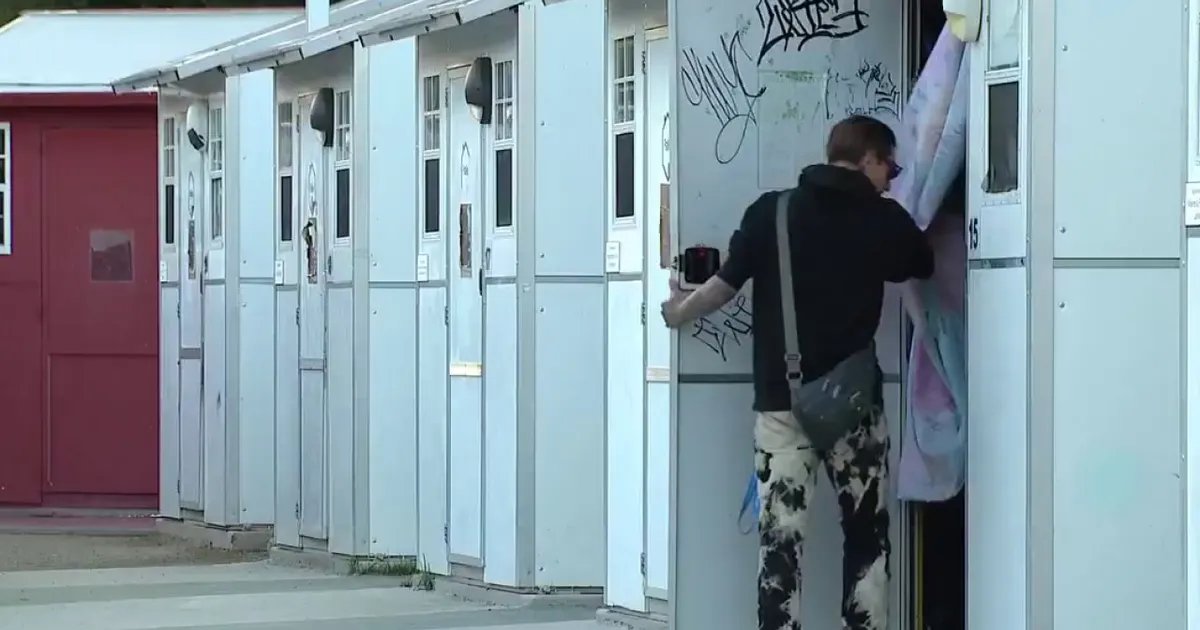
LOS ANGELES — A new tiny home community in North Hollywood is offering transitional housing for individuals who have recently experienced homelessness, representing a key initiative in Los Angeles’ ongoing effort to address the homelessness crisis.
The community features 78 beds across 39 small units, designed to facilitate the transition from street living to more stable environments. Importantly, residents are permitted to bring pets, a factor that outreach workers indicate often deters individuals from seeking traditional shelters.
“It’s helping me — not being on the streets,” said Jesus Hernandez, a resident of the community. “Otherwise, I’d still be out there like everybody else.”
To maintain a safe environment, drug use is prohibited on the premises, and residents are required to check in at least once every three days. There is currently no limit on the duration of stay, with the average residency lasting approximately 200 days, according to Ivet Samvelyan, vice president of Hope the Mission, the organization overseeing the facility.
Samvelyan noted that about 30% of the residents successfully transition into permanent housing, a success rate considerably higher than the broader statistics from the Los Angeles Homeless Services Authority, which reported a 10% success rate for similar city-funded initiatives in 2024.
Despite this progress, officials acknowledge significant challenges remain. “It’s only going to be around 30% because we’re trying to figure out what works and what doesn’t,” said Los Angeles City Councilmember Adrin Nazarian, who represents the district. However, he emphasized that the alternative—leaving individuals on the street—would be far worse.
Residents like Dennis, once a software engineer, express gratitude for the support provided by the program. “I was a software engineer for 25 years and couldn’t find work. That’s how I ended up on the streets,” he explained. “I’m grateful a place like this exists.”
Yet, many individuals still face uncertainty about their future. Hernandez, who has been living at the site for several months, shared his apprehension about finding permanent housing. “It all depends,” he said.
Outreach workers highlight the ongoing challenge of encouraging individuals living on the streets to accept help. Many continue to decline shelter options, making initiatives like this one crucial as a first step toward addressing homelessness.
“In my specific case, I couldn’t be more thankful,” another resident remarked, encapsulating the mixed feelings of hope and uncertainty that surround the program.