
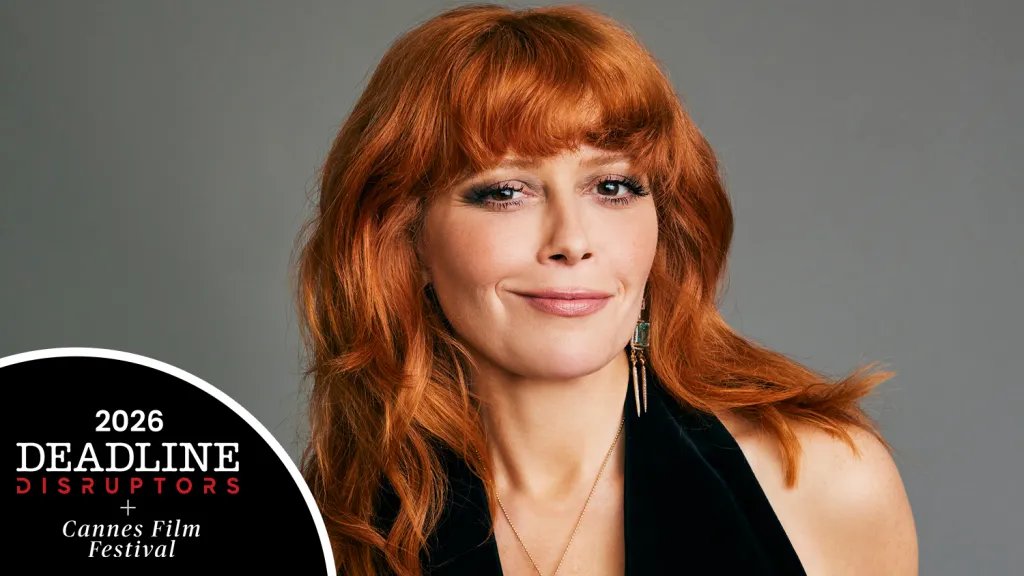
Natasha Lyonne Shares Insights on Her Film ‘Uncanny Valley’ and the Future of AI in Cinema
Artificial intelligence (AI), while a burgeoning topic in Hollywood, has been a long-standing interest for actress and writer Natasha Lyonne. Reflecting on her formative years spent studying the Talmud at a Jewish private school in New York City, Lyonne notes, “I feel that I understand how it formed my brain as a tween.” She draws a parallel between religious text interpretation and AI development, stating, “It’s almost like one line of code as interpreted by a million different rabbis.”
Lyonne, a five-time Emmy nominee, elaborates on this metaphor through her creative experiences. She describes her personal approach as an “algorithmic Tower of Babylon,” a creative filing system she has employed in her work on Russian Doll and her forthcoming film, Bambo. This film, which she will write and direct, follows a boxing promoter from 1980s Brooklyn and his daughter. Lyonne is producing the film through her Animal Pictures alongside partners Max Ferguson, Craig Mazin, Jason Weinberg, and Sarah Sarando.
Watch on Deadline
Among her projects is the film Uncanny Valley, which Lyonne will direct from a script co-written with actor Brit Marling and scientist Jaron Lanier. This film tells the story of a teenage girl who struggles with reality as an augmented reality game takes over her life. The title references the unsettling experience of encountering AI-generated humanoid figures that do not quite look human.
Brit Marling speaks on a panel for “A Murder at the End of the World” at Deadline Contenders Television 2024.
Reflecting on her engagement with science and AI, Lyonne states, “I’ve been on this journey for quite some time, so I think I’m just a little bit more attuned.” She emphasizes her commitment to learning, noting her departure from Tisch School of the Arts at 16 to pursue an autodidactic path. Lyonne recalls a pivotal moment in her recovery from addiction, saying, “When I was at my lowest point, they told me to find anything, a doorknob or an ocean, and call that my power greater than me. It’s actually when I fell for science.”
Unlike many who express skepticism toward AI’s implications for employment and the environment, Lyonne embraces its potential. She is actively developing an ethical AI model at Asteria Film, a studio she co-founded. This initiative positions her among a growing body of women in Hollywood, including Sandra Bullock and Reese Witherspoon, who are exploring the intersection of AI and creativity.
At the CNBC Changemakers Summit in April, Bullock advocated for a balanced approach to AI, stating, “It’s here. We have to observe it. We have to understand it. We have to lean into it.” Meanwhile, Witherspoon voiced her intention to educate herself about AI on social media, highlighting gender disparities in its adoption.
Lyonne also comments on media coverage, noting a disparity in how male and female figures in AI are portrayed, saying, “There’s a harsh imbalance around the way men and women in AI are covered by the media.” She highlights instances where male counterparts have faced less scrutiny for their involvement in AI-related projects.

Natasha Lyonne in ‘Russian Doll’
“Everybody brings their own baggage to the table,” Lyonne says, considering the varied perspectives on AI. She emphasizes the importance of ethical practices in AI development, highlighting Asteria’s clean and licensed data model as a stark contrast to models built on unlicensed and unreliable sources.
“I think that what people started to realize over time is that they weren’t going to be able to keep it entirely clean, so they started going entirely dirty,” observes Lyonne. She believes that the entertainment community must navigate these technological shifts carefully to ensure the survival of their craft.
While Lyonne advocates for responsible AI practices, she acknowledges ongoing challenges, suggesting that, despite the need for human oversight in many AI tools, companies may still prioritize cost-cutting over ethical considerations.
Read the digital edition of Deadline’s Disruptors/Cannes magazine here.
In March, Lyonne joined over 400 industry professionals, including Lilly Wachowski and Alfonso Cuarón, in signing an open letter urging the government to enhance copyright protections amid growing concerns over AI. This letter contributed to the National Policy Framework for Artificial Intelligence, introduced a year later and endorsed by SAG-AFTRA, which highlighted the importance of safeguarding against unauthorized AI reproductions.
Nonetheless, Lyonne expresses concern that the efforts prompted by the letter might have been overshadowed by existing initiatives, such as the Stargate Project, which aims to develop infrastructure for advanced AI technologies. She reflects, “We were literally sort of the tinsel and the marketing department of this bigger project that was going on.”
Currently, Lyonne contemplates the term “AI” as a vague label for a misunderstood field. This confusion often arises from fears associated with current AI technology versus the theoretical potential of AGI (Artificial General Intelligence), when machines could exceed human intelligence. Lyonne remains committed to continually educating herself on ethical AI usage, stating, “I always just call and check in with my pals who are real coders. I think there is a lot of work yet to be done.”