
Lena Dunham Shares Her Thoughts on Writing About Adam Driver, Praising His Talent and Complexity
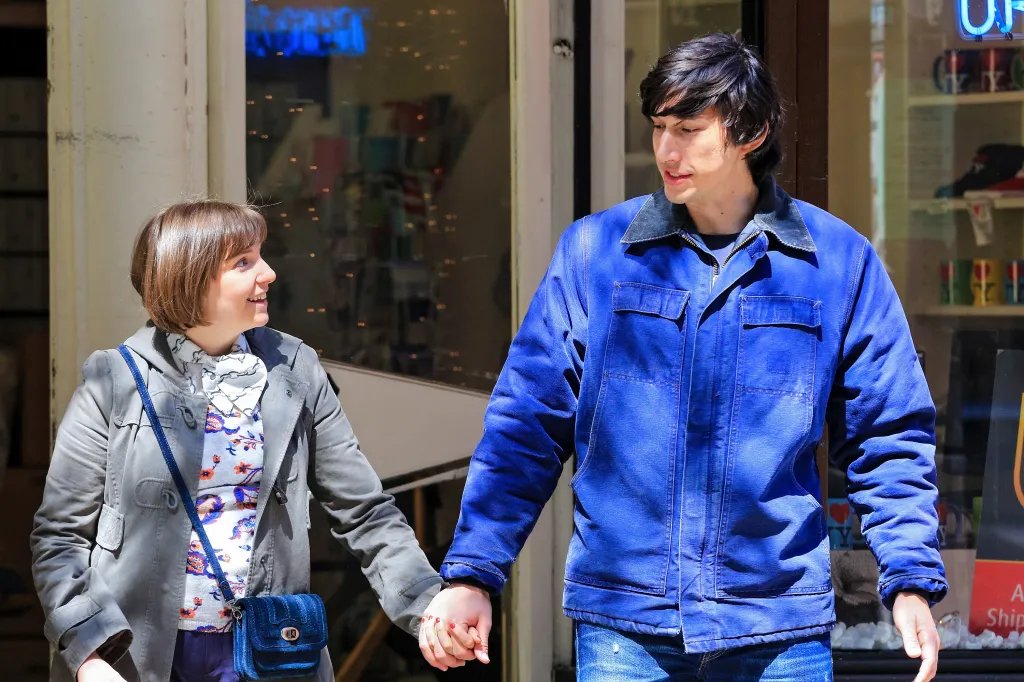
Lena Dunham is candidly reflecting on her complicated professional and personal relationship with former Girls co-star Adam Driver in her new memoir, Famesick. In the book, she discusses the experiences that shaped their dynamic during the production of the HBO series.
Dunham and Driver portrayed the show’s central romantic couple, a connection laden with tension both on and off the screen. She recounts a particularly chaotic moment while filming their first sex scene in Season 1, where she felt overwhelmed as Driver took control, stating, “careful blocking went out the window” when he “hurled me this way and that.”
“Stunned, I couldn’t speak for a moment,” Dunham writes. “Unsure of what had happened — had I lost directorial authority, allowed the scene to go off the rails, not given proper instructions? Would I be removed from my command post immediately?”
She elaborates, “It wasn’t that I felt violated… But I felt that something intimate, confusing, and primal had played out in a scenario I was meant to control.”
In an exclusive interview with People, Dunham explains her motivation for including Driver in her memoir. “It was an attempt to capture that [relationship] in an honest way, and also really talk about how much being around this very talented, charismatic, complex, and powerful person affected me in ways that were really positive and in ways that were a bit harder.”
She emphasizes that the aim was not to single out Driver but rather to illustrate the complexities of navigating her role as a director. “For better or worse… it was all of our first jobs,” she recalls. “I think Adam went on a very specific ride because he had the ride of the show and then also the ride of becoming a major movie star at the same time.”
At just 24 when Girls premiered, Dunham recounts moments of intense frustration, including one instance where Driver, frustrated during rehearsals, threw a chain against the wall beside her. “I remember doing a fight scene with Adam and how scary it was to meet someone so totally present with such absence,” Dunham writes. She recalls a moment when, during line rehearsals, she could not recall her lines, prompting Driver to yell, “FUCKING SAY SOMETHING” while throwing a chair next to her.
At the time, Dunham downplayed Driver’s outbursts, rationalizing his behavior as part of his creative temperament. “I reasoned that the intensity of his anger at me… was proportionate to the intensity of our creative connection,” she reflects.
Despite his aggressive moments, Dunham portrays Driver as both nurturing and intense. At one point, he visited her apartment nightly when she was feeling anxious, expressing concern that if he came up once more, “I’m not leaving this time.” Yet, she hesitated to cross that boundary, fearing it might jeopardize their work relationship and her authority.
When Driver later announced his engagement to his now-wife, Dunham admitted to feeling heartbroken, despite the absurdity of such emotions. She writes, “I was his scene partner… But in life? It would never be me who kept him in line.”
Dunham concludes her reflections with a poignant memory from their final scene together, recalling Driver’s words: “I hope you know I’ll always love you.” She muses, “Who knows, maybe I’d write him new parts. We would tell new stories… But I never heard from him again.”
As of now, Adam Driver has not publicly responded to Dunham’s memoir.