

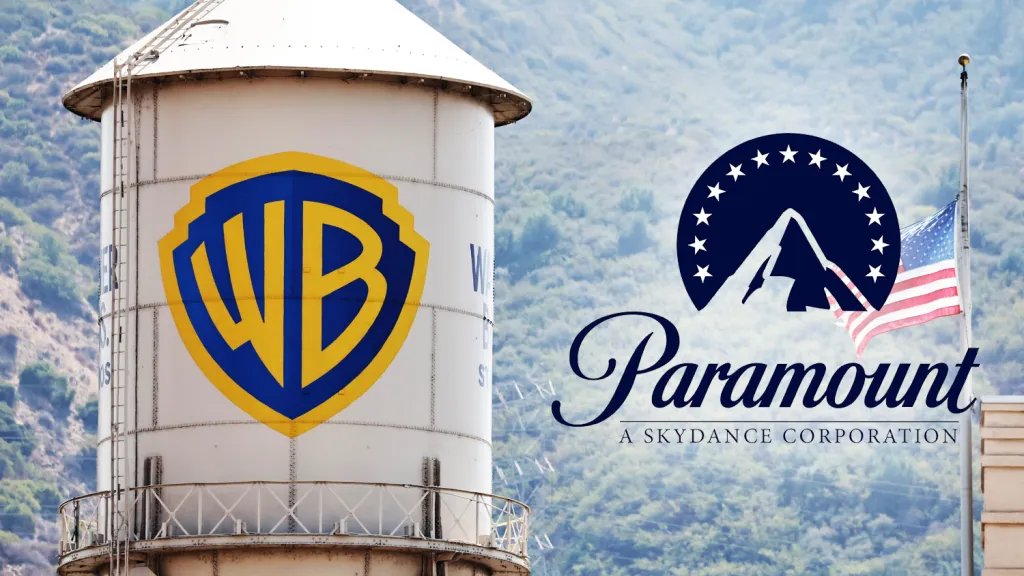
Cinema United CEO Highlights Concerns About Market Power from Paramount and Warner Bros. Merger at CinemaCon
Concerns Raised at CinemaCon Over Industry Consolidation
At this year’s CinemaCon in Las Vegas, Michael O’Leary, President and CEO of Cinema United, highlighted significant concerns regarding the increasing concentration of power among a limited group of film distributors. He cautioned that this trend could dictate terms related to scheduling, screen placement, and access to historical film catalogs, potentially undermining the interests of theater owners and moviegoers alike.
O’Leary specifically referenced ongoing efforts to acquire Warner Bros., an iconic studio that produced a standout slate for 2025. He remarked that mergers and acquisitions within the industry have a profound impact on local economies and millions of cinema fans worldwide.
Paramount’s chief executive David Ellison expressed optimism about completing the merger in the third quarter, promising a production rate of 30 films annually. However, industry insiders worry that consolidation may lead to a reduction in the number of films produced, accompanied by significant job losses.
“Unfortunately, history shows us that consolidation results in fewer films being produced for movie theatres,” O’Leary stated in his State of the Union address. “We believe this transaction will be harmful to exhibition, consumers, and the entire entertainment ecosystem.”
His remarks align with the sentiments of prominent Hollywood figures, including JJ Abrams, Damon Lindelof, David Fincher, and Denis Villeneuve, who recently signed an open letter opposing the merger, warning it could threaten the sustainability of the creative community.
The merger discussions come at a time when the theatrical business shows promising signs, marked by a resurgence in box office revenue and a diverse array of content. Notably, Universal Pictures announced a 45-day theatrical window for its films starting in January.
O’Leary emphasized the importance of theatrical exhibition as the industry’s foundation, remarking, “After six-plus years of theories and experiments devoted to proving that theatrical’s days have passed, there is a growing recognition of something we have always known.” He called for broader adoption of a protective window of at least 45 days, ideally extending to the 60-plus day range favored by Disney, to revitalize audience interest and bolster industry performance.
He highlighted that moviegoers are often hesitant to visit theaters if they anticipate being able to stream films quickly from home. The average window for wide releases in 2025 was noted to be 37 days, a slight increase from the previous year. O’Leary pointed out that had all wide releases adhered to a minimum 45-day window, the average could have reached 49 days.
“Progress is being made, and windows will remain a priority. For our part, exhibition should acknowledge and fully support those partners that are committed to meaningful theatrical exclusivity,” O’Leary affirmed. While major chains typically adhere to minimum window policies, variations still exist among others in the industry.
Sony Pictures Motion Picture Group Chairman and CEO Tom Rothman also advocated for consistency in theatrical windows during his presentation at CinemaCon, suggesting that enforcing longer windows may be necessary, even if it limits the range of films available.
O’Leary shared a notable statistic indicating that Gen Z is becoming a crucial demographic for moviegoing, with attendance among individuals aged 12 to 28 increasing by 25% over the past year. He concluded, “While attendance still lags previous highs, audience enthusiasm is not static. It changes every day, and these positive trends paint a brighter future.”