
Canal+ Will Stop Collaborating with Those Who Signed the “Time to Switch-Off Bolloré” Petition, According to Maxime Saada
Tensions Rise in French Media Sector Over Vincent Bolloré’s Influence
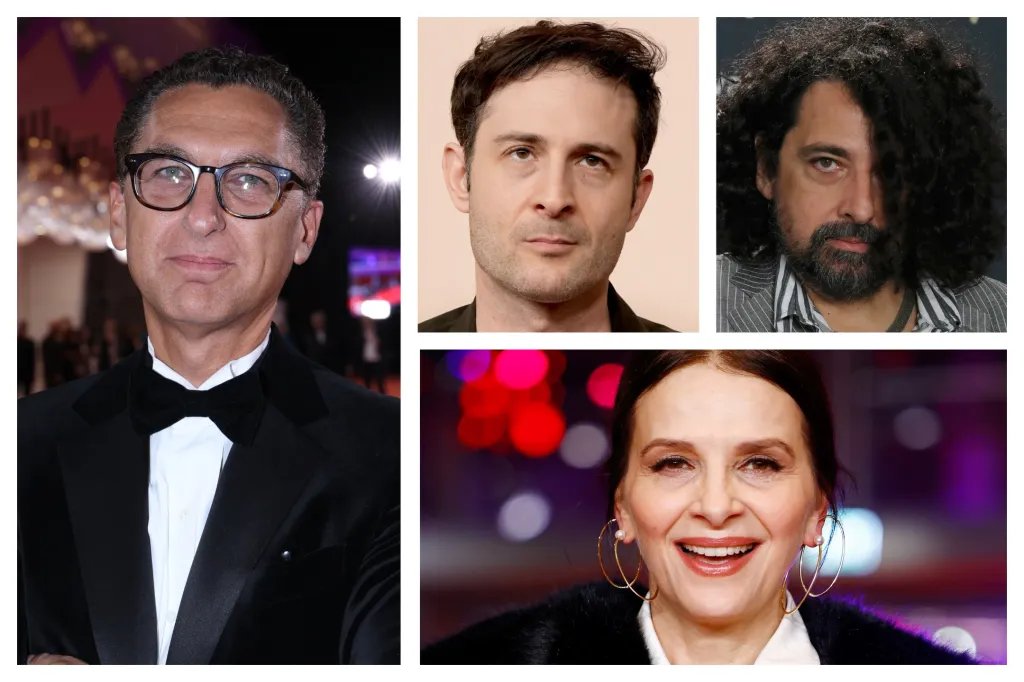
In a heated response to a recent open letter issued during the Cannes Film Festival, Maxime Saada, Chair and CEO of Canal+, has defended the company against allegations surrounding Vincent Bolloré’s increasing control over the French entertainment and media industries. The letter, titled “Time To Switch-Off Bolloré,” has garnered significant attention, having been signed by over 600 prominent cinema professionals, including notable figures such as Juliette Binoche and Palme d’Or contenders Arthur Harari and Bertrand Mandico.
The petition expresses concern regarding Canal+ Group’s acquisition of a 34% stake in UGC, a major player in French production, distribution, and cinema exhibition, with intentions to fully acquire the company by 2028. The signatories argue that this move signifies a deeper agenda to propagate a “right-wing, reactionary agenda” across French media.
Saada addressed the letter during the Canal+ Group’s annual producers’ lunch at the Cannes Film Festival on Sunday. “I experienced this petition as an injustice towards the Canal teams who are committed to defending the independence of Canal+ and the diversity of its choices,” he stated. “As a result, I will no longer work—I no longer wish Canal+ to work with the people who signed this petition.”
In a surprising twist, Saada claimed the signatories had referred to Canal+ as “crypto-fascist,” a label not present in the letter itself. “If some go so far as to call Canal+ ‘crypto-fascist,’ then I cannot agree to collaborate with them,” he asserted.
The letter’s timing is crucial, coinciding with broader concerns in the French media and entertainment sectors regarding Bolloré’s influence. Although he officially stepped down as chair and CEO of the Bolloré Group in 2022, many believe he continues to wield significant power behind the scenes. Critics have accused him of steering Canal+’s news channel CNews and other platforms toward conservative viewpoints since acquiring Vivendi in 2014.
CNews has faced numerous sanctions for disinformation and has received criticism for a lack of guest diversity. Recently, the channel lost its TNT license amid a scheduled renewal process. Despite these controversies, Canal+ remains a leading financier in French cinema, recently pledging €480 million over three years to support the industry’s production.
The “Time To Switch-Off Bolloré” letter acknowledges the ongoing contributions of Canal+ to cinema while voicing apprehension about potential future shifts in its programming direction. It raises a red flag for what they label as Bolloré’s “civilizational project,” arguing that the media mogul’s ambitions extend beyond mere commercial interests. “By controlling the entire financial chain, Bolloré has complete freedom to act when the time comes,” it warns.
As the Cannes Film Festival unfolds, the letter’s impact and Saada’s statements are stirring intense discussions about the future of French cinema. The open letter raises critical questions about editorial independence and the potential ramifications of a growing far-right influence in the industry, highlighting fears of cultural homogenization and ideological control.
Bolloré’s supporters may argue against the petition’s claims, asserting that Canal+ has maintained its commitment to diverse cinema. However, in the backdrop of recent events at Hachette Livre, where the ousting of a prominent editor led to the departure of numerous authors over similar concerns, the reverberations of this debate are likely to persist.
The growing scrutiny surrounding Bolloré’s influence will be a defining issue for French media professionals as they continue to navigate these complex dynamics in the months ahead.