A Fresh Take on ‘The Mummy’: Lee Cronin’s Version Balances Thrills with Familiarity
Irish Filmmaker Lee Cronin Revives Iconic Horror Franchise with “The Mummy”
Irish filmmaker Lee Cronin has breathed new life into two horror franchises featuring the undead, notably in Evil Dead Rise and his recent project, The Mummy. Both films reflect Cronin’s exploration of themes surrounding the disintegration of the nuclear family, drawing from a well of horror tropes. With Evil Dead Rise, Cronin has matured into a role reminiscent of the franchise’s creator, Sam Raimi, as he infuses the narrative with dark humor amid graphic depictions of violence.
The Mummy, Cronin’s third feature film, is a reimagining of Universal’s famed franchise, which first debuted in 1932. While the film does reference its predecessor, it largely pivots toward a style reminiscent of Raimi, characterized by bleak humor, dramatic scenes of defenestration, and a wealth of clichés. Although the film entertains, it struggles under the weight of its own imitative elements.
Despite its shortcomings, The Mummy manages to captivate audiences. It combines various thematic and stylistic approaches, resulting in a unique yet mismatched narrative fabric. Cronin’s eclectic artistry may not always resonate, but moments of inventiveness emerge throughout the film.
In an intriguing narrative twist, Cronin transposes the legend of the mummy from its Egyptian origins to a domestic setting in America. The story follows Charlie Cannon, portrayed by Jack Reynor, a journalist stationed in Cairo alongside his wife Larissa (Laia Costa) and their two children, Katie (Emily Mitchell) and Sebastián (Dean Allen Williams). Their seemingly idyllic life is shattered when Katie is abducted by a mysterious neighbor (Hayat Kamille), setting off a frantic search amid a sandstorm that reveals the indifference of local authorities.
The film jumps forward eight years, finding the Cannon family resettled in Albuquerque. In their daughter’s absence, they have assumed a new normal, now featuring Maud (Billie Roy) and a teenage Sebastián (Shylo Molina). They live with Larissa’s eccentric and devoutly religious mother, Carmen (Veronica Falcón), who provides unexpected levity to their somber life.
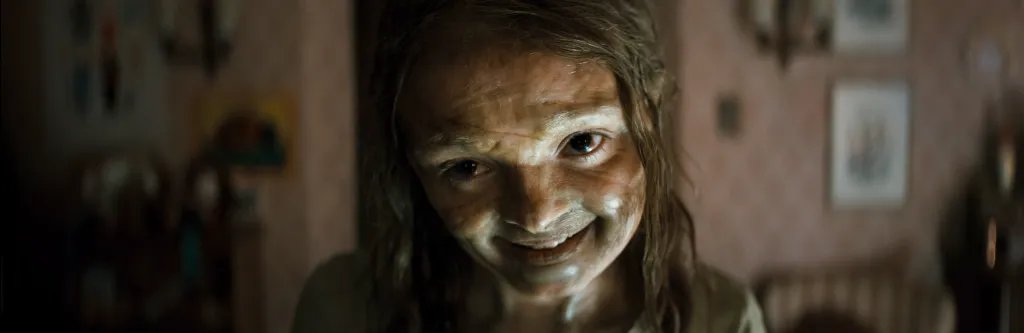
While the film hints at deeper themes of grief and guilt, it struggles to deliver a coherent exploration of these emotions. The return of Katie, now portrayed by Natalie Grace, introduces a darker mystery: she has been discovered mummified but alive. Although doctors pronounce her healthy, her unsettling behavior raises alarms as she begins to exhibit increasingly bizarre tendencies.
Cronin’s film mirrors the tension of classic horror narratives but suffers from a slow pace and muddled focus. Attempting to blend elements of body possession, reminiscent of The Exorcist, with a mystery akin to Se7en, the film introduces multiple subplots, including one featuring Detective Zaki (May Calamawy), which detracts from the central narrative.
Ultimately, The Mummy presents an odd amalgamation of styles, struggling to balance its various story threads. Numerous elements are introduced but left unfulfilled, including the involvement of an archaeology professor portrayed by Mark Mitchinson, who fades from the narrative without resolution.
Perhaps most critically, the film falls short in delivering genuine scares. Its gruesome imagery is underscored by themes of family disintegration, a common motif in Cronin’s work. However, this thematic depth remains obscured in layers of plot that fail to fully engage audiences.
Title: Lee Cronin’s The Mummy
Distributor: Warner Bros/New Line Cinema
Release date: April 17, 2026
Director-screenwriter: Lee Cronin
Cast: Jack Reynor, Laia Costa, May Calamawy, Natalie Grace, Veronica Falcón
Rating: R
Running time: 2 hr 14 mins