Na Hong-jin, Director of ‘Hope,’ Shares Film Inspirations from ‘Jaws,’ ‘Lethal Weapon,’ and Classic Sci-Fi at Cannes
Hope, an action-packed alien thriller from acclaimed filmmaker Na Hong-jin, premiered on Sunday night at the Grand Théâtre Auditorium. The screening elicited enthusiastic applause from the audience during particularly intense sequences.
Despite being filmed primarily in South Korea, the influence of Hollywood is evident throughout the movie.
Director Na revealed that his script was shaped by numerous Hollywood films. The narrative begins with a solitary sheriff, played by Hwang Jung-min, who senses an ominous threat lurking in the shadows, causing chaos and destruction.
For inspiration, Na drew upon early works by Steven Spielberg, citing Duel as a touchstone for building tension. “Duel for the terror,” he remarked, referencing the 1971 TV movie featuring Dennis Weaver, who is relentlessly pursued by a menacing truck.
Watch on Deadline

‘Duel,’ 1971
The influence of Duel extends back to Ishirō Honda’s 1954 classic, Godzilla.
Na also examined Jaws to grasp how a police officer manages challenges beyond their expertise, with Roy Schneider’s Chief Brody providing a compelling case study of a newcomer to a community who harbors a fear of water.
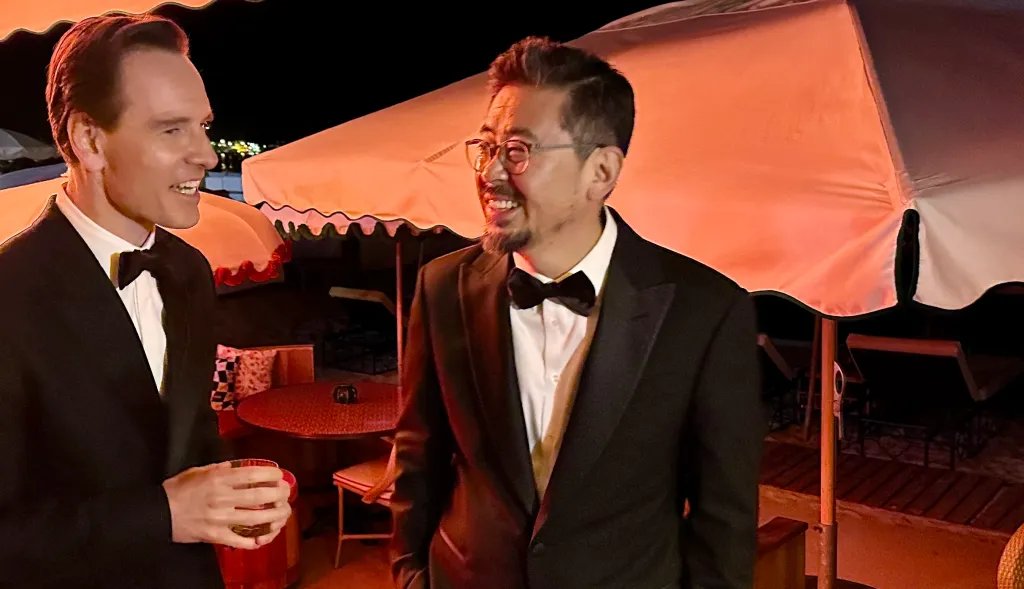
After the screening, Na engaged in conversation at the beachfront venue for the after-party. He expressed a desire to capture the essence of an archetypal lone hero seen in 1980s and 1990s cop films.
He revisited Bruce Willis in Die Hard and Die Harder but found particular resonance with Richard Donner’s Lethal Weapon, where he appreciated the portrayal of invulnerable heroes.
Na aimed to give a “human-being touch” to the film’s creatures. He described his intention to avoid relying solely on CGI, opting instead for practical effects reminiscent of earlier filmmaking methods.
Na Hong-jin, Michael Fassbender, Alicia Vikander, Taylor Russell, and Hoyeon Jung attend the ‘Hope’ screening in Cannes (Andreas Rentz/Getty Images)
Na examined films from the 1950s and 60s, including The Creature From the Black Lagoon and Fantastic Voyage, to influence the design of his monsters.
He credited Fassbender and Vikander with embodying his vision. “They showed me such utter trust,” he stated about his collaboration with the actors.
Fassbender confirmed that he and Vikander completely embraced Na’s directorial style during their scenes filmed in South Korea.
When asked if the audience’s enthusiastic response reinforced his efforts, Na laughed, saying, “I was thinking I should have more applause… I need to work on it harder.” He admitted he was racing against time to finish the film, having worked on sound elements just before making the trip to Cannes.
Na acknowledged that further work is planned ahead of the film’s U.S. release this fall via Neon.
Reflecting on the current landscape of summer blockbusters, he noted a personal disillusionment with mainstream superhero films, instead finding a rejuvenating thrill in Hope—a testament to the bold vision of festival organizers who championed it.
The Cannes Film Festival aims to embrace evolving genres, blending entertainment with profound storytelling, ensuring that audience engagement remains a priority.
Virginie Efira walks the red carpet at the ‘Histoires Parallèles (Parallel Tales)’ premiere in Cannes (Green/Getty Images)
Ryûsuke Hamaguchi’s All of a Sudden, featuring performances by Virginie Efira and Tao Okamoto, captivated audiences with its three-hour runtime, tackling themes of love and friendship amidst the challenges of dementia.
Rodrigo Sorogoyen’s The Beloved showcased a formidable performance by Javier Bardem, earning high praise from critics.
Additionally, Gilles Lellouche’s compelling roles in both The Electric Kiss and Lászlo Nemes’ Moulin highlight his versatility. Viewers are encouraged to watch Léa Drucker in A Woman’s Life and her previous work in Case 137.
This concludes the latest insights from the festival.