
Why Dead City Punx Are Causing a Stir on L.A. Streets
The underground punk band Dead City Punx, known as one of the most provocative acts in Los Angeles, has garnered a reputation for chaos at its shows, which have included incidents like arrests, police confrontations, and fiery displays. Following a concealed performance in downtown Los Angeles in 2025, Mayor Karen Bass condemned the ensuing unrest caused by fans as “unacceptable under any and all circumstances,” emphasizing the need for accountability among the perpetrators.
Since its inception, Dead City has drawn comparisons to iconic bands like Black Flag and N.W.A for its disruptive influence on the music scene and local authorities. For many young fans, especially those who flocked to the band’s outlaw concerts during the pandemic, Dead City symbolizes a revitalized punk rock subculture in Los Angeles. The band’s members have faced significant hardships, including poverty and addiction, and have been outspoken against police brutality, even performing near a downtown detention facility. Their impact has attracted attention from both mainstream rock icons and the fine arts community, as well as the LAPD.
In response to police crackdowns at their concerts, Dead City fans have shown their defiance by setting fires and vandalizing property. The question arises for many in the punk community: while they challenge the shortcomings of modern California, could they be inadvertently creating new issues?
A new documentary titled “Dead City Punx,” co-produced by Zack de la Rocha of Rage Against the Machine, premieres on April 16 at the Regent Theater. The film captures the band’s raw energy—from drug dens and graffiti-covered overpasses to a packed venue—while they grapple with whether their music serves as a rebellious social commentary or straightforward anarchy.
Drummer Grumpy noted, “A lot of people work their regular job, they hate their life. But they could go to our shows, and they could become this character, and a lot of people leaned into it. We can’t control what that person does. We’re just here to play music, and if you want to react to it by setting a stolen car on fire, that’s your choice.”
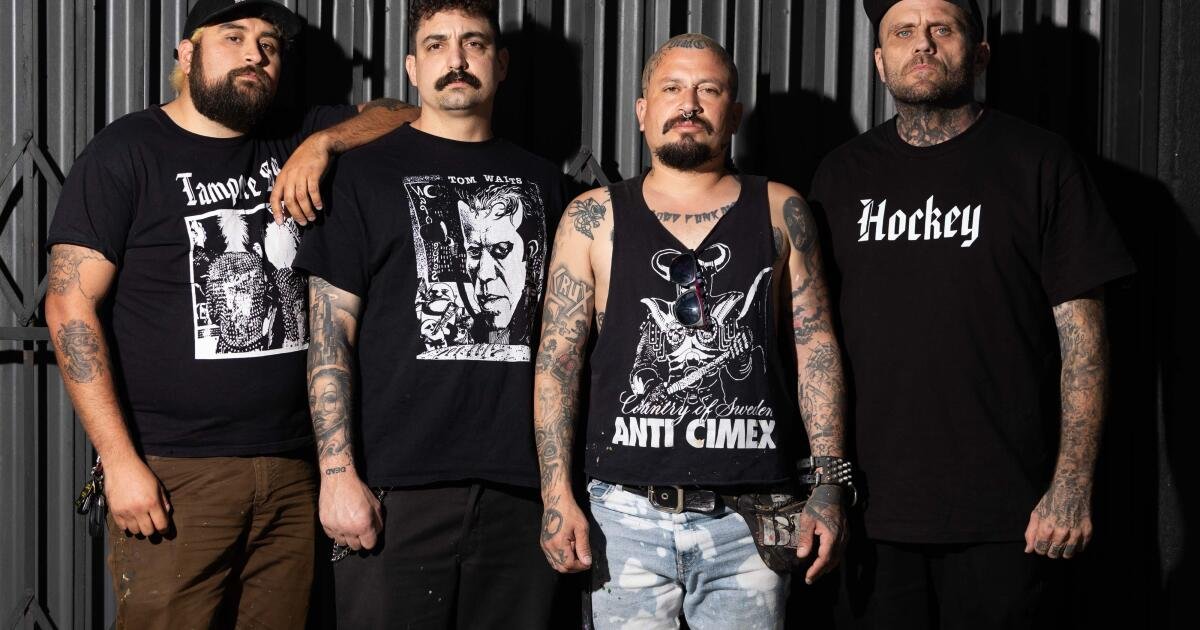
As they continue to gain notoriety amid economic and cultural declines, Dead City’s members—Mike, Grumpy, Meka, and Adrian—shared their perspectives in a rare interview last month. Despite their chaotic onstage persona, the band members displayed humor and warmth in person. Meka, for instance, humorously recounted a recent mishap that led to an emergency room visit.
With ages ranging from late 30s to early 40s, the band’s musical roots come from a variety of backgrounds, contributing to their eclectic sound. Grumpy had early experiences as a teenage punk drummer, while Adrian grew up in a household rich in Latin music. Mike, who turned to meth dealing during a turbulent childhood, found his footing in music through transformative conversations with Grumpy while they were both incarcerated.
“Me personally, I didn’t even think I would live this long,” Mike admitted. “I probably thought I would have overdosed before the band even started.”
From the beginning, Dead City viewed their band as both a collective and a rebellion against a failing Los Angeles. Their fast-paced tracks, like “F— Peace” and “Human Chopshop,” reflect this ethos. A notable performance at Lafayette Park in April 2021 attracted thousands, drawn by the energy and audacity of an unauthorized event during COVID-19 restrictions.
Crowds overwhelmed local police, who were unprepared for such a large turnout. “They had to get bodies. They had to get into their tactical clothing and work on a game plan,” Mike recounted. The chaotic energy of the crowd led to more events along the L.A. River, igniting interest among photographers, visual artists, and scene enthusiasts.
De la Rocha expressed the contrast between the polished portrayal of Los Angeles in entertainment and the realities faced by its residents. He remarked, “Dead City for me is the reality of Los Angeles… a concept that sharpens this contrast.”
Dead City’s reputation has continued to grow, though not without backlash. A set in Oakland at a homeless encampment stirred controversy, with some claiming the band was exploiting vulnerable individuals for entertainment. The band defended itself, mentioning that they had provided assistance and engaged with the community before the show.
“Being attacked by people online was stressful, but we didn’t do anything wrong,” Grumpy asserted, while Meka added, “We got there the day before and talked to all the people, and paid them to help clean.” Mike emphasized an understanding of their audience’s frustrations, suggesting that some discourse had raised awareness of local issues.
The LAPD has increased its attention on Dead City. In a community briefing, police noted an incident where a fan was struck by a projectile and injured during a Dead City concert. Grumpy voiced his frustration at being a focus for law enforcement, suggesting that their resources could be better allocated elsewhere.
Despite occasional regrets about their shows—particularly a tumultuous concert in 2025 resulting in widespread vandalism—members of the band maintain a commitment to their craft. Adrian clarified their disapproval of that specific incident, stating, “Normal people getting f— with? Heck no.” However, Mike pointed out, “Do you get mad at the Lakers for that?”
The band is navigating its burgeoning career amid the complexities of their image and identity. Although they recently performed at a Live Nation venue, which stirred mixed reactions from fans, Grumpy defended their financial choices, emphasizing their genuine love for music over potential commercial gains.
De la Rocha praised Dead City’s impact on the L.A. punk scene, declaring that they have returned it to an insurgent culture while maintaining its communal spirit. “When they organize a show, it’s more than a concert; it’s a real battle for public space,” he asserted.
With the forthcoming release of the “Dead City Punx” documentary and additional projects, the entertainment industry is both intrigued and cautious about the band’s trajectory. Despite attempts to share their story, the documentary has faced challenges in securing festival placements, amidst fears of its raw authenticity. Roger Gastman, an executive producer on the film, noted that Dead City’s struggle reflects broader trends in the industry, underscoring the band’s refusal to be silenced.