
The Rise of Today’s Stylish Men: How the Quarter Zip is Changing Fashion Choices
Men’s fashion has recently undergone a significant transformation, moving away from flashy styles and nostalgic trends towards a more intentional, refined aesthetic. This shift reflects a growing desire among young men to align their clothing choices with their personal identities.
The evolution can be observed on the Golden Globes red carpet, where actors like Timothée Chalamet, Owen Cooper, and Hudson Williams showcased creative interpretations of formal wear. Additionally, the ongoing Pitti Uomo trade show in Florence highlights this trend, bringing together designers keen on modern tailoring.
This season’s guest designers, Hed Mayner from Israel and Japan’s Soshi Otsuki, both emphasize sharp, contemporary tailoring that contrasts with the rigid structures of traditional suits. Their participation signals a departure from a long-standing dominance of streetwear dominated by logos and casual attire, pivoting instead towards high-quality, individualized styles.
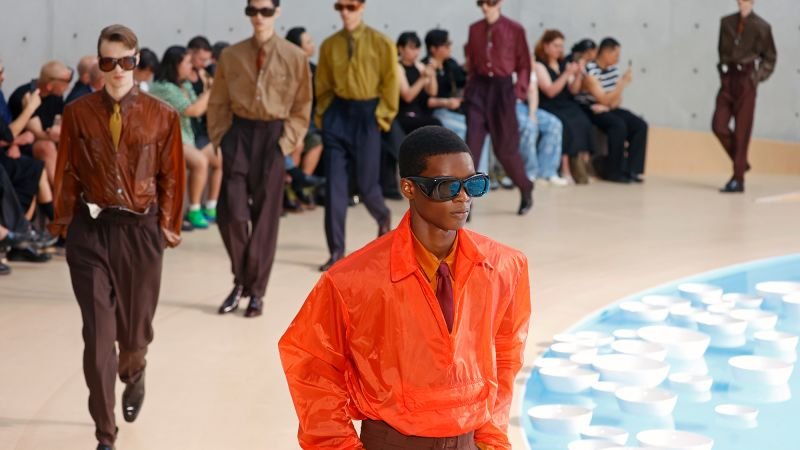
A look from Hed Mayner’s menswear Spring-Summer 2026 show at Paris Fashion Week. The Israeli designer specializes in modern tailoring that doesn’t feel stuffy.

Mayner, along with Japanese designer Soshi Otsuki (a Fall-Winter 2024 runway look is pictured), are this year’s guest designers at the Pitti Uomo trade show.
Luke Fracher, founder of the New York-based resale store Luke’s, observed this changing preference among his customers in a recent Instagram video. “Those same kids who were buying crazy Balenciaga or Rick Owens two years ago are now buying calmer stuff, like Hedi Slimane’s Dior,” he noted. This sentiment is echoed in Lyst’s trend forecast for 2026, which predicts that male shoppers will increasingly prioritize clarity and purposeful wardrobe choices.
Designer Aaron Levine embodies this shift with his recent collections, which blend minimalist aesthetics with vintage influences. His works for Studio Nicholson and Drake’s feature pieces like suede boots and easygoing coveralls, showcasing understated refinement. Levine remarks on his design philosophy, aiming to create “grown-up, nice stuff that will last you a long time.”
This approach to simplicity is seen as a reaction to the saturation of streetwear, which has often emphasized logos and overt branding. Levine asserts that many are now looking for styles that reflect more depth and individuality, rather than merely serving as advertisements for companies.
Dressing to Get Ahead
The popularity of casual streetwear, propelled by designers like Demna Gvasalia and the late Virgil Abloh, has faced a resurgence towards “quiet luxury”—defined by muted colors and discreet branding. This trend arises from a collective desire for elegance without ostentation, emphasizing quality everyday staples over traditional symbols of wealth.

Mark Ronson attended the 83rd Annual Golden Globes in January wearing a look from Saint Laurent’s Spring-Summer 2026 collection.
The quarter zip has emerged as a quintessential representation of this mindset, crossing various markets from the military to hip-hop. Recent social media trends highlight its significance, with notable figures showcasing the garment as a symbol of aspiration. “When you put it on, you feel more professional,” said Richard Minor, a young New Yorker who has embraced this style.
This trend is not limited to American culture, as British rapper Central Cee also adopted the quarter zip into his wardrobe. Influencers and creators, such as Andrew Amoako, recognize this garment as a means to project confidence and intent, shedding negative stereotypes while embracing a more intentional lifestyle.

British rapper Central Cee is more often seen sporting Nike Tech Fleeces but he briefly swapped them out for a quarter zip in 2025.

Jonathan Bailey also adopted the quarter-zip style as he attended Dior’s Spring-Summer 2026 show at Paris Fashion Week.
Designers have also embraced the quarter zip, with notable appearances from Matthieu Blazy of Chanel and actor Jonathan Bailey during the Dior menswear show. This garment’s newfound popularity aligns with a broader desire for clothing that projects calm amid political and economic uncertainty, according to fashion expert Ben Barry. Data indicates a 31% increase in global demand for quarter zips in late 2025, suggesting a cultural shift towards clothing as a means of expressing confidence and control.
Barry notes that this trend coincides with a redefinition of masculinity, particularly in digital spaces where young men are eager to demonstrate growth and self-improvement through their appearance. “Style becomes quick, visible proof that you’re doing the work,” he explains.
Polish Without Stiffness
The quarter zip is not alone in this rising trend of polished yet comfortable attire. Other garments, once deemed too formal, are being reintegrated into young men’s wardrobes. Loafers, which have seen significant increases in popularity, represent an elegant choice for a sophisticated yet relaxed style. Searches for high-end loafers have skyrocketed, reflecting a desire for style that combines comfort with subtlety.
Ties are also making a resurgence, now worn for personal style rather than obligation. Layered casually under knitwear, ties are shedding their formal connotations in favor of more intentional styling. This evolution marks a broader recalibration in men’s fashion, emphasizing individuality within a framework of traditional sophistication.

At Paris Fashion Week in October 2025, men continue to wear shirts and ties, but are styling them in more playful ways, using color and accessories.
Despite a backlash against perceived “performative male” aesthetics on social media, many young men see dressing with intention as a form of active participation rather than posturing. In an image-driven culture, clothing functions as an immediate expression of self-identity and social awareness.
What Men Will Wear in 2026
The outlook for men’s fashion in 2026 reflects a series of subtle yet impactful shifts rather than fleeting trends. Everyday layers such as knitwear and overshirts will form foundational pieces, while footwear becomes more refined, with loafers and boots potentially outpacing sneakers. Tailoring is expected to remain structured yet softened for comfort, steering clear of overt logos in favor of quality materials and fit.

Models walk the runway during the Celine Spring-Summer 2026 show as part of Paris Fashion Week in October 2025.
The styling of garments is also evolving, with a trend toward more relaxed silhouettes and playfully worn accessories. Retailers are responding to these changes by focusing on preppy and heritage-inspired menswear, combining sophistication with a more minimalist aesthetic. Such evolution represents a transitional phase, with the quarter zip serving as a potential precursor to a future characterized by individuality over conformity.
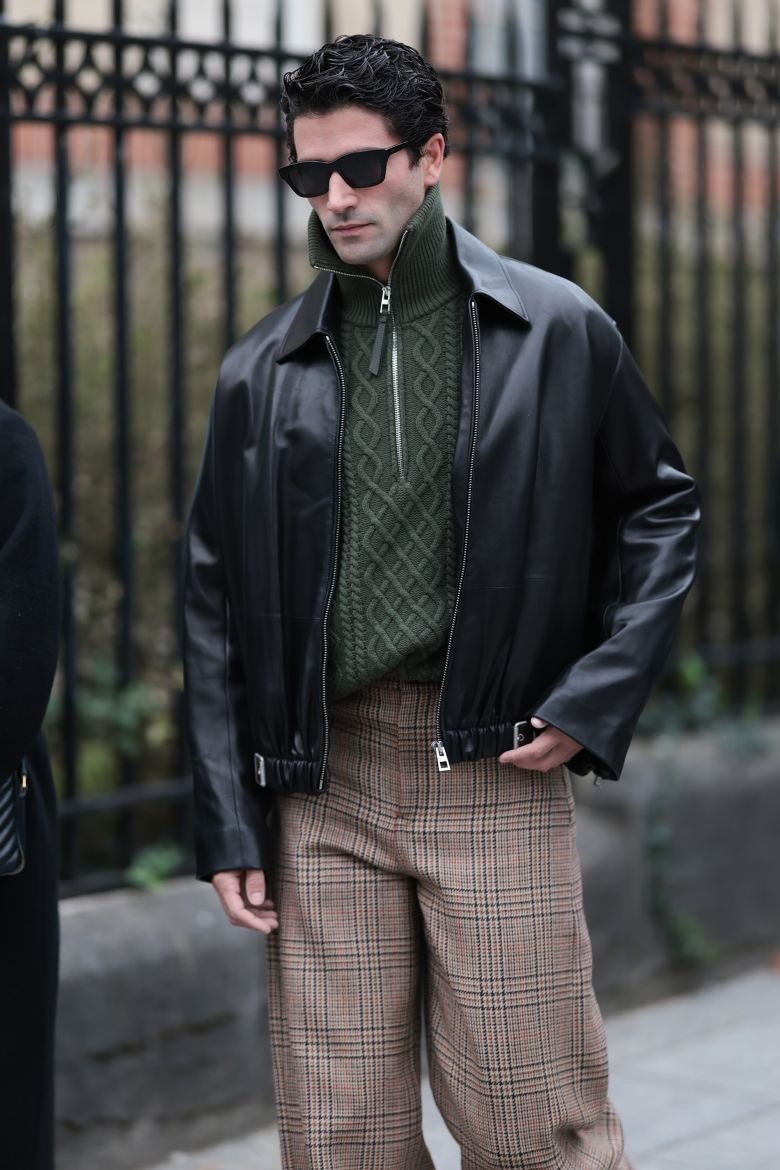
Model-turned-celebrity stylist Marc Forne at Paris Fashion Week, wearing a green cable-knit quarter-zip with a black leather jacket and brown plaid patterned trousers.
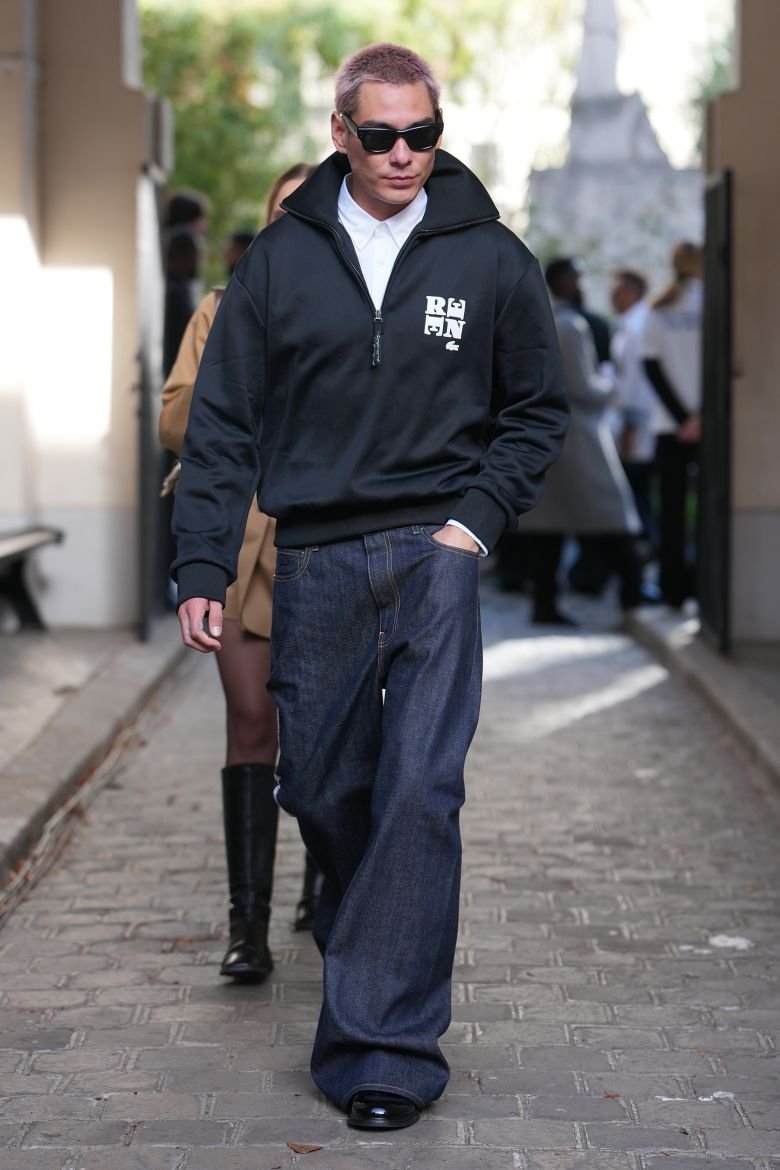
Model and actor Evan Mock styled his half-zip sweater by Lacoste with denim trousers and black leather boots at Paris Fashion Week.
As designers, influencers, and consumers converge on this evolving aesthetic, the quarter zip stands as a symbol of a recalibrated masculine identity—one that balances sophistication with authenticity. This shift emphasizes not just what men wear, but how they navigate a complex cultural landscape.