
Pierre Salvadori Shares His Thoughts on the Joys and Challenges of Debuting at Cannes, His Love for Lubitsch, and the Heart of His Unique Brand of Comedy
Director Pierre Salvadori recently expressed his excitement and apprehension about the premiere of his latest film, The Electric Kiss, describing it as a celebration of his passion for cinema. “This is a film for a party, a celebration… presenting the film in that immense theater is a gift, something that has not happened to me across the 30 years of my career. It’s a joy accompanied by an immense terror and fear, that will only come to an end at 10:30 PM,” he stated.
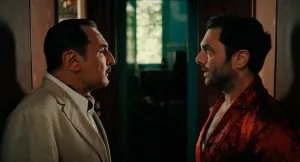
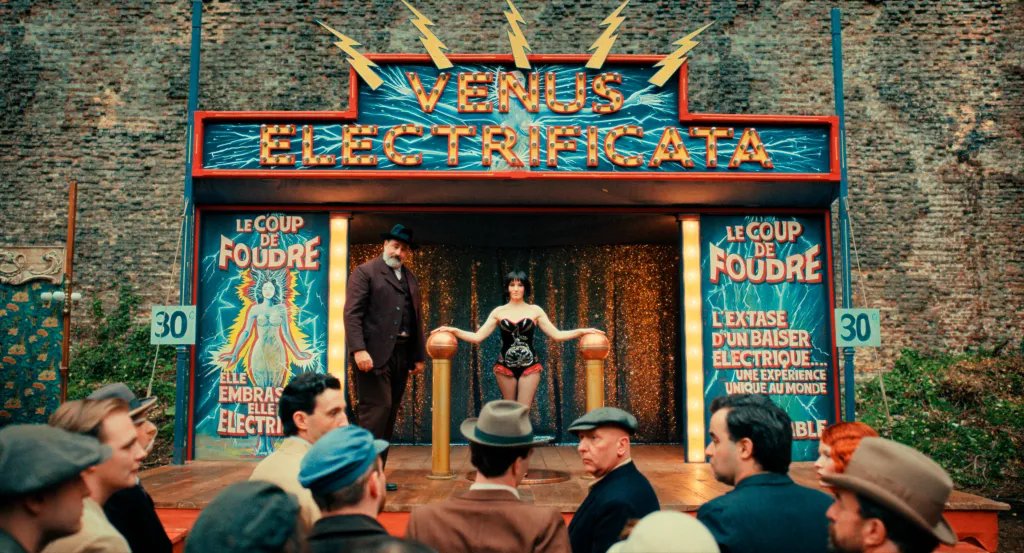
Set in the vibrant backdrop of 1920s Paris, known as Les Années Folles, The Electric Kiss tells a bittersweet story of love and betrayal. The narrative follows Suzanne, a financially struggling young woman portrayed by Demoustier, who works at a traveling fair, offering electrifying kisses to unsuspecting patrons while secretly being charged herself. Inspired by the fair’s clairvoyant, she concocts a scheme to convince grieving artist Antoine (played by Marmaï) that she can connect him with his deceased wife, Irène (Pons). This deception garners the approval of Armand (Lellouche), Antoine’s art dealer and friend, who hopes to see his client regain his creative spark.
The premise of The Electric Kiss stems from a backstory Salvadori received from director Rebecca Zlotowski during filming for her 2019 project, The Summoning. “She told me a young woman, a fake psychic, makes a young man believe she can contact his deceased wife and, in the process, falls in love with him,” Salvadori recalled, noting the story’s lasting impression on him. After working on various projects, including episodes for the French version of In Therapy, Salvadori revisited the idea for his current film.
The setting in 1928 aligns with the period’s fascination with Spiritualism, a movement that intrigued many and inspired a wave of séances and psychic phenomena. Salvadori emphasized that placing the narrative in this era prevents the characters from appearing overly gullible, stating, “There was a great deal of curiosity about everything related to the afterlife and spiritualism at that time. It was considered intelligent and open-minded to be interested in those things.”
As Salvadori reflects on his cinematic journey, he admits his filmography, mainly comprised of comedies and romantic comedies, is often summed up by the notion of “the search for happiness.” He acknowledges the challenging perception that comedic films are merely “cynical” attempts to appeal to broader audiences. “Filmmaking for me is steeped in a love of strong mise-en-scène and a desire to explore human relationships,” he clarified, adding that the story’s happy outcomes are not his primary focus.
Discussing his cinematic influences, Salvadori cites Ernst Lubitsch as pivotal in shaping his understanding of direction. “It was after seeing Heaven Can Wait that I suddenly understood what directing was,” he explained, expressing appreciation for filmmakers with a distinct style. He emphasized a preference for narrative depth over overt messages, stating, “I didn’t say, ‘I’m going to make a film about the relationship between art and money,’ but these themes surface through complex, interesting characters.”
In The Electric Kiss, Salvadori collaborates again with Marmaï, alongside newcomer Demoustier. The director noted his admiration for Anaïs, remarking on her technical skills and expressive ability, which he found reminiscent of working with Catherine Deneuve on In the Courtyard. “I was struck by her quickness, her intelligence, her mischievousness,” Salvadori mentioned.
The casting also symbolizes a long-standing partnership with producer Philippe Martin, highlighting the dynamic of their collaborative 30-year relationship. Salvadori reminisced about their journey, stating, “There has always been this dimension of friendship and work, and sometimes a lot of tension about how to produce a film… there’s this unbreakable friendship, almost a brotherhood.”