
NTSB Chair Raises Concerns About Mid-Air Collisions at Hollywood Burbank Airport
NTSB Chair Raises Concerns Over Airspace Safety at Hollywood Burbank Airport
During a recent hearing focused on a tragic mid-air collision near Washington, D.C., which involved an Army helicopter and an American Airlines plane, National Transportation Safety Board (NTSB) Chair Jennifer Homendy voiced significant concerns regarding the airspace safety at Hollywood Burbank Airport in Southern California.
Addressing attendees, Homendy highlighted alarming feedback from commercial airlines regarding potential mid-air incidents at Burbank. "I keep hearing about other areas in the airspace where they are concerned. Burbank is one where commercial airlines have called me to say the next mid-air is going to be at Burbank, and nobody at FAA is paying attention to us. So, whether it is involving helicopters or not, people are raising red flags, and why aren’t people listening? The FAA has to ensure safety. That is their job,” she stated.
In response to Homendy’s remarks, the Federal Aviation Administration (FAA) issued a statement reinforcing its proactive measures to enhance safety following the D.C. crash. "The FAA acted immediately to improve safety following the tragic midair collision, both at DCA and around the country. In February 2025, we began using innovative AI tools to identify similar hotspots with high volumes of mixed helicopter and airplane traffic and implement appropriate mitigations. One of our primary focus areas was Van Nuys Airport and nearby Hollywood Burbank Airport in the Los Angeles area," the FAA noted, indicating ongoing efforts to adapt its traffic management strategies.
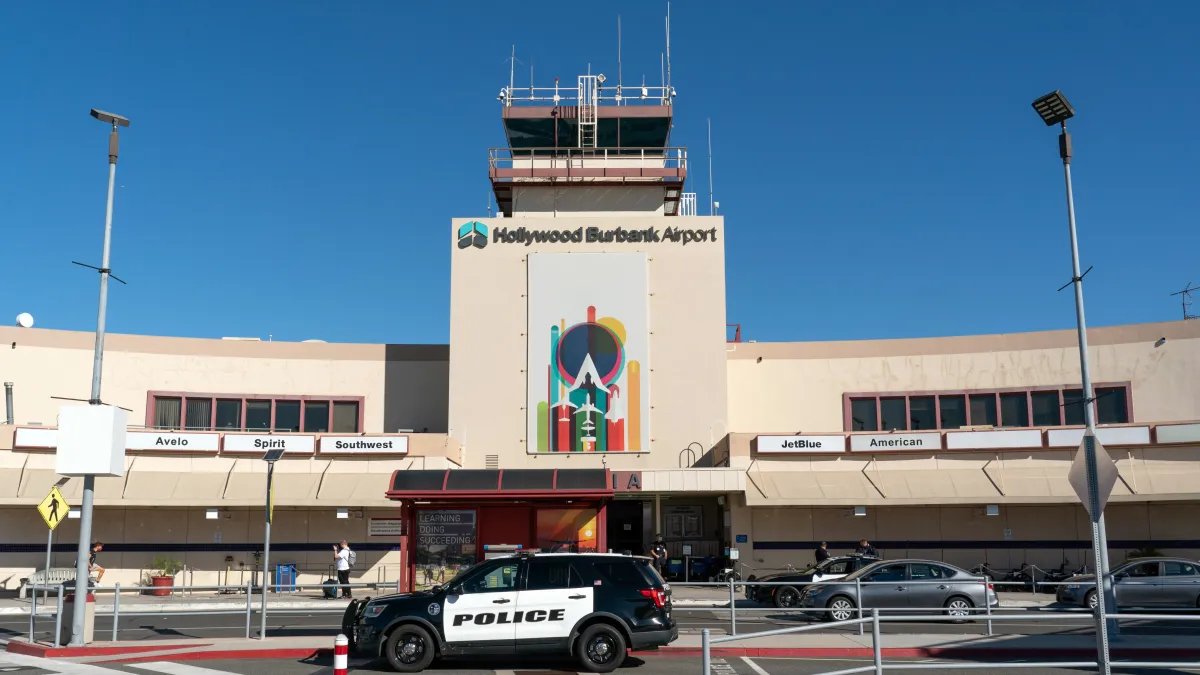
Nestled in the San Fernando Valley, Hollywood Burbank Airport spans 555 acres and is positioned about 12 miles north of downtown Los Angeles. The airport comprises two intersecting runways and facilitates travel for approximately 6.5 million passengers annually, along with handling 74.8 million pounds of cargo.
The ongoing NTSB investigation into the D.C. collision, which claimed 67 lives, has revealed a troubling history concerning helicopter traffic safety. During the hearing, NTSB board members expressed concern over “years of ignored warnings” related to the dangers surrounding helicopter operations near busy airspaces. They pointed to the problematic positioning of helicopter routes, which intersected with the approach path of a secondary runway at Reagan National Airport. This and an overreliance on air traffic controllers to manage helicopter pilots compounded the challenges leading up to the crash.
The incident marked the deadliest aviation disaster in the United States since 2001, with notable victims including 28 members of the figure skating community. While the D.C. tragedy has drawn attention to the critical issues of air safety, NTSB statistics indicate that last year recorded the lowest number of crashes since the onset of the COVID-19 pandemic, totaling more than 1,400 nationwide.