NBC News’ Peter Alexander on Challenging Trump and the Realities of Reporting from the Oval Office
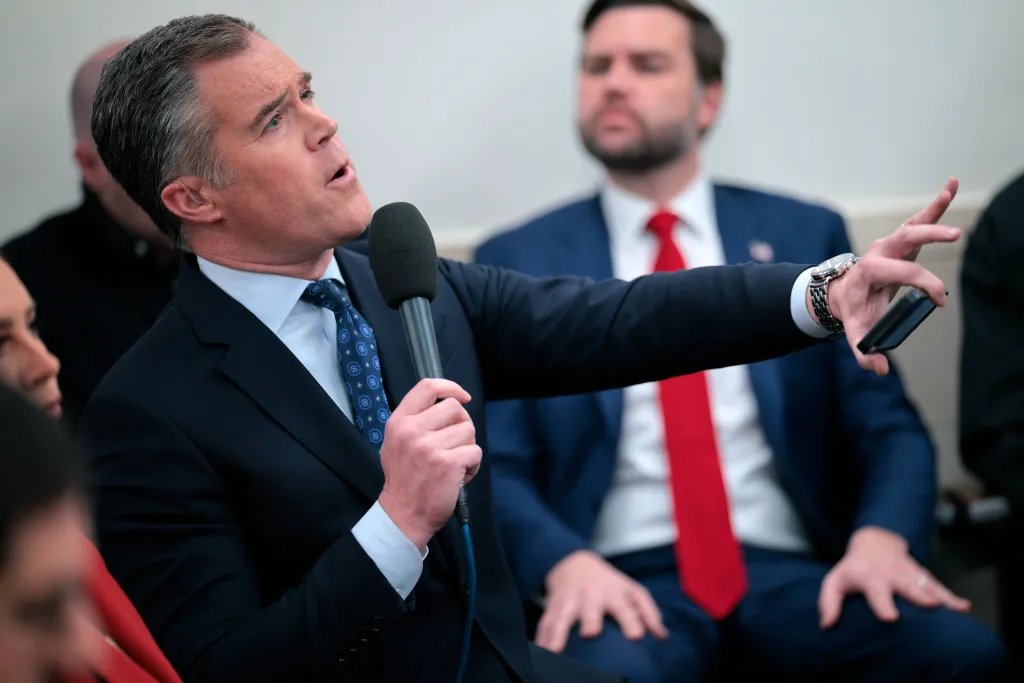
When NBC News’ Peter Alexander confronted former President Donald Trump last spring about Qatar’s $400 million jet intended for Air Force One, the exchange escalated into a personal attack. Trump not only criticized Alexander but also directed his ire at NBC News and Comcast CEO Brian Roberts. “You don’t have what it takes to be a reporter. You’re not smart enough,” Trump remarked during the heated moment.
This incident was highlighted last week as Alexander received the prestigious Walter Cronkite Award for “holding power accountable” and for maintaining his composure amidst such attacks.
Alexander’s run-ins with Trump are not isolated; they reflect a broader trend of hostility directed at reporters within the White House press corps. The former president has, in recent times, also targeted female correspondents.
At the award ceremony, Alexander shared insights with attendees, stating, “Viewers always ask, ‘How do you just sit there and not respond?’ My answer is simple: Those moments reflect on the other person, not on me. My job is the next question.”
Covering the White House during Trump’s current term, often referred to as Trump 2.0, presents unique challenges. Notably, the administration has exerted greater control over which reporters attend press events, resulting in a pool that now includes members from pro-Trump media outlets, whose questions frequently align with the president’s messaging.
In an interview, Alexander elaborated on his experiences with Trump, noting, “I’ve had those experiences being shouted down or verbally smacked around.” He emphasized that his priority remains focused on the next question, ensuring that the dialogue remains relevant to issues affecting Americans.
Alexander discussed the dynamics of the press pool, where reporters have limited opportunities to pose questions. He pointed out that this administration has introduced more pro-Trump voices into the mix, potentially sidelining critical inquiries during pivotal moments.
Reflecting on the recent shift in the press pool, Alexander expressed concern about a lack of challenging questions being posed. He remarked, “Sometimes that puts us in a position where pressing issues don’t get asked.”
In his interactions with Trump, Alexander acknowledged the unique atmosphere where sometimes, the former president engages with him in a more congenial manner, yet admitted that sharp exchanges are commonplace. He recounted an incident where Trump recognized him during a briefing, shifting the tone from confrontational to more casual.
Alexander maintains a working relationship with White House staff members, who are responsive to his inquiries. He stated that while they are not friends, mutual respect exists for the role each party plays in serving the public.
When discussing the differences between Trump’s two terms, Alexander noted that the current administration appears more cohesive, with fewer dissenting voices. This contrasts with the previous term, which was marked by internal conflict and a wider range of perspectives.
He also addressed criticisms concerning the press corps’ coverage of Trump’s health compared to Biden’s, asserting that he has faced pushback from both administrations for asking tough questions. However, he emphasized that his responsibility is to the audience and to seek clarity on critical matters regarding national leadership.
Alexander regards fact-checking as an essential part of his role: “I view myself not as an advocate for Republicans or for Democrats, but as an advocate for the facts.” This commitment shapes his approach during often contentious exchanges with Trump.
As the political landscape shifts heading into the midterms, Alexander notes the importance of addressing voter concerns, particularly regarding cost of living issues—a topic he has encountered consistently from constituents.
In summary, Alexander’s approach combines a steadfast commitment to journalistic integrity with an understanding of the complex dynamics present in the current White House environment. The next 10 months leading up to the midterms promise to be pivotal, with significant implications for both coverage and public perception.

![Danielle Deadwyler and Phil Dunster Share Insights on the Return of [Spoiler] in Episode 6 of 'Rooster'](https://musichollywoodfashion.com/wp-content/uploads/2026/04/1776048619_Danielle-Deadwyler-and-Phil-Dunster-Share-Insights-on-the-Return-768x432.jpg)