

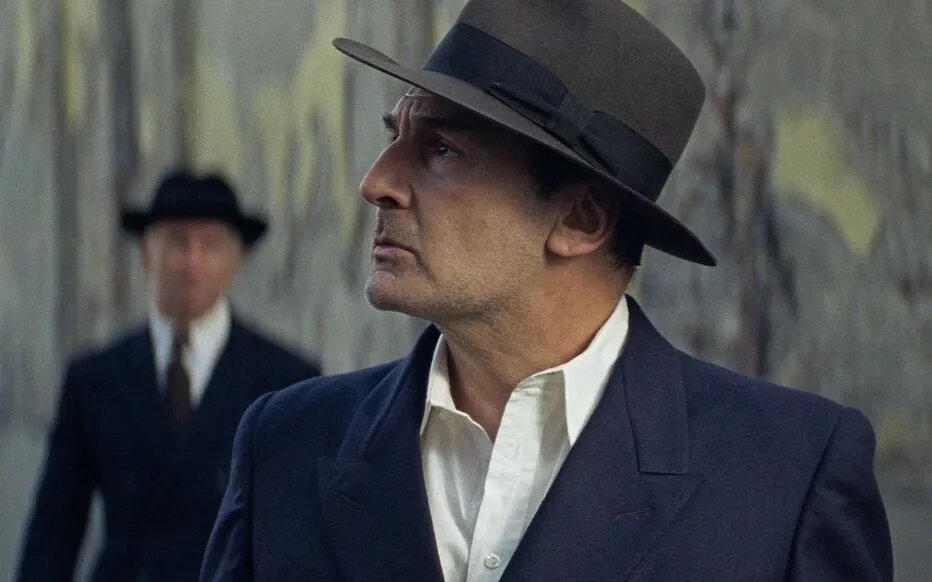
Moulin Review: Gilles Lellouche’s Remarkable Performance in László Nemes’ Gripping Wartime Story of Courage and Resistance at Cannes
László Nemes Returns to World War II with ‘Moulin’
Acclaimed filmmaker László Nemes revisits the historical themes that garnered him an Academy Award for his debut feature, Son of Saul (2015), with his latest film, Moulin. Set shortly before the events of Son of Saul, Moulin chronicles the true story of Jean Moulin, a leading figure in the French Resistance who masqueraded as a civil servant. While its opening credits might evoke grand narratives akin to Jean-Pierre Melville’s Army of Shadows (1969) or Vincente Minnelli’s The Four Horsemen of the Apocalypse (1962), the film offers a more intimate look at the moments leading to Moulin’s demise at the hands of Klaus Barbie and his Gestapo operatives in 1943.
Moulin distinguishes itself from Son of Saul through its cinematic style, transitioning from the tight, claustrophobic approach of its predecessor to a broader, Hollywood-inspired aesthetic. Collaborating once again with cinematographer Mátyás Erdély, the film employs muted colors and diffuse lighting to cultivate a starkly lonely atmosphere. Unlike Son of Saul, where the framing often isolated its characters, Moulin incorporates more bystanders, illustrating how ordinary individuals merely observed the unfolding tragedy without intervening.
From the outset, the film immerses viewers in an atmosphere of paranoia. Gilles Lellouche, portraying Moulin, parachutes into Lyon under the cover of darkness, expressing his unease through simple yet impactful dialogue. Having just returned from London, where President Charles de Gaulle is hiding, Moulin plans to unite various factions of the Resistance. His importance is underscored by the attention he draws from Nazi leadership, though the extent of his knowledge regarding the impending Allied invasion remains ambiguous.
While Son of Saul focused on the horrors of war, Moulin examines the prevailing climate of conflict, beginning with a tense atmosphere fraught with coded language and secrecy. Moulin adopts the alias Jacques Martel, posing as an interior decorator for the Comtesse de Forez, who may or may not be aware of his concealment. This layered deception is emblematic of the film’s exploration of identity amid chaos.
The plot thickens when Moulin visits Dr. Dugoujon, whose practice serves as a façade for Resistance activities. A sudden turn of events places Moulin in custody, highlighting the precariousness of his situation. Lars Eidinger portrays Barbie, the SS officer intent on unmasking Moulin, employing a chilling mix of mental and physical coercion.
Despite the looming threat of danger, much of the film remains dedicated to the psychological confrontation between the two men. Eidinger’s portrayal of Barbie—initially exhibiting a campy charm reminiscent of Christoph Waltz’s Hans Landa—quickly escalates in intensity and menace. Lellouche’s nuanced performance as Moulin offers an intriguing counterpoint, revealing depth and complexity in a character entwined in constant peril.
Title: Moulin
Festival: Cannes (Competition)
Director: László Nemes
Screenwriter: Olivier Demangel
Cast: Gilles Lellouche, Lars Eidinger, Marcin Czarnak, Louise Bourgoin, Felix Léfebvre
Sales agent: 193 Legendary
Running time: 2 hrs 10 mins