
MDAG’s Artistic Director Speaks Out on Wim Wenders: Why Politics Matters in Film
Artistic Director of Millennium Docs Against Gravity Responds to Wim Wenders’ Remarks on Politics in Filmmaking
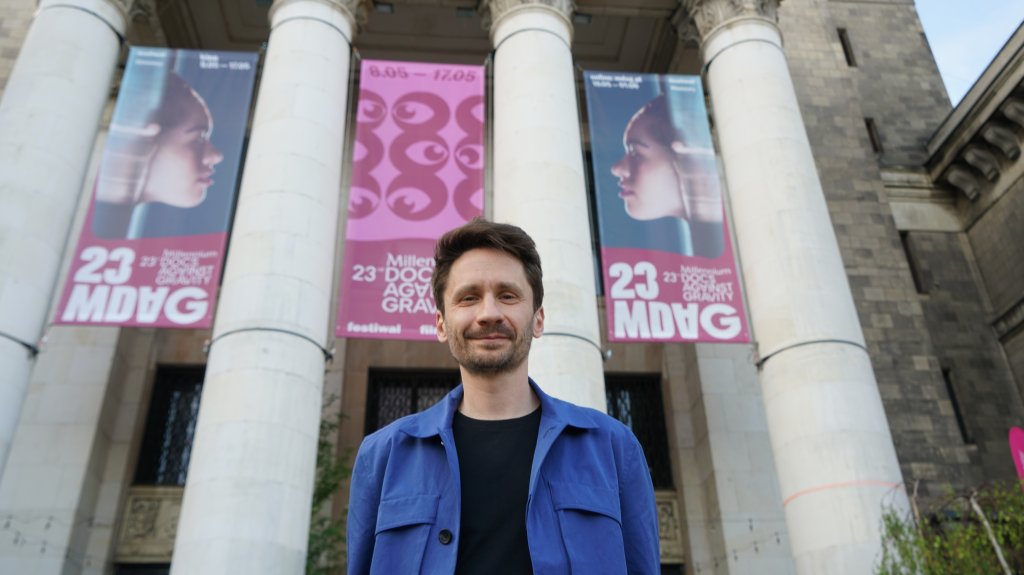
The artistic director of Millennium Docs Against Gravity (MDAG) in Poland has publicly challenged German filmmaker Wim Wenders’ assertion that filmmakers should "stay out of politics." Karol Piekarczyk delivered his response during the opening night of the international documentary festival in Warsaw, emphasizing the intertwined nature of art and human rights.
“I’m not going to take issue with the person that said it, but with the sentiment,” Piekarczyk remarked, referencing comments Wenders made while serving as president of the Berlinale jury in February. “I don’t know since when the basic human rights have become political. We didn’t make them political.”
Piekarczyk elaborated on the complexities faced by documentary filmmakers, stating, “I think there is a deep misunderstanding about how filmmakers work. It’s not like you have a list of topics and just choose… Alisa [Kovalenko, director of Traces] didn’t make her film because she had this list; she made it because it’s a personal story, but it’s a story that people have to hear.” He underscored that her film addresses the troubling reality of sexual violence being wielded as a weapon.
Wenders’ comments, made during a jury press conference at the Berlin Film Festival, sparked widespread debate among filmmakers and festival-goers alike. Some winners at the Berlinale used their acceptance speeches to advocate for Palestinian rights, a move met with disapproval from certain German political figures. This backlash prompted the Federal Government Commissioner for Culture and the Media to convene an emergency meeting regarding the festival’s future and leadership.
Piekarczyk remarked on the backlash that documentary filmmakers often encounter when tackling political themes. “It happened at different festivals where filmmakers were screening films on difficult topics, on genocide and Palestine. And then suddenly some festivals were distancing themselves from these filmmakers,” he explained. “For me, this is absolutely insane.”
In contrast, he highlighted MDAG’s commitment to supporting filmmakers, stating, “If we choose films, we will always stand behind the filmmakers. This is a part of our identity and what our audiences expect from us.” He noted the importance of fostering a sense of community, especially in turbulent times.
Piekarczyk addressed the potential challenges of programming in politically charged environments, reflecting on the support MDAG receives from its primary sponsor, Millennium Bank. “We’ve been extremely lucky… They have never said anything about our programming, and they are very in sync with us,” he stated.
Despite Poland’s previous right-wing government and periodic funding challenges, MDAG has continued to gain traction. “There became a point where institutions like the Polish Film Institute… couldn’t ignore us anymore,” Piekarczyk said. “They didn’t give us a lot of money, but they started giving us money because they just looked a bit stupid when they were traveling the world and people were saying, ‘Oh, you have such an amazing festival.’”
This year’s MDAG is taking place concurrently in seven Polish cities, including Warsaw and Wrocław, with growing audience interest. “So many people are coming; last year we had 180,000 admissions,” Piekarczyk remarked. “The audience is an amazing sponsor and support.”
The festival runs in-person until May 18, with an online component scheduled from May 19 to June 1. Awards for the MDAG Industry segment will be presented in a ceremony on Sunday night.