

Léa Seydoux’s Standout Performance in ‘Gentle Monster’: A Family Drama from Cannes Film Festival
In 2022, Austrian director Marie Kreutzer debuted Corsage, a feminist reinterpretation of the life of 19th-century Empress Elizabeth, popularly known as Sissi. The film featured Vicki Krieps as the complex, anorexic monarch, and Florian Teichtmeister as her unfaithful husband, Franz Joseph I. However, the following year brought controversy when Teichtmeister was arrested for possession of child pornography, with authorities uncovering 76,000 files across 22 devices. His subsequent suspended sentence sparked outrage among many Austrians, overshadowing Kreutzer’s film, which was subsequently withdrawn from cinemas.
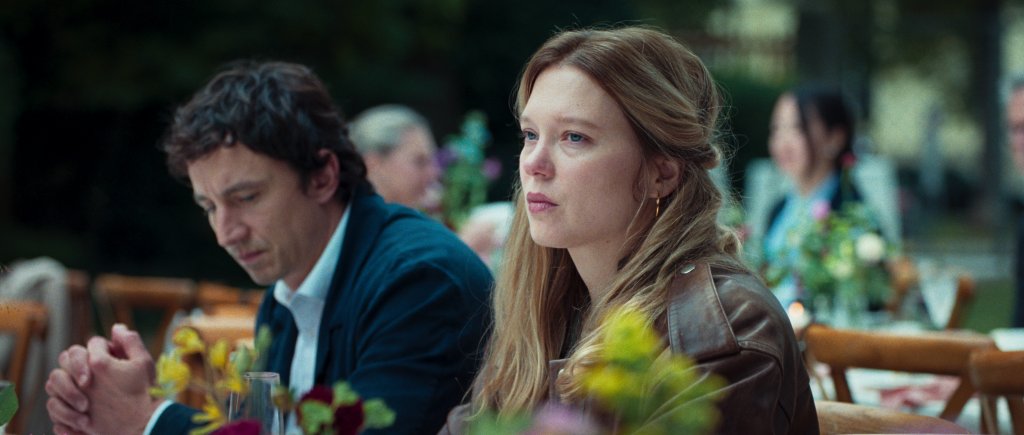
In her new film, Gentle Monster, Kreutzer appears to grapple with the fallout from the Teichtmeister scandal, weaving a narrative inspired by similar accusations into a fictional story about a family in distress. The film stars Léa Seydoux as Lucy, an experimental pianist whose world unravels when she learns that her husband, Philip (played by Laurence Rupp), lives a secret life as a pedophile pornographer.
Lucy, Philip, and their young son move to a serene farmhouse in Bavaria, seeking a quieter lifestyle that Lucy hopes will alleviate Philip’s anxiety. Her mother, portrayed by Catherine Deneuve, warns her about the challenges faced by female artists who juggle motherhood and rural living. Lucy’s seemingly supportive demeanor masks a more profound turmoil, unknown to her, until the Munich police arrive at their doorstep. Just a day prior, the couple had discussed disconnecting from their devices to focus on family time. In an instant, Philip’s technology is seized, revealing an extensive collection of child pornography, including unsettling imagery featuring their son.
The film’s heavy themes are palpable, yet Kreutzer’s storytelling intertwines multiple narratives, showcasing a detective — played by Jella Haase — who is resolute in her investigation. However, the intertwining of her domestic challenges with Lucy’s story feels forced and convoluted. Kühn’s father, a philologist suffering from dementia, presents his own crisis that runs parallel to Lucy’s, but the narrative struggles to articulate the connections between their experiences meaningfully.
Kreutzer’s decision to juxtapose these two households invites questions about male behavior, although it risks oversimplifying complex issues. The narrative includes a flashback sequence to happier times that appears to offer insight but instead serves as a series of false conclusions leading to an anticlimactic ending. Lucy’s emotional unraveling feels genuine, marked by gradual disillusionment rather than a sudden catastrophe.
While Kreutzer’s cinematography emphasizes the intensity of Seydoux’s performance, the film’s narrative complexity detracts from its impact. The mixture of French, German, and English languages used by the characters enhances the themes of miscommunication, though it also risks becoming a heavy-handed metaphor for disconnection.
Title: Gentle Monster
Festival: Cannes (Competition)
Director-Screenwriter: Marie Kreutzer
Cast: Léa Seydoux, Laurence Rupp, Jella Haase, Catherine Deneuve
Sales Agent: MK2 Films
Running Time: 1 hr 54 mins