
Kerry Condon Talks About Choosing the Right Roles in ‘Train Dreams’ and ‘F1: The Movie’: Timing Matters, Doesn’t It?
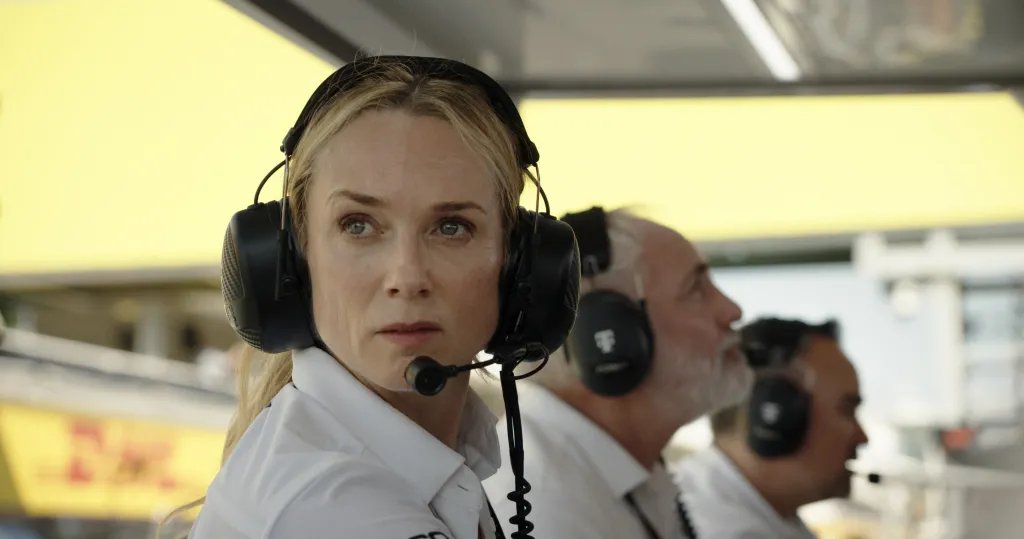
This year marks a significant moment for Kerry Condon, following her Oscar nomination for her role in *The Banshees of Inisherin*. Condon is now making waves with performances in two films: *Train Dreams* and *F1: The Movie*. In *Train Dreams*, directed by Clint Bentley, she portrays Claire Thompson, a friend of reclusive railroad worker Robert Grainier, played by Joel Edgerton. Meanwhile, in Joseph Kosinski’s *F1: The Movie*, Condon plays Kate McKenna, a racing car engineer navigating her relationship with Brad Pitt’s character, Sonny Hayes. Condon sat down to discuss her connection to nature in *Train Dreams* and her preparation for *F1* alongside a real female Formula One engineer.
DEADLINE: What sold you on Clint Bentley and Greg Kwedar’s script for *Train Dreams*?
KERRY CONDON: It was the nature aspect of the script. Nature plays such a significant role; it feels like a character in the film. I’ve always loved stories where nature is prominent. I wanted that representation, and the beautiful lines from Bill Macy’s character about cutting down trees resonated deeply with me. It made me think, “This is a beautiful movie,” and I knew I had to be part of it.
DEADLINE: You have a significant speech in the fire tower with Joel where you talk about the power of nature and help him manage his pain.
CONDON: The dialogue was beautifully connected. I’ve witnessed grief portrayed in other films, but this felt particularly profound due to its connection to nature.
DEADLINE: Owning a farm, how did being on set in that rustic Washington state environment help you embody Claire?
CONDON: It was remarkable. The script depicts Claire as an old friend to Robert, which created an immediate ease between the two characters. My history with Joel Edgerton stretches back to my first role at 19 in *Ned Kelly* in Australia. Our first scene together involved horses, and here we were again in this film, on a horse and cart. It felt like full circle. The Pacific Northwest, where I have my farm, made me feel very connected to this project.
DEADLINE: There’s an interesting story about Joel wanting to buy the rights years ago, and then he received a call asking if he wanted to play this character in an obscure novella.
CONDON: Timing is everything. He acknowledged that if he had done it years ago, it might not have carried the same weight for him, especially now that he has a family.
DEADLINE: How was it working with Clint Bentley as a director? Can you describe the type of set he creates?
CONDON: I felt a connection to his perspective, which motivated me to join the project. He directed a film about a jockey prior, which particularly intrigued me since I’ve long been captivated by racing and riding horses. In our initial meeting over Zoom, we bonded over our shared love for racehorses. Clint is driven by artistic vision rather than simply seeking recognition. He treats everyone on set with respect, hiring excellent department heads, which is crucial for a film’s success. He expressed genuine gratitude that I took time out of *F1* for this project, which I appreciated. He knew when to step back during filming, especially since we worked with natural light. It allowed for a realistic and immersive experience.
DEADLINE: That scene on the balcony feels incredibly real because it’s lit by natural light.
CONDON: Absolutely. The sunlight setting on our faces contributed significantly, enhancing the film’s authentic vibe.
DEADLINE: Regarding *F1*, you met with real engineers. How did that experience shape your performance?
CONDON: The team arranged for us to attend a Formula One race in Barcelona to immerse ourselves in the environment. I was introduced to Bernie Collins, a real-life strategist whose background mirrored mine, having also attended an all-girls Catholic school. This connection made it easier for me to envision the character. Although I lacked a strong foundation in physics, Bernie tailored complex concepts into digestible formats for me while we broke down scenes together. Balancing technical accuracy with audience accessibility was crucial; I aimed to reach broader audiences beyond just Formula One fans.
DEADLINE: Shooting in a live racetrack environment must have been incredible.
CONDON: It was exhilarating. I was prepared for the nature of live shooting with only a few takes allowed. The pressure motivated me, and our assistant director ensured we were ready to adapt as needed. While I was aware of my role as a guest within the Formula One setting, I kept to myself when not filming, focusing on delivering my best performance.
DEADLINE: Did you get a chance to drive any of the cars?
CONDON: Most people ask me that, and it’s funny—driving those cars isn’t straightforward, even for seasoned actors like Brad, who ultimately did get a chance. Formula One cars require a unique understanding and skills that are not accessible without rigorous training.
DEADLINE: And any minor missteps could result in significant costs.
CONDON: Right, there’s pressure even in the narrative—the cost of an accident can be staggering, which made me engage deeply with my character’s perspective.
DEADLINE: You seemed truly immersed.
CONDON: I certainly was.

DEADLINE: The chemistry between you and Brad is dynamic; how did you develop that rapport? Was there an extensive rehearsal process?
CONDON: We rehearsed the scenes beforehand, but due to scheduling complexities, they were shot out of order. Ironically, I began filming with him for the last scene of the movie. Even when I returned from another project, I discovered I was filming the balcony scene, which felt a bit surreal. The disjointed timeline required adjustment, especially as I navigated the flirty nature of our characters.
DEADLINE: The scene in the bar where you reconcile the guys stands out.
CONDON: That scene was challenging to shoot, taking two days in a small room filled with smoke for visual effect. Maintaining continuity with props was quite tricky.
DEADLINE: Your roles in these films are markedly different. What future projects do you aspire to take on?
CONDON: It’s quite an unusual feeling to be in a position where I’m able to be selective about projects. After years of auditioning and working tirelessly to make ends meet, this newfound opportunity feels rewarding. It’s invigorating not to rush into every available role.