
Is Fashion Only for the Rich These Days?
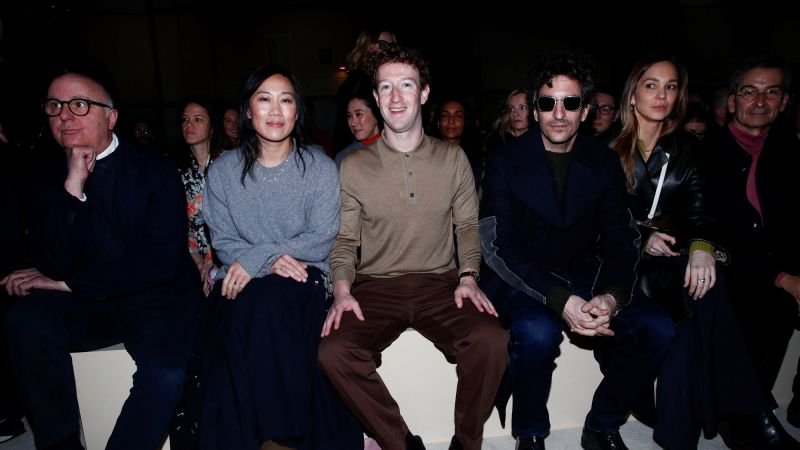
Milan, Italy — As fashion week unfolds, an air of reflection permeates the atmosphere, prompting questions about the show’s audiences and their significance. This was particularly evident Thursday at the Prada show, where Priscilla Chan and her husband, Meta founder Mark Zuckerberg, made headlines by donning an €11,500 ($13,000) shearling coat. One can’t help but wonder: who is this extravagance meant for?
Fashion has never been more ubiquitous while simultaneously becoming less accessible. It echoes the reach of pop music, livestreaming runway shows and turning celebrity fashion into a competitive arena. Platforms like TikTok and Instagram have transformed the industry, allowing multiple generations of fashion enthusiasts—including Eva Chen, vice president of fashion at Instagram—to dissect and discuss every brand move. For instance, the controversial Gucci show recently ignited debate online.
Parallel to this accessibility is a troubling rise in prices. A Chanel bag that cost $5,800 in 2019 is set to hit $10,800 by 2024. The Spring 2025 Versace collection, offering bold alternatives to the quiet luxury craze, features dresses that run into the tens of thousands of dollars. The high-fashion items garnering attention are increasingly out of reach for the very consumers commenting on them, with Gen Z opting for subtly branded goods rather than overt luxury products.
This season’s shows are marked by a sense of unease regarding their purpose. As runway designs flood social media, their implications rest lightly on the shoulders of audiences largely disconnected from the brands’ commercial success.
At Prada’s show, the juxtaposition of Zuckerberg and Chan raised eyebrows, especially amidst rumors of a potential collaboration on smart glasses. The collection itself presented a classic iteration of Prada’s feminine aesthetic, showcasing only 15 models who rotated through 60 unique looks. Each ensemble highlighted the rapid pace of modern womanhood, reflecting a world where femininity often feels suspended between meticulous appearances and the relentless march of time.
However, the presence of tech billionaires at a luxury fashion event draws criticism. With Zuckerberg’s net worth skyrocketing from $72 billion to $177 billion, and as couture champions like Jeff Bezos and Lauren Sanchez recently revealed their own fashion interests, the luxury arena increasingly appears as a new playground for the wealthy elite.
Miuccia Prada is aware of this dynamic and noted that the runway is not a platform for overt political statements. “We are designing for rich people,” she remarked, acknowledging the industry’s focus on high-cost items and the paradoxes therein.
This dichotomy between fashion’s lofty ideals and the often oblivious clientele contributes to its complex allure, presenting a contradiction rather than a problem to solve.
Glenn Martens, who leads Diesel and Maison Margiela, articulated how social media’s democratization of fashion creates both opportunity and challenge. While more people can critique and engage with fashion, many lack the depth of knowledge needed to appreciate its nuances.
Yet for Martens, this democratization is embraced. “This is really a brand for the people,” he remarked, underscoring his intention to draw in a wider audience. Conversely, some designers, like Fendi’s Maria Grazia Chiuri, have chosen to sidestep social media’s intricacies. Her recent collection, characterized by carefully curated designs, reinforced the desirability of Fendi’s handbags while addressing customer needs directly.
Each of these narratives plays a role in the ongoing dialogue at Milan Fashion Week, where the intersection of high fashion, wealth, and public engagement continues to unfold.