
Hungary Moves On from Viktor Orban: Producers Aim for a Fresh Perspective Free from Old Propaganda
Hungary’s Media Future: A New Era Summoned by Election of Péter Magyar
Hungary’s media landscape and its appeal to Hollywood producers could be on the brink of significant transformation. This change follows the election of Péter Magyar’s Tisza party, which has concluded Viktor Orbán’s 16-year leadership with the far-right Fidesz party. While optimism for reforms is palpable, the scale of necessary changes poses a substantial challenge.
During Fidesz’s tenure from 2010 to 2026, independent producers, particularly those critical of the government, faced a challenging environment. Hungary’s public broadcasting system drew frequent condemnation from the European Union and other watchdogs for failing to protect journalists and serving as a propaganda tool for the ruling party. The government favored projects that glorified Hungary’s military past and aligned with Fidesz’s Christian nationalist agenda, while nearly 80% of local media remained under Orbán’s control.
Magyar’s victory has ignited a wave of enthusiasm among many, including independent producers. “It’s a massive celebration here,” one producer shared, highlighting the emotional response to the recent election results. Speaking on state-run radio, Magyar announced plans to suspend state media broadcasts, accusing news anchors of subservience to Orbán and neglecting the voices of the opposition.
“Every Hungarian deserves a public service media that broadcasts the truth,” Magyar stated, as reported by Reuters. He acknowledged the need for time to develop a new media law and authority to ensure that state media fulfill their intended roles.
The electoral shift also holds implications beyond Hungary. Magyar’s decisive win presents a setback for former President Donald Trump’s MAGA movement, which some analysts claim used Orbán’s Christian nationalism as a model. Notably, Vice President J.D. Vance traveled to Budapest last week to support Orbán, but his presence is considered to have diminished the incumbent’s electoral prospects.
In his victory speech, Magyar emphasized the need for change, stating, “Hungarians said yes to Europe today. They said yes to a free Hungary.” The center-right Tisza party secured 137 out of 199 seats in the parliament, allowing Magyar a strong mandate for reform.
As Fidesz prepares to officially relinquish power next month, discussions regarding structural reforms are already underway. Initial changes could prominently involve the media sector, with sources within state-supported organizations cautiously anticipating the developments. “With this extremely high turnout for the election, almost 80% and a two-thirds win for the opposition party, it will mean a lot of changes for the country—the leader will push for this,” remarked a source involved in Hungary’s content financing system.
Producers are optimistic that Tisza’s triumph will reshape local productions. “Orbán and his cronies put up propaganda—revisionist stuff with incredibly expensive budgets,” said a senior Hungarian TV producer, who chose to remain anonymous. “There will be a new directive to commission films and series much more rooted in our present issues, problems, and conflicts.”
Magyar’s supermajority will empower him to repeal much of the restrictive legislation enacted during Orbán’s rule. He has pledged to dismantle cronyism and eliminate government control over state services and media, asserting that “it is over.” This includes commitment to reform bodies like the National Media and Infocommunications Authority, which have been criticized for their lack of independence.
One industry insider noted that “the pubcaster leadership will change very quickly.” Still, experts remain cautious, as historical comparisons suggest reform does not guarantee a significant cultural shift. Poland’s recent pro-European government faced challenges, with its public broadcaster struggling against a resurgent right-wing media landscape.
Anticipated changes within Hungarian funding bodies and screen organizations are already underway, with the announcement that Csaba Káel, the government film commissioner, will depart from his role at the National Film Institute (NFI). Critics had recently voiced their concerns, urging for leadership changes that would allow fresh management to reshape the institute.
Despite Hungary experiencing substantial growth in production since the NFI’s inception in 2020—ramping up revenue to over 300 billion forints ($940 million) annually—Káel faced scrutiny for allegedly favoring projects that aligned with Fidesz’s ideologies.
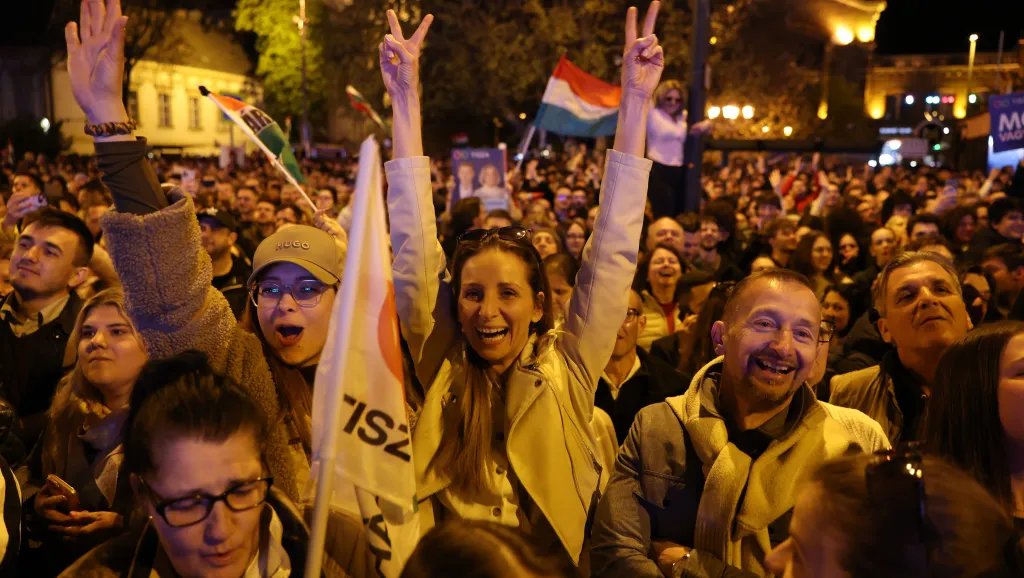
As celebratory crowds filled the streets of Hungary, the atmosphere echoed hope for a new beginning. Magyar’s campaign strategy, targeting youth and disenchanted voters in rural areas, proved effective. A senior TV producer acknowledged the celebratory spirit, noting, “Everyone is hungover; it’s a huge celebration.”
The production sector now eagerly awaits the potential changes under Magyar’s leadership. Although fiscally conservative, he is viewed as supportive of Hungary’s cultural sector and independent media. “It’s very hard to predict what will happen next, but Magyar has surrounded himself with very liberal cultural people,” remarked Gabor Krigler, who now runs Joyrider Television.
Plans to revitalize Hungary’s lucrative 30% tax rebate could attract more international productions. Established in 2004, the rebate has drawn numerous Hollywood projects, but recent decision-making bottlenecks alongside competitive European incentives have raised concerns about Hungary’s role as a cultural manufacturing hub.
Tisza’s commitment to maintaining and bolstering the production workforce poses questions regarding the prioritization of cultural reforms amidst pressing economic circumstances. As Emese Acs of UFA Produkció pointed out, Hungary’s production capacity is substantial, but reliant on overall economic health to thrive.
Magyar’s administration will face the significant task of balancing cultural advancement with economic recovery. For many within Hungary’s production community, however, the anticipation of change is invigorating: “This is a game-changer for me,” Krigler declared. “We can now return, come back and produce here again. It’s very energizing.”