
Governor Newsom Shares Updated California Budget Plan
Newsom Unveils $350 Billion Spending Plan for Last Year in Office
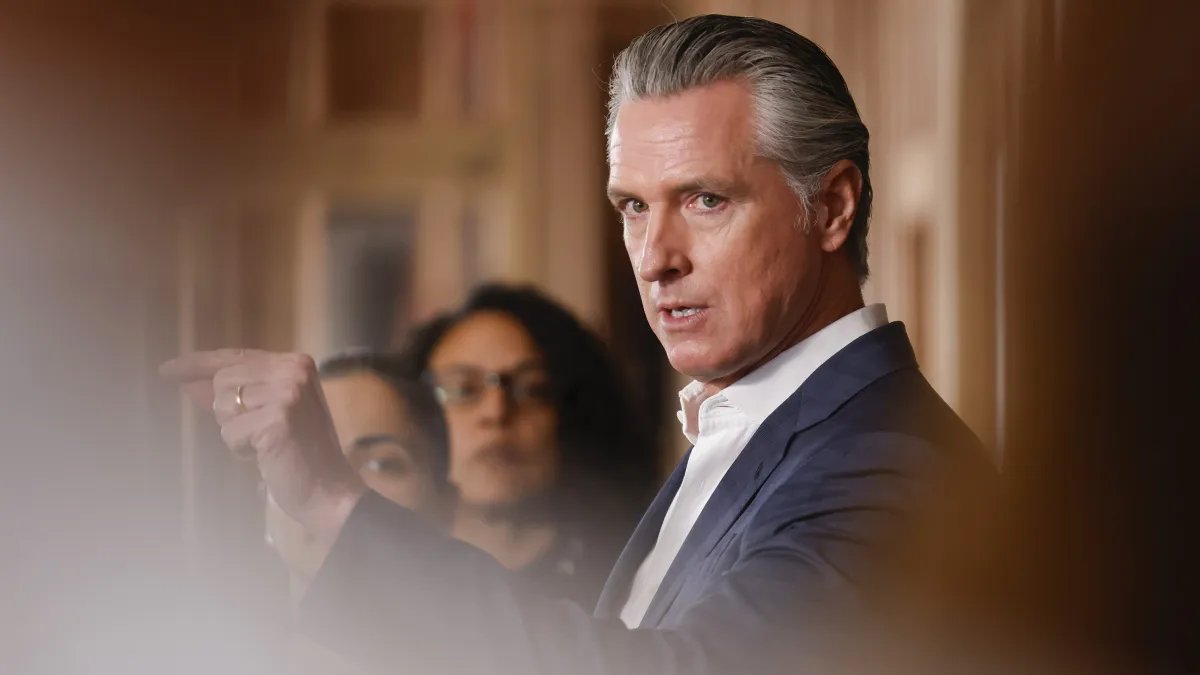
California Governor Gavin Newsom presented a revised budget proposal on Thursday, outlining a $350 billion spending plan for his final year in office. This budget, which avoids a deficit, is notable for its minimal new expenditures while also steering clear of significant cuts.
As Newsom prepares for a potential presidential campaign in 2028, he seeks to preserve key programs that have characterized his leadership of the nation’s most populous state and one of the world’s leading economies. The governor promotes this budget as a fiscally responsible move, emphasizing the safeguarding of California’s progressive initiatives while also bolstering the state’s rainy day funds. This stance aims to counter critiques regarding the state’s spending habits. Legislative budget analysts report that California’s expenditure has increased by over $100 billion since 2020.
“We’re cutting deficits. But we’re not cutting corners,” Newsom stated during the announcement.
Set to leave office in January, Newsom cannot seek a third term. His office disclosed that revenues are currently $16.5 billion higher than earlier projections, primarily driven by a flourishing stock market and advancements in the artificial intelligence sector. This surplus will help California avert a projected $2.9 billion deficit and eliminate the budget shortfall for the next year, while halving the anticipated shortfall in the following year.
This shift is a welcome development for a state that experienced substantial budget deficits in preceding years, which led to painful reductions in services, including a rollback on commitments to offer free health care to low-income immigrants without legal status. Nonpartisan budget analysts have cautioned that California may face budget gaps exceeding $20 billion annually in the upcoming years.
State officials are bracing for potential federal funding cuts in healthcare, alongside rising costs in various sectors like energy and fuel, largely due to geopolitical tensions, including the war in Iran. They have emphasized that California cannot fully compensate for the loss of federal funds.
In his budget presentation, Newsom criticized former President Donald Trump, stating, "Trump doesn’t particularly give a damn about the financial situation of the average American."
The May budget proposal initiates the last phase of negotiations between Newsom and legislative Democrats, who must finalize a spending plan by the end of June. This year, state lawmakers have suggested several tax increase proposals aimed at addressing budgetary issues, yet Newsom has expressed opposition, arguing that such measures could drive businesses away. Instead, he has proposed reducing fees for new small businesses and curtailing certain tax credits beginning in 2027. He has also resisted a ballot initiative that aims to impose a one-time tax on billionaires, which is likely to go before voters in November.
California’s progressive tax structure heavily relies on the wealthiest individuals, with about half of the state’s revenue sourced from just 1% of the population. This reliance results in fluctuating revenues, soaring during economic booms and plummeting during downturns.
The state may see an additional revenue boost from anticipated initial public offerings by several leading AI companies, expected to be among the largest IPOs in history. However, legislative budget experts have previously warned of a potential AI bubble that could adversely affect the state’s finances.
Newsom’s budget proposal also allocates $300 million to offset some losses from government-sponsored health subsidies, a $5 billion education grant for teacher training, and $100 million dedicated to assisting homeowners in the Los Angeles area recover from last year’s devastating wildfires.