
Fire Risks Increase in Pacific Palisades as Brush Accumulates and Reservoir Stays Offline
Concerns Rise Over Wildfire Preparedness in Pacific Palisades
LOS ANGELES COUNTY, Calif. – Residents in Pacific Palisades are increasingly worried about the community’s readiness for wildfires as the dry brush accumulates in burn scar areas and a critical water reservoir remains offline for repairs.
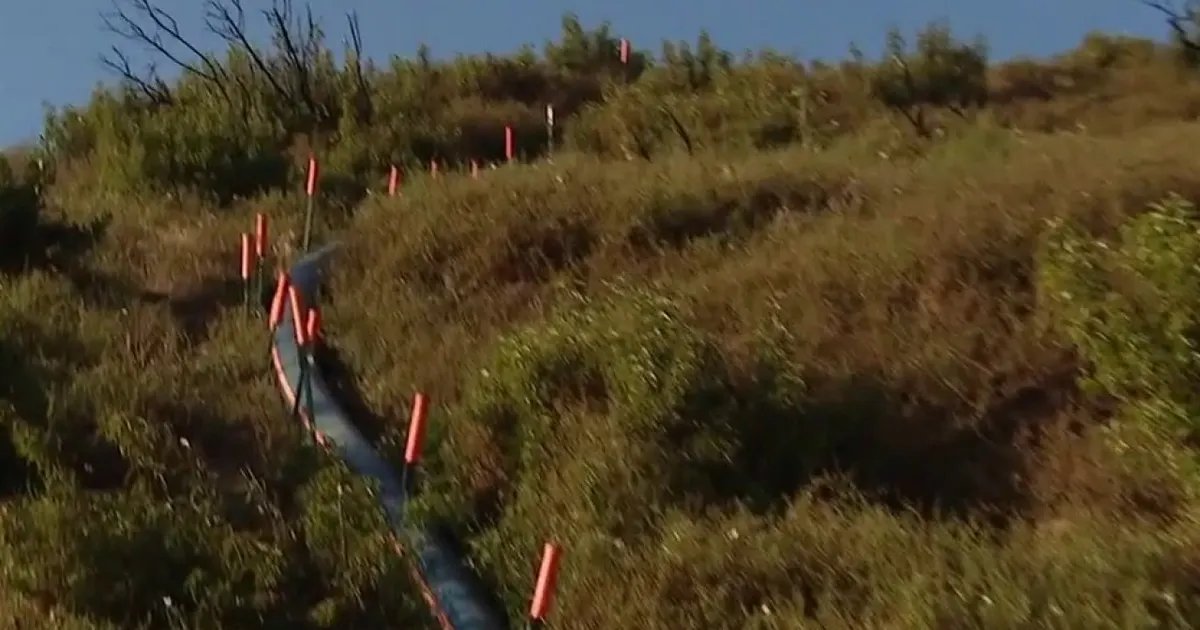
Months have passed since last year’s Palisades Fire, yet charred hillsides are now reemerging with vegetation, creating what residents describe as a hazardous buildup of fuel. "We need help. This is dead brush on top of dead brush," said Luzanne Otte, a concerned resident.
Compounding the issue, the Santa Ynez Reservoir, which was also out of service during last year’s fire, is currently empty as it undergoes repairs. This loss of water supply posed significant challenges for firefighters during the past incident. Crews have since installed approximately six miles of emergency water lines in the area, but with dry brush proliferating nearby, concerns are mounting as fire season looms.
In response, city officials have begun notifying residents that brush inspections and defensible space checks are set to commence. "Clearing vegetation is critical to reducing wildfire risk," they stated. However, many burned lots in the Palisades remain exposed as reconstruction continues.
Otte emphasized the need for action beyond individual property clearance, advocating for equally aggressive measures on public lands: "It is important to clear your lots for the same reasons it would be important to clear state park land," she said. "It’s a mixed bag. We don’t need to punish people who have already been through enough."
Frustration persists among residents regarding the perceived inaction on nearby state-managed lands, particularly where the fire originally ignited. In a statement, a representative from California State Parks noted that crews have been actively working in and around Topanga State Park since the firestorms of January 2025.
These efforts reportedly include clearing 33 acres of highly flammable invasive vegetation and collaborating with over 850 nearby homes to improve defensible space. The strategy aims to mitigate wildfire risks and enhance resilience across the Santa Monica Mountains.
While state officials pursue these initiatives, residents, volunteers, and city crews continue to clear brush in burned neighborhoods, with many calling for a heightened sense of urgency regarding state-managed land. "Whether or not it’s peak fire season, it doesn’t matter," Otte remarked. "The levels and layers of incompetence are inconceivable to me."