Dylan O’Brien Talks About His Journey to Playing a Gay Character in ‘Twinless’
Dylan O’Brien is taking on distinct roles in Twinless, a film that explores themes of loss and identity. To navigate the complexities of portraying a LGBTQ character, O’Brien found invaluable support from co-star, writer, and director James Sweeney.
In the film, O’Brien plays twins Roman and Rocky, and he expressed appreciation for Sweeney’s guidance in embracing the role of the gay twin, Rocky. O’Brien acknowledged the unique challenge of portraying a queer character as a heterosexual actor, stating that Sweeney “gave him permission” to explore that aspect of Rocky’s identity.
Sweeney elaborated on the importance of fluidity in performance, saying, “In terms of him playing queer – I’ll take credit for giving him permission and pushing him in a direction to be fluid with the masculinity and femininity.” He pointed out that many straight actors may hesitate to fully embrace LGBTQ roles due to concerns about public perception. Sweeney believes that for Rocky to be convincingly attracted to Dennis, a sense of comfort with both masculinity and femininity is essential.
O’Brien concurred with Sweeney, highlighting the significance of trust in their collaborative process. “Permission goes a long way. James is a gay man, and coming from a place I could trust… It was nice to have his insight, support, and calibration. He’d be like, ‘Go crazy on this one. We can dial it back if it doesn’t feel real,’” O’Brien said.
Watch on Deadline
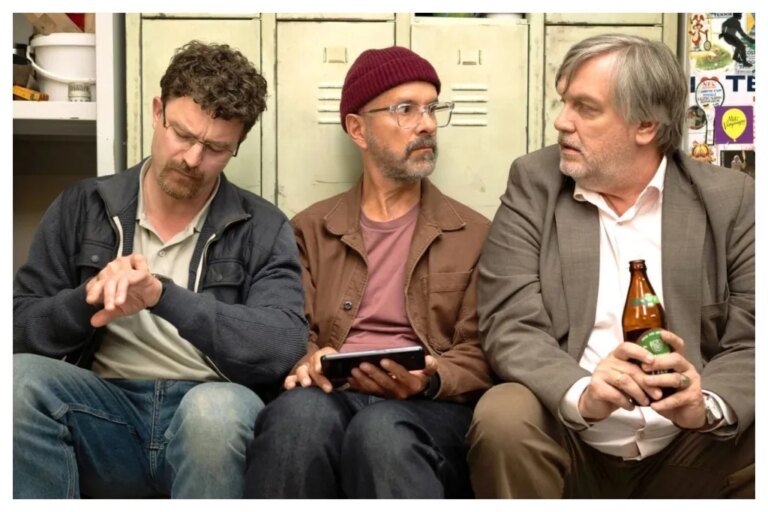
Twinless is currently streaming on Hulu. In the film, Dennis, portrayed by Sweeney, and Roman, played by O’Brien, form a bond after meeting in a bereavement support group for twins. As their friendship develops around their shared grief, hidden secrets loom, threatening their connection.
Dylan O’Brien and James Sweeney in ‘Twinless’ (2025)
Sweeney emphasized the importance of authenticity in storytelling, stating, “I don’t necessarily approach my work in the sense of I’m trying to make a queer protagonist’s struggles relatable. It’s, I guess, more instinctual than that.” He believes that normalizing queer characters within universal human experiences, such as loneliness and rejection, fosters empathy and understanding.