
Director Martin Zandvliet Talks About Creating the Canneseries TV Drama ‘Harvest’ and How It Compares to ‘Succession’
Director Martin Zandvliet Celebrates Premiere of New TV Series ‘Harvest’ at Canneseries
COPENHAGEN—Martin Zandvliet, renowned for his Oscar-nominated film Land of Mine, has returned to Copenhagen following the premiere of his debut television series, Harvest, at Canneseries. Two episodes of the seven-part Danish drama were screened in competition, giving attendees an early glimpse of a series still in the editing stages for its later episodes.
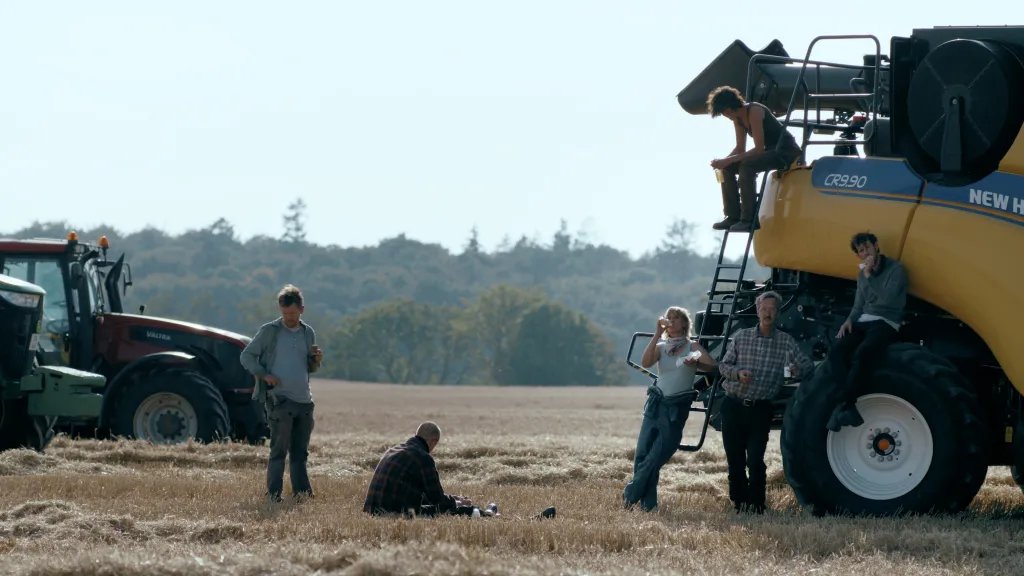
Dubbed by some as “Succession with tractors,” a comparison Zandvliet is not particularly fond of, Harvest stars Katrine Greis-Rosenthal and Elliott Crosset Hove, among others. The series begins at the 65th birthday celebration of patriarch Gorm, whose decision to pass the family farm, Feldumgaard, to his youngest daughter Astrid instead of his eldest son Erik ignites family turmoil.
Produced by Danish public broadcaster DR and its in-house division DR Drama, Harvest also received support from the New8 European network financing club. Zandvliet serves as the writer, creator, and director.
In a post-screening interview, Zandvliet shared insights into the experience of making Harvest, emphasizing its distinct narrative atmosphere despite thematic similarities to Succession. “Yeah, it’s a family in crisis because of a generation change, but this is a whole different atmosphere,” he remarked.
Building on his previous work, which addresses historical tensions, Zandvliet described Harvest as a more intimate story that still retains the grandeur of Danish landscapes. "It’s my responsibility as a filmmaker to make it visual," he explained, highlighting the cinematic elements present both in Land of Mine and Harvest.
Reflecting on his debut in television, Zandvliet expressed the exhilaration of sharing the project with an audience at Cannes. “It was amazing to see it on the screen,” he noted. He elaborated on the challenges of striving for depth and connection without relying on familiar tropes often seen in television.
He pointed out, “There’s so much craziness going on in the world that normal people with normal problems should be enough to entertain us.” His focus on relatable characters amidst real-world issues could promote deeper conversations about societal changes, particularly in agriculture and environmental impacts.
Zandvliet acknowledged the responsibility of creating a show that reflects societal issues while assuring viewers that Harvest does not take a political stance. “This is not a political show,” he stated. “It’s about a family living in this environment and sparking a debate on how to address these concerns effectively.”
With aspirations for potential future seasons dependent on audience reception, he noted that the fate of the series hinges on viewers’ connections with the characters. His transition from feature films to television has offered a new, extended creative process, with the shooting for Harvest lasting significantly longer than his previous projects.
While Zandvliet has additional television ideas in development, the success of Harvest remains the immediate focus. “It all depends on how this season goes,” he said.
This interview has been edited and condensed for clarity.