Community Voices Rise Against Housing Development in Woodland Hills
Community Mobilizes Against Golf Course Development in Woodland Hills
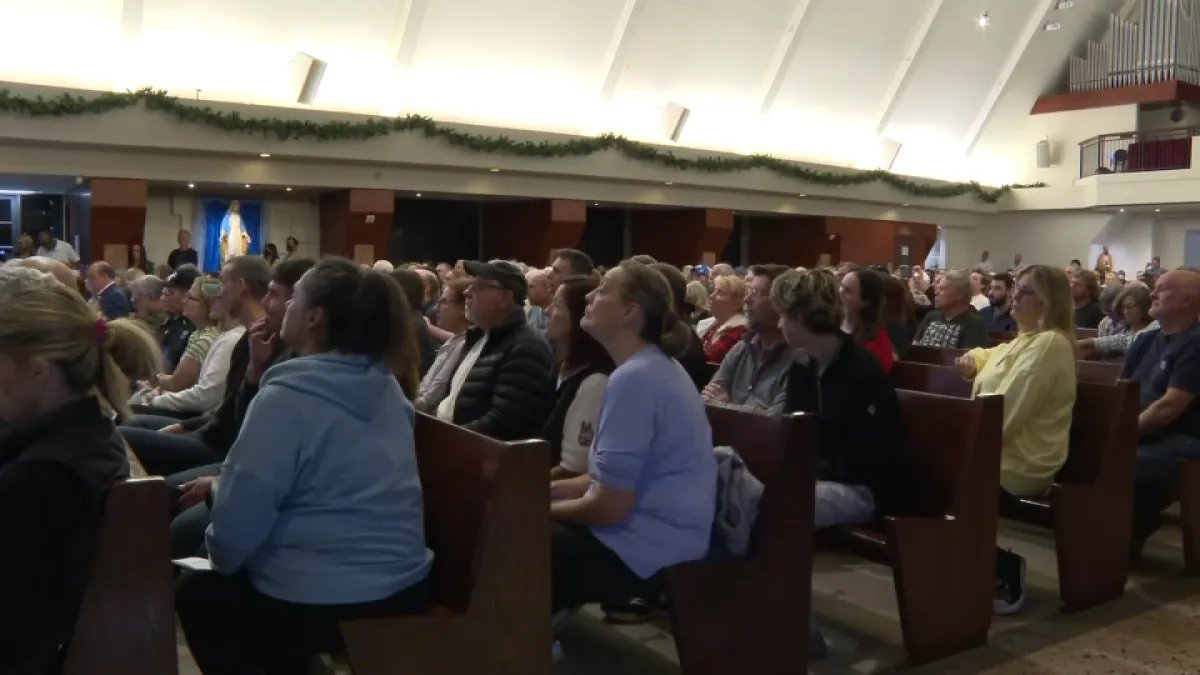
Residents gathered at St. Mel Catholic Church on Friday to voice their opposition to plans for transforming a historic golf course and country club into a residential development. The proposal, which aims to build nearly 400 homes on the land, has sparked significant concern among locals, particularly regarding increased traffic in a high fire hazard zone.
"I think it’ll be the death of Woodland Hills if they go ahead with this project," said Woodland Hills resident Stephen Scheff, reflecting the sentiments of many attendees who fear the implications of such a large-scale development.
The golf course and country club, established in the 1920s, occupies 93 acres just east of Topanga Canyon Boulevard and south of the 101 Freeway. It was sold in 2020 to Newport Beach-based real estate firm Arrimus Capital.
According to the project’s website, developers plan to close the club and utilize a 20-acre section to construct 175 single-family homes, 126 apartments, and 97 rent-restricted homes for seniors.
Anita Zaccaro, another community member, expressed her apprehensions, stating, “The fire risks and just the changing character of our community…It’s in a high fire zone and it’s a lot of units they are considering putting there. I think it’s way too massive for the area."
The developers submitted their application to the city of Los Angeles last month, arguing that the project will help alleviate the housing crisis. They are seeking approval under AB 2011, a state law that expedites housing permits in commercial corridors by bypassing environmental reviews and public hearings.
"This is not a commercial corridor and as a result, it’s a misapplication of the law," asserted Matt Heisie from the Woodland Hills Neighborhood Collective.
Councilmember Bob Blumenfield added context, explaining that amendments recently signed by Governor Newsom redefine the criteria for what constitutes a commercial corridor, now emphasizing street width over land use. He alleges that the developers lobbied lawmakers to engineer these modifications to limit public input.
“If this moves forward under those state laws, it never comes to a vote before the city council," said Blumenfield. “I ultimately think this is probably going to be something that ends up in court.”
The application is currently under review by the city’s planning department, and Blumenfield intends to seek clarification from the city’s land use attorneys to ensure that the state law is interpreted correctly before the project progresses.
As of now, representatives for the developers had not responded to requests for comment.