

Celebrate 35 Years of Arts Education with P.S. ARTS: A Journey of Self-Expression
Celebrating 35 Years of Arts Education: John Lawler’s Commitment to Equity and Access
John Lawler’s career spans various roles, including artist, teacher, principal, and CEO, with a consistent focus on ensuring equity and access to arts education for all children. His journey has seen him become an award-winning director and writer, co-found two nonprofits, and serve as principal in two nationally acclaimed arts high schools.
“Arts education means more than just creating young artists,” Lawler remarked. “Kids with an arts education are three to five times more likely to graduate and get into college than those without. The benefits extend far beyond conventional thinking.”
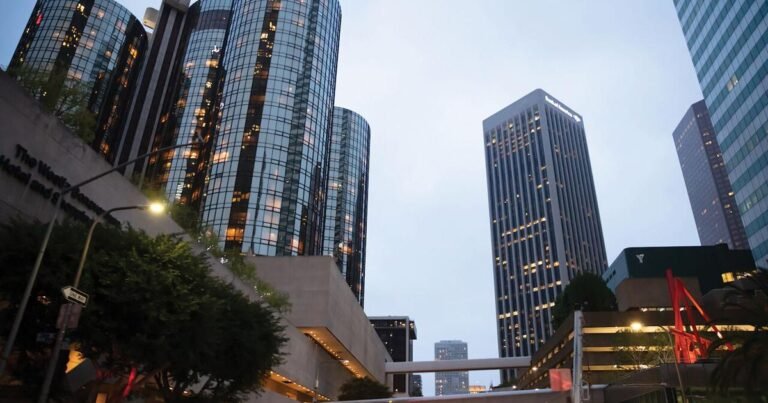
As the CEO of P.S. ARTS, headquartered in Downtown Los Angeles, Lawler oversees initiatives that bring quality arts programs to public schools lacking such resources. He described their approach: “We send highly trained teachers along with a curriculum and a plan for their interactions with students. While the classroom teacher may be present, our teacher leads the class entirely. We also train classroom teachers to integrate arts into their own curricula.”
P.S. ARTS celebrated its 35th anniversary on April 19 with the Express Yourself Fundraiser. Lawler emphasized the significance of the event. “It’s a day that celebrates art making for families while raising awareness about the critical need for investment in arts education. Investing in arts in public schools is ultimately an investment in the future of these children.”
Lawler began his career as a stage director before moving to Los Angeles to work as a television screenwriter. His shift towards education led him to become a film and theater teacher. Inspired to expand his impact, he initiated the development of ArTES Magnet, an arts-focused high school in the San Fernando Valley that opened in 2011.
“ArTES was a proof of concept that the arts can significantly enhance not only enrichment but academic outcomes,” he explained. The school implemented a comprehensive four-year arts program alongside core academic subjects, achieving impressive results.
In 2018, Lawler took on the role of principal at the Los Angeles County High School for the Performing Arts (LACHSA), a school distinguished by its audition-based admissions. “It’s the number one arts high school in the country,” he stated, noting that graduates gain admission to selective colleges, often with lower GPAs and test scores than typical standards. “Colleges recognize the value of students with substantial arts education. They are dedicated, collaborative, and engaged learners.”
Central to Lawler’s mission across all positions has been ensuring that all children, particularly those in underserved communities, have access to arts education. He expressed his dedication, particularly at Title I schools: “Those populations often face barriers to arts education, and that’s where I wanted to make the most impact.”
Reflecting on his tenure at LACHSA, he noted, “We aimed to maintain excellence while assessing potential over prior accomplishments. We adapted our approach to recognize talent rather than polish, enabling us to increase Title I student representation from 3% to over 30% in just four years.”
When the opportunity to become CEO of P.S. ARTS arose, Lawler recognized the alignment of missions. “At P.S. ARTS, I reach over 33,000 students instead of just 500. The nonprofit sector can be liberating. My focus remains on equity and access, allowing me to prioritize ideal arts programming without the constraints of district policies.”
Most teachers at P.S. ARTS are practicing artists who provide part-time instruction complemented by ongoing professional development. Lawler highlighted the transformative impact of arts education, stating, “It’s uplifting to witness the engagement and joy of students as they create. There’s nothing quite like the fulfillment they find when expressing themselves artistically.”
As P.S. ARTS continues to advance its mission, Lawler’s commitment to enriching the educational landscape through the arts remains steadfast.