

Behind the Scenes of ‘The Quinta’s Ghost’: Exploring the Punk Rock Influences in this Goya-Inspired Animated Horror Short
Animated Short Film Explores the Turmoil of Francisco de Goya
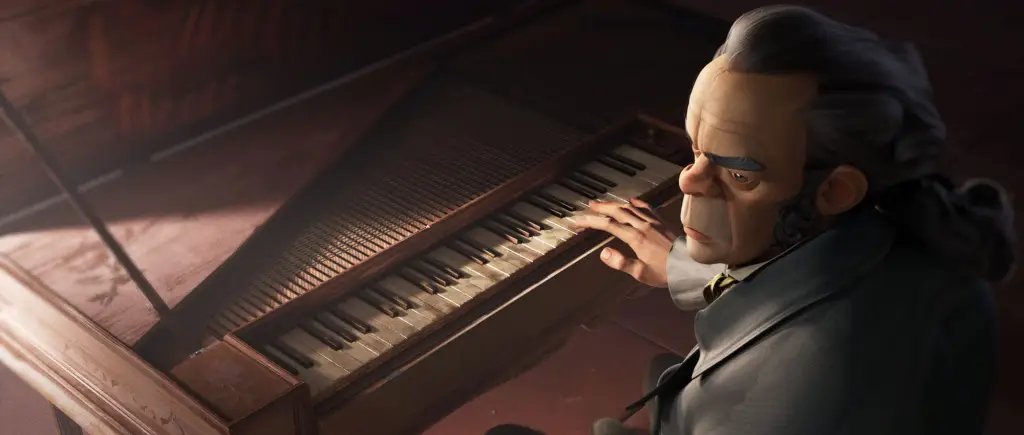
James A. Castillo’s latest animated short film, The Quinta’s Ghost (El fantasma de la Quinta), delves into the tortured life of the Spanish painter Francisco de Goya, depicting a man grappling with his past through haunting artwork on the villa walls he inhabited. The 17-minute film vividly portrays Goya during the latter part of his life, a period marked by darkness and despair, as his health declined following a debilitating illness that rendered him deaf.
Set in Goya’s villa, The Quinta del Sordo (The House of the Deaf Man), the film reveals the artist’s descent into madness as he confronts tragedies, including the loss of seven of his eight children and the tumultuous backdrop of civil war in Madrid. Castillo employs the villa itself, voiced by Maribel Verdú, as a watchful observer of Goya, showcasing his struggle as he paints unsettling figures and wrestles with his demons.
In discussing the inspiration behind the film, Castillo emphasized Goya’s profound evolution as an artist. “As successful as Goya was, it was his Black Paintings that solidified his genius,” he explained. He noted that Goya’s willingness to express personal emotions through art was revolutionary for his time. “That kind of radical self-expression was a very punk rock thing to do,” Castillo remarked.
Castillo sought to create a narrative filled with depth, particularly as Goya’s life during this period is sparsely documented, revealing a man isolated in a secluded environment. This lack of historical clarity became fertile ground for artistic fiction. “I’ve been trying to find ways in my work to talk about grief,” he stated, underscoring his desire to explore the horror genre within animation.
Co-producer Raul Rocha shared his excitement about bringing Spanish culture to international audiences. “The goal of the project has always been to export this part of our culture to the U.S.,” he said, highlighting the rising interest in Spanish art and music. The film has already garnered attention at renowned festivals, including Tribeca, generating enthusiasm among viewers unfamiliar with Goya’s life.
Castillo acknowledged the challenge of balancing Goya’s cultural significance with broader audience appeal. “We tried to make a film that resonates regardless of prior knowledge about Goya,” he stated. By concentrating on the human experience of a 74-year-old man confronting dementia alone, the film aims to evoke empathy rather than solely rely on the artist’s fame.
The narrative perspective shifts intriguingly, as the villa serves as both setting and narrator. Castillo explained that the house’s voice emerged from a desire to encapsulate the nuanced emotional landscape of Goya’s experience. “The house bears witness to Goya’s pain, becoming a character that transforms alongside him,” he said.
The film not only grapples with trauma but examines the ongoing struggle to reconcile with one’s past. Castillo shared his own experiences with grief, using the symbolism of Goya’s lost children to illustrate the weight of personal and societal pressures. “Art can liberate you from your own trauma,” he reflected.
Rocha added another layer, noting that the film resonates with contemporary Spanish issues, positioning Goya’s relationship with his art and country as reflective of present-day challenges. “This moment with the bull represents Spain and its intricate flaws,” he explained.
Castillo concluded by emphasizing the ongoing relevance of Goya’s story: “Every generation has the right to revisit cultural icons and reinterpret them,” he said, expressing hope that the film will shed new light on themes of mental health and masculinity.
The Quinta’s Ghost presents a poignant examination of grief and creation, inviting audiences to reassess the interplay between the artist and his work, as well as the burdens of history.