
David Lean’s Journey at Cannes: How He Turned His Father’s Criticism into Cinematic Greatness
David Lean’s ability to capture breathtaking landscapes in films set across India, Ceylon, and Jordan is unmatched, creating iconic imagery that continues to resonate with audiences. “I like spectacle,” Lean once remarked in an interview, highlighting his affinity for grand visuals.
Beyond grand vistas, Lean also masterfully portrayed the intricacies of the human face. His films featured striking performances from actors such as Peter O’Toole, with his piercing blue eyes against bright skies, and the captivating looks of Omar Sharif and Julie Christie, as well as the compelling expressions of Trevor Howard and Celia Johnson.
These dual talents are explored in the documentary Maverick: The Epic Adventures of David Lean, directed by Barnaby Thompson. The film is set to premiere in the official Cannes Classics section on Sunday, May 17, at the Cannes Film Festival.
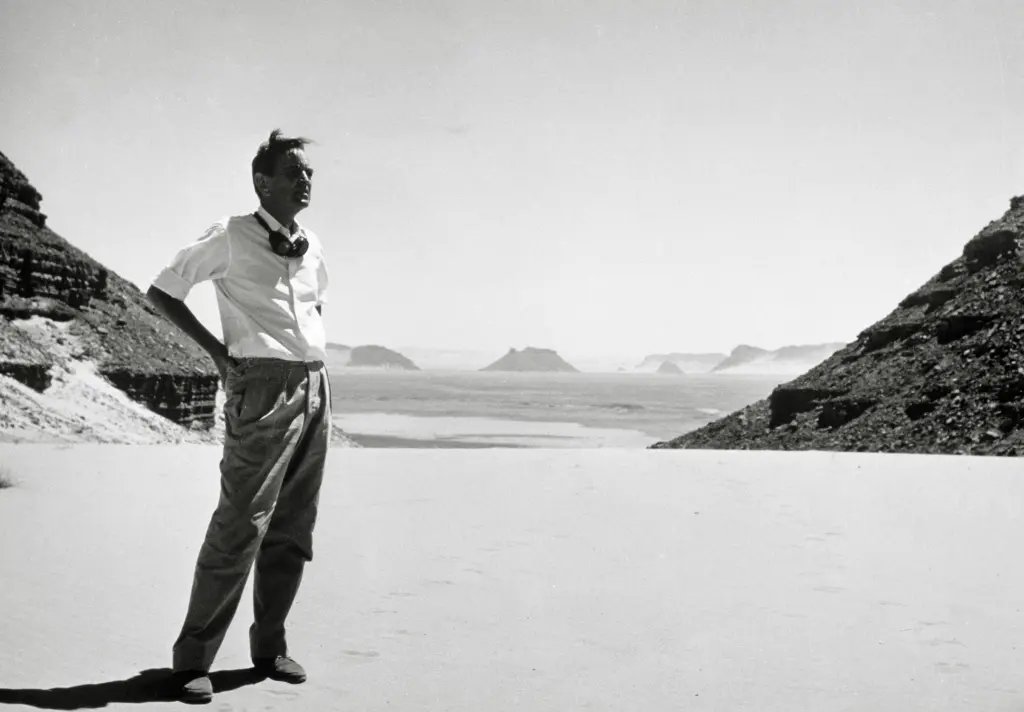
David Lean
Alamy
“Lean did so much to introduce the grammar of modern filmmaking,” Thompson observes. “His films are so representative of what we think about when we think about the big cinema experience.”
The documentary charts Lean’s remarkable rise within the film industry—a trajectory marked by significant challenges. Raised as a Quaker, Lean faced restrictions that forbade him from attending movies, deemed wicked. Additionally, his struggle with dyslexia went largely unrecognized, forcing his parents to underestimate his abilities. Thompson discovered a letter from Lean’s father that conveyed a lack of faith in his son’s potential, signing off with, “Much love, dad.”
Despite his reading difficulties, Lean gravitated toward visual media, initially pursuing photography before transitioning to film editing in the early 1940s, where he worked on notable films by Powell and Pressburger. His talent as a film cutter soon made him a sought-after professional in the UK. It was playwright Noël Coward who encouraged Lean to venture into directing, leading to his first project: an adaptation of Coward’s Blithe Spirit. Thompson, who directed a recent documentary on Coward, emphasizes the significance of this partnership in Lean’s development.

Director Barnaby Thompson
Courtesy of Barnaby Thompson
Thompson shared his surprise at the depth of their connection, saying, “I hadn’t realized how involved they were because they seemed like two such different people in a way.” This insight underscores the complexities in both Lean’s and Coward’s trajectories.
Reflecting on Coward’s background, Thompson notes, “I always assumed he came from a good family and probably went to Oxford or Cambridge. The moment you find out actually he came from a poor family and left school when he’s 10 – wow.” He adds, “And with Lean, it was finding out that he grew up a Quaker and so he wasn’t allowed to go to the movies.” The irony is palpable, as Lean went on to create some of the most romantic films in cinematic history, though his personal life was tumultuous; he married six times. “Suddenly, ‘Ooh, that’s interesting,’” Thompson remarks, recognizing how these personal histories enrich the narratives embedded in Lean’s films.
L-R Omar Sharif and Julie Christie in ‘Doctor Zhivago’; Peter O’Toole in ‘Lawrence of Arabia’
Everett Collection
The documentary features insights from diverse filmmakers who discuss Lean’s unparalleled contributions to cinema, including Francis Ford Coppola, Steven Spielberg, Wes Anderson, Celine Song (Past Lives), and Steven Soderbergh, among others.
“I made an effort to get a cross-section of filmmakers from lots of different ages and backgrounds,” Thompson reveals. “Filmmakers like Nia DaCosta, who saw Lawrence of Arabia on video, connected with its impact, despite never having seen it on the big screen.” He adds that Brady Corbet highlighted how 70mm film not only enhances landscapes but also profoundly impacts the representation of the human face.
Sarah Miles and director David Lean on location in the Dingle Peninsula in Ireland, shooting ‘Ryan’s Daughter,’ 1970.
Everett Collection
Lean delivered his iconic works Lawrence of Arabia and Ryan’s Daughter using 70mm film, although producers disallowed his intention to shoot A Passage to India in the same format. The reception of Ryan’s Daughter, which starred Robert Mitchum and Sarah Miles, proved to be a significant setback for Lean. Critics such as Pauline Kael of the New Yorker and Richard Schickel from Time panned the film, leaving Lean devastated and prompting a 14-year hiatus from directing. Thompson suggests that the harsh criticism reverberated deeply within Lean, resonating with his struggles with self-worth.
“He never got over that feeling of inferiority,” Thompson posits. “When he received the dressing down from critics on Ryan’s Daughter, I think it was almost like he came away feeling like, ‘My father was right, I am worthless.’ … Now, dyslexia and things like that get recognized, but back then, it was just like, ‘You’re stupid.’ I think there’s no doubt that that drove him in lots of different ways all through his life.”
Trevor Howard and Celia Johnson in ‘Brief Encounter,’ 1945
Everett Collection
This year marks the 80th anniversary of the screening of Brief Encounter at Cannes and the 60th anniversary of Dr. Zhivago‘s debut on the festival circuit. Thompson brings a wealth of experience from his own time at Cannes.
“I was there with Cate [Blanchett] when An Ideal Husband was the closing night film in 1999. Cannes means everything to me. It’s the festival that I think stands for cinema in the biggest way,” Thompson reflects. “So, to be launching the film about the guy who is cinema, in the home of cinema, it couldn’t be more perfect.”