
Paramount and WBD Share Details of Their $110 Billion Merger
Warner Bros. Discovery Agrees to $110 Billion Sale to Paramount
Warner Bros. Discovery (WBD) has officially entered into an agreement to sell itself to Paramount for $31 per share in a deal valued at $110 billion. The announcement was made Friday, with Paramount scheduling a conference call and webcast for Monday at 8:30 AM ET to discuss the terms of the agreement.
The merger follows WBD’s recent rejection of a proposal from Netflix, which had only four days to match the offer from Paramount but ultimately decided against proceeding. This left Paramount in a strong position after a protracted attempt to secure WBD as a rival.
Paramount has pledged that the new entity will produce at least 30 movies annually—15 from each studio. The company emphasized its commitment to theatrical releases, ensuring a minimum 45-day window for films before they become available on subscription streaming platforms. Concerns regarding Netflix’s dedication to theatrical releases had previously raised eyebrows among industry exhibitors.
The merger is projected to finalize in the third quarter of 2026, pending regulatory approvals and a vote by WBD shareholders expected in early spring. Paramount anticipates over $6 billion in cost synergies, derived from technology integration, operational efficiencies, and streamlined corporate functions.
Industry analysts forecast that the merger may lead to thousands of layoffs across both companies.
The transaction is financed through $47 billion in equity, primarily supported by the Ellison Family and RedBird Capital Partners. While Paramount did not disclose all strategic and financial partners, prior backing included major investment firms from the Public Investment Fund of Saudi Arabia, L’imad Holding Company PJSC in Abu Dhabi, and the Qatar Investment Authority. Notably, Jared Kushner’s Affinity Partners and China’s Tencent had previously been involved but later withdrew.
New Class B Paramount shares will be issued at $16.02 each under the terms of the equity commitments. Additionally, the deal includes $54 billion in debt commitments from Bank of America, Citigroup, and Apollo, which encompasses $15 billion intended to back WBD’s existing bridge facility and $39 billion in new debt. This debt financing does not account for an additional $3.5 billion provided to support an existing revolving credit facility.
Upon completion, the merged company will boast an extensive film library of over 15,000 titles, in addition to thousands of hours of television programming. Notable franchises include Harry Potter, Mission Impossible, and Game of Thrones, among others.
Combined sports rights will cover major events such as the NFL, Olympics, and UFC, allowing distribution across all platforms. The merger will also result in a diverse portfolio of cable networks, including CNN, raising concerns among some lawmakers regarding the implications for news media under this new corporate structure.
Ellison, the son of Oracle co-founder Larry Ellison, has emphasized a focus on integrating technology to enhance the operations of the combined company.
Despite the optimistic outlook, Wall Street analysts have expressed wariness over the significant debt burden that the new company will carry, which may limit future investments.
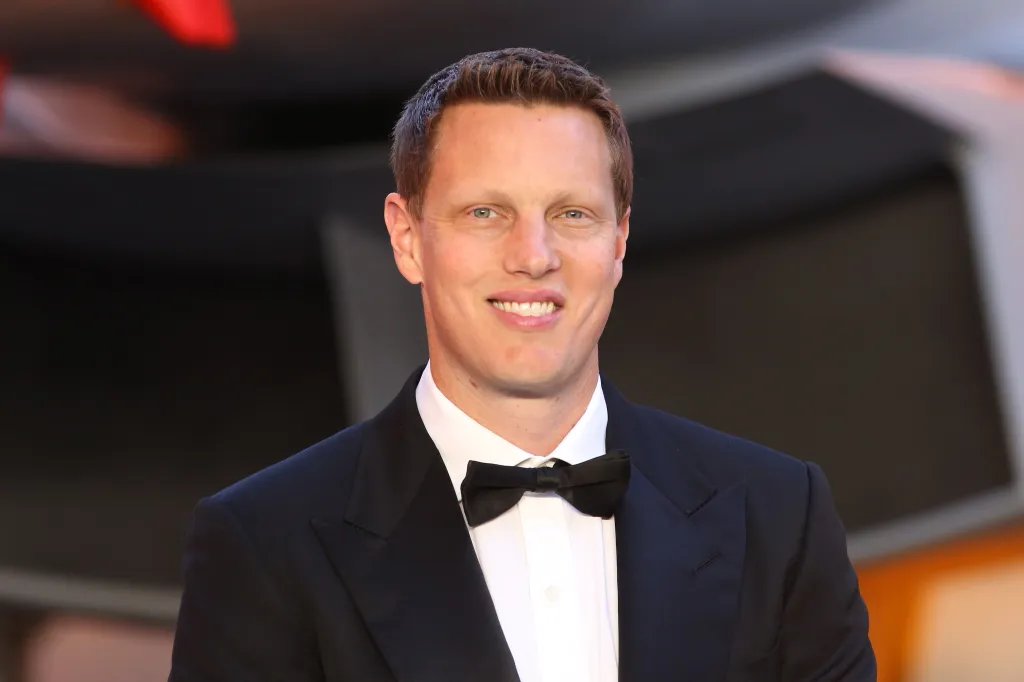
"From the very beginning, our pursuit of Warner Bros. Discovery has been guided by a clear purpose: to honor the legacy of two iconic companies while accelerating our vision of building a next-generation media and entertainment company," said David Ellison, CEO of Paramount.
David Zaslav, CEO of WBD, added, "I’m very pleased with the outcome we achieved for WBD shareholders and the entertainment industry. Our guiding principle throughout this process has been to secure a transaction that maximizes the value of our iconic assets."