

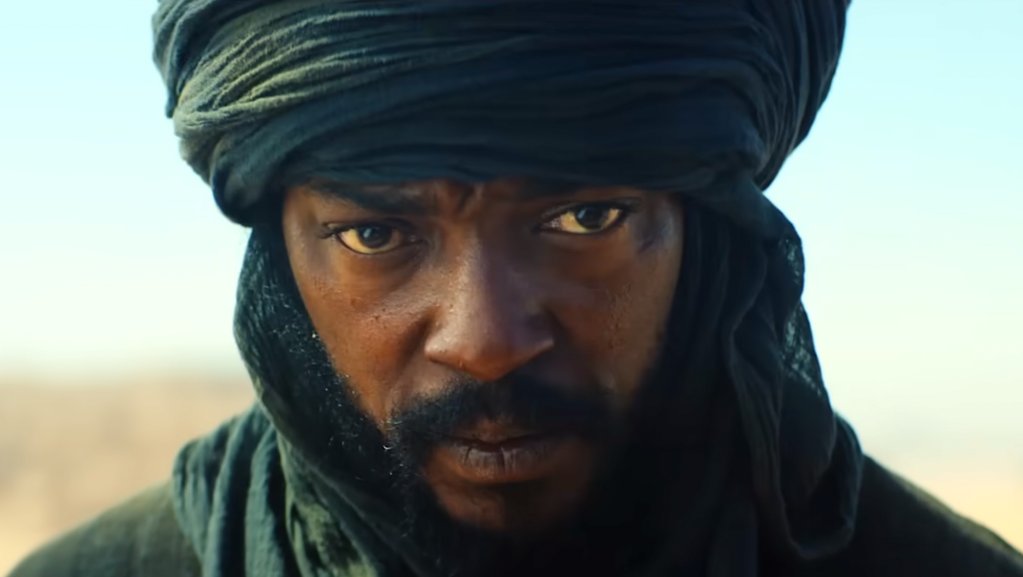
Why Anthony Mackie’s ‘Desert Warrior’ Didn’t Find Its Audience in the U.S. and Middle East
The much-anticipated film Desert Warrior, featuring Captain America star Anthony Mackie and Academy Award winner Ben Kingsley, has struggled to gain traction at the box office since its debut in theaters across the U.S. and Middle East last weekend. Despite its ambitious five-year development, early figures suggest the film may not meet initial expectations.
Produced by Riyadh’s media giant MBC Group and distributed by Vertical, Desert Warrior has garnered significant attention due to its lackluster performance, grossing only $596,000 on 1,010 screens in the U.S. as of Thursday. Industry analysts have labeled it as one of the biggest box office flops in history.
Vertical’s marketing strategy highlighted the star power of Mackie and Kingsley alongside visually striking scenes of the Saudi landscape, yet audience response was muted. With a production budget of $150 million, the film appears unlikely to recoup its costs.
Although expectations for Desert Warrior were tempered from the outset, insiders had hoped it could achieve at least $1 million in U.S. sales. While the current earnings might signal trouble, sources indicate that Vertical may not have heavily invested in the project, leaving a pathway to profitability through theatrical and home entertainment revenue.
MBC Group did not provide a comment, nor did Vertical.
Middle East Box Office
The film’s performance starkly contrasts with several recent Saudi successes, such as Shabab Al Bomb, which grossed $1.24 million in its opening weekend. Empire Entertainment, the distributor for Desert Warrior, has also had more successful releases this year, including Project Hail Mary, which took in $700,000 during its debut weekend.
As of Thursday, ticket sales in Saudi Arabia totaled approximately $110,000, while the film earned $37,000 in the UAE. The overall Middle Eastern total stands at just $225,000, with local sources noting a lack of extensive marketing.
Why Was ‘Desert Warrior’ Deserted?
MBC Group initially envisioned great success for Desert Warrior, which faced numerous challenges before its release, including creative discord with director Rupert Wyatt, who left and later returned to the project. Budgetary concerns also compounded delays.
The timing of the release has not helped; observers note that audiences may be less inclined to engage with a film about a desert conflict amid ongoing real-world tensions in the region. MBC considered postponing the release following international events but ultimately opted against further delays.
Aiysha Hart in ‘Desert Warrior’
Nonetheless, the fact that Desert Warrior has made it to theaters marks a significant achievement for its creators. During its prolonged development and post-production phase, there were moments when crew members expressed doubts over whether the film would ever be released.
A source reflected, “There was definitely a fear among the filmmakers and talent that the thing had become such a white elephant that MBC would just bury it. It would have been easier for them to go straight to streaming, so MBC deserves credit for going the distance. They believed in what was good about the film, and it does some of the things they intended in showcasing what can be achieved on screen in the region.”
For many, the $150 million investment in Desert Warrior extends beyond simple entertainment; it represents a crucial step in developing Saudi Arabia’s filmmaking infrastructure. As the country seeks to diversify its economy away from oil dependency, lessons learned from this project may pave the way for future filmmaking initiatives.