

Trump White House Shares ‘Golden Age’ Video Featuring K-Pop Sensation ‘Golden’
On the morning of Donald Trump’s lengthy State of the Union speech, the White House released a mashup video featuring clips from various popular movies and television shows, set to “Golden,” a hit song by KPop Demon Hunters that topped the Billboard Hot 100.
Explore
HUNTR/X: EJAE, Audrey Nuna & REI AMI
See latest videos, charts and news
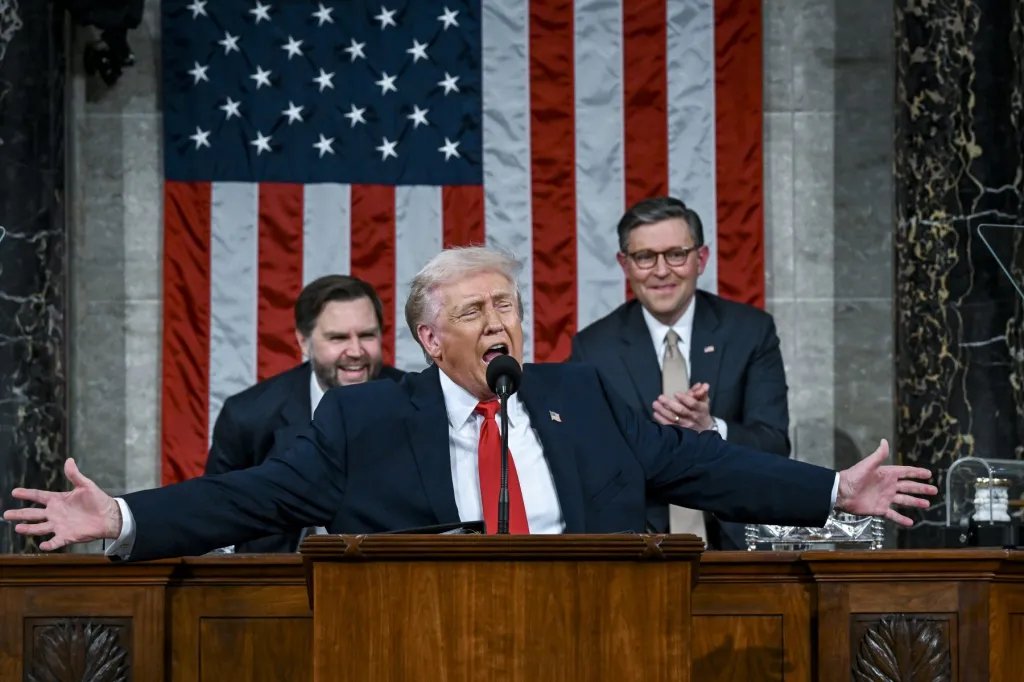
The video appeared to be an effort to generate excitement ahead of the 107-minute address scheduled for Tuesday, February 24. This quick-paced montage emphasized Trump’s well-known affinity for gold, reflecting his claims that the country is experiencing a triumphant period. The caption read, “WINNING IS BACK. America IS BACK. AND WE’RE JUST GETTING STARTED [eagle emoji]. THE GOLDEN AGE IS HERE,” which foreshadowed the two-word phrase Trump would later employ during his speech.
As of press time, it remained unclear if the administration had secured permission to use “Golden” in the video. Representatives for the White House and EJAE, a member of HUNTR/X and co-writer of the track, had not responded to inquiries from Billboard. The song, which featured in the most-streamed movie on Netflix, enjoyed an eight-week run at the top of the Hot 100 and spent 18 weeks leading the Billboard Global 200, as well as a record 20 weeks atop the Billboard Global Excl. U.S. chart.
While it’s common for campaigns to use songs in social media posts or rallies without explicit approval from songwriters or rights holders, removing unauthorized content can often prove challenging.
The montage opened with a memorable scene from Seinfeld, featuring the line “that’s gold Jerry!” followed by clips from Dazed and Confused, The Office, The Postman, Bruce Almighty, Eastbound and Down, The Waterboy, and Modern Family. It concluded with a line from Adam Sandler’s Happy Gilmore: “you like that baby? There’s more where that came from!”
Aside from highlighting Trump’s preference for gold and conveying a generally positive message, the specific policies or initiatives being promoted by the video remained ambiguous, as did whether the administration had obtained permission to use the various clips.
This video aligns with the Trump administration’s frequent use of meme-driven communications, which often includes social media posts that mock opponents and feature popular copyrighted material without prior approval. In one instance last December, the administration faced backlash when a post using Sabrina Carpenter’s song “Juno” was deleted after she criticized the use of her music in a manner she deemed “evil and disgusting.”
The situation exemplifies a broader trend of musicians calling out the Trump administration for unauthorized uses of their music, with notable names including Carpenter, Olivia Rodrigo, Beyoncé, and many more.
Earlier that week, the estate of Isaac Hayes reached a confidential settlement with Trump over alleged unauthorized use of his 1966 song “Hold On, I’m Comin'” during campaign rallies. The terms of this settlement were not disclosed.
In a statement, Hayes’ son and estate manager, Isaac Hayes III, emphasized the significance of protecting intellectual property rights and responsible use of creative works, stating, “This resolution represents more than the conclusion of a legal matter; it reaffirms the importance of protecting intellectual property rights and copyrights, especially as they relate to legacy and ownership.”


