The Testaments Team Discusses Casting Chase Infiniti as Agnes and Their Vision for Future Seasons
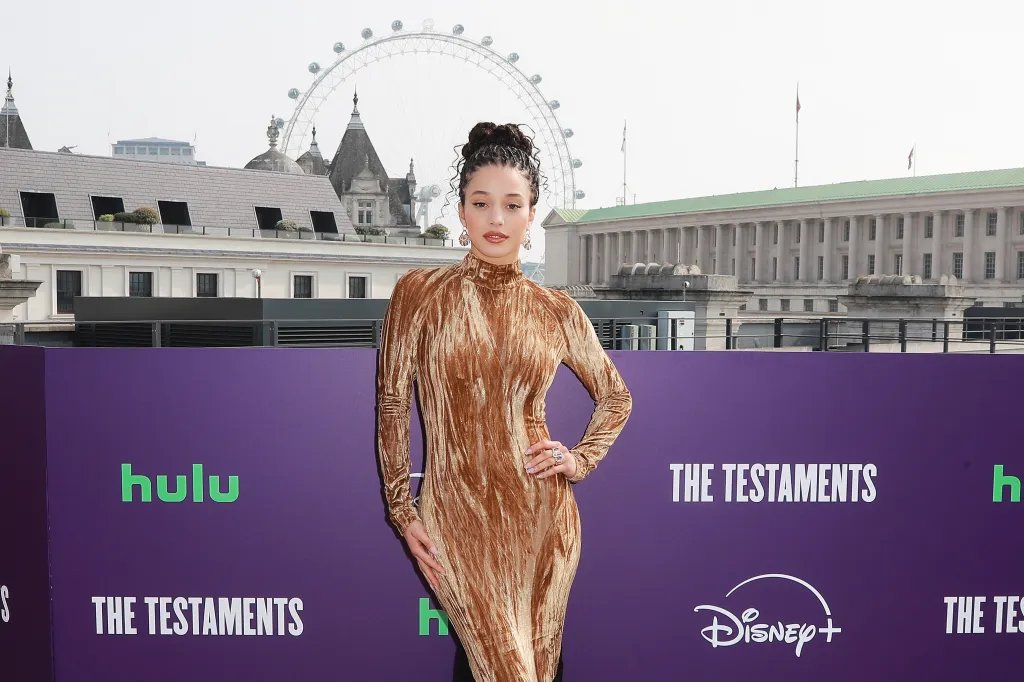
Infiniti, who gained significant attention after her role in One Battle After Another, stepped onto the purple carpet at Series Mania in Lille last weekend for the world premiere of The Testaments. The series executive producer, Miller, expressed confidence in her casting, stating it was a straightforward decision. “We were waiting for the rest of the world to notice,” he said.
Warren Littlefield, series executive producer, echoed Miller’s sentiments, noting that Elisabeth Moss, star of The Handmaid’s Tale and an executive producer on The Testaments, also recognized Infiniti as their ideal Agnes upon seeing her audition. “We all agreed; Lizzie Moss was also weighing in on the casting choice. She thought she was spectacular. She had the same reaction we all did, which was, ‘Oh, there’s Agnes,’” Littlefield remarked.
Watch on Deadline
The narrative centers on the girls and young women of Gilead, specifically the daughters of commanders, who attend a privileged school overseen by Aunt Lydia, played by Ann Dowd. As Agnes, Infiniti stars alongside Lucy Halliday, who portrays Daisy, a Pearl allowed into the Aunts’ domain. “Season 1 is an awakening,” Littlefield noted. “That’s the only world they’ve ever known and they’re not fully aware of the horrors of it just yet. Readers and followers of The Handmaid’s Tale and The Testaments may know more about who Agnes is than Agnes does. We’re going to let them and Agnes catch up.”
With Season 1 identified as an awakening, the show aims to pave the way for further chapters. Miller envisions an expansive storyline, with aspirations for a series that could span multiple seasons. Although The Handmaid’s Tale reached 66 episodes, he anticipates aiming for 30 to 50 episodes for The Testaments.
In The Testaments, the iconic red cloaks from The Handmaid’s Tale have been replaced by a vibrant, color-coded scheme. Older girls don purple garments, while the Pearls are dressed in white. Littlefield described the new series as both a companion piece to its predecessor and as a standalone story. “The world has moved on from events of the earlier series. We didn’t want to do Season 7 of The Handmaid’s Tale. It’s a different time, a different [color] palette. It’s no longer the point of view of June; now it’s the point of view of these young women,” he explained.
Littlefield emphasized that the series offers a fresh perspective for new viewers while remaining connected to its origins. “If you know the mothership, great, but you don’t need to. You can come to this fresh. It’s its own original experience,” he said.
Both The Handmaid’s Tale and The Testaments reflect contemporary issues, with Miller noting the current relevance of the new series: “It’s fairly relatable to our world.” Amidst the portrayal of Gilead’s oppressive regime, the series carries an underlying message of hope. Miller stated, “The young women coming of age and having grown up in that world are full of rebellion… it’s the irrepressible energy and the power and the optimism of the young.”
Littlefield acknowledged the hopeful themes present in Margaret Atwood’s work. “Margaret saw what a future might be in The Handmaid’s Tale. And then in 2018 she’s writing The Testaments, published in 2019. We go, ‘How did you do this, how did you put your finger on, not just on America but the world? And then also give us hope, and through these young women illuminate that maybe there’s a path forward,” he concluded.