
The City College Stampede: A Look Back at the 1991 Tragedy and Sean ‘Diddy’ Combs’ Role
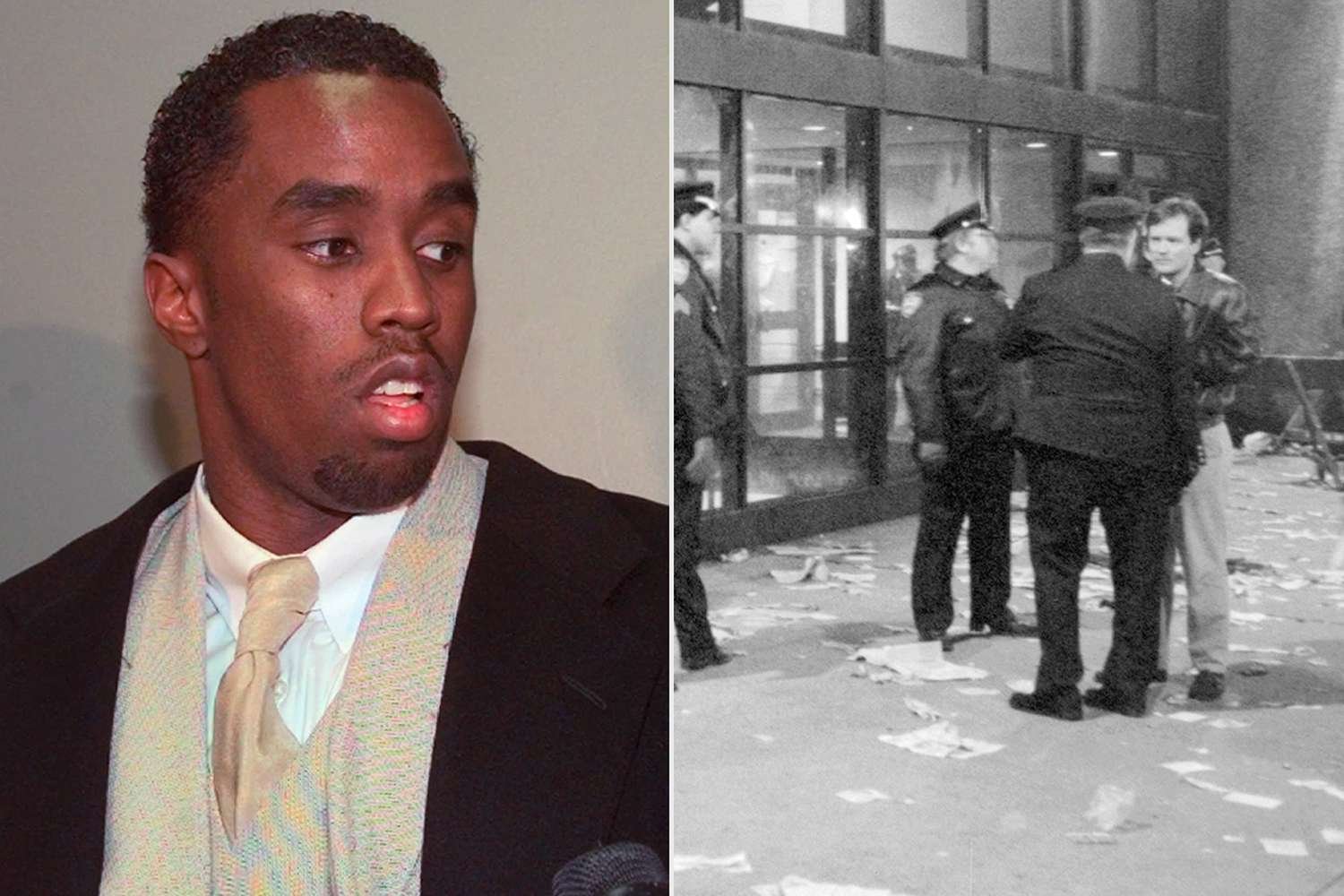
Sean “Puff Daddy” Combs speaks to the media outside New York Civil Claims Court on March 23, 1998; The scene after a fatal stampede at City College of New York (CCNY) on December 28, 1991.
Credit :
Kathy Willens/AP Photo; Gene Kappock / New York Daily News via Getty
NEED TO KNOW
- Sean “Diddy” Combs helped promote and organize a celebrity charity basketball game at the City College of New York in 1991.
- Thousands of people attempted to enter the gymnasium, but the entrance was closed after it reached capacity.
- Hundreds of individuals then crowded into a staircase, leading to the tragic deaths of nine people.
On December 28, 1991, a devastating stampede at City College of New York resulted in the deaths of nine individuals, a tragedy that continues to resonate over three decades later.
During the charity basketball game organized by Sean “Diddy” Combs and fellow rapper Heavy D (Dwight Arrington Myers), an estimated 5,000 people tried to enter a gymnasium that could only accommodate approximately 2,730. As the event approached, the crowd quickly escalated, leading to chaos.
As the gymnasium filled, some attendees rushed to access the venue and became trapped in a staircase. For about 15 minutes, the doors meant to provide entry remained closed, exacerbating the situation. As more people gathered, many became crushed against the doors, ultimately resulting in nine fatalities and nearly 30 serious injuries, as reported by History.com.
This tragic incident was later explored in the Netflix docuseries Sean Combs: The Reckoning, which aired on December 2, 2023.
In the documentary, Kirk Burrowes, co-founder of Bad Boy Records, alleged that Combs physically assaulted his mother, Janice Combs, in the aftermath of the tragedy. Burrowes claimed the rapper “put his hands on her, called her a bitch, and slapped her.” In response, Janice Combs issued a statement refuting the allegations as “inaccurate and patently false.”
She further condemned Burrowes for using the tragedy to promote personal narratives regarding Bad Boy Records, stating it was “wrong, outrageous and past offensive.”
This account of the City College stampede serves not only as a reflection on a significant event in hip-hop history but also marks a crucial moment in Combs’s career.
How Did the City College Charity Game Turn into a Stampede?
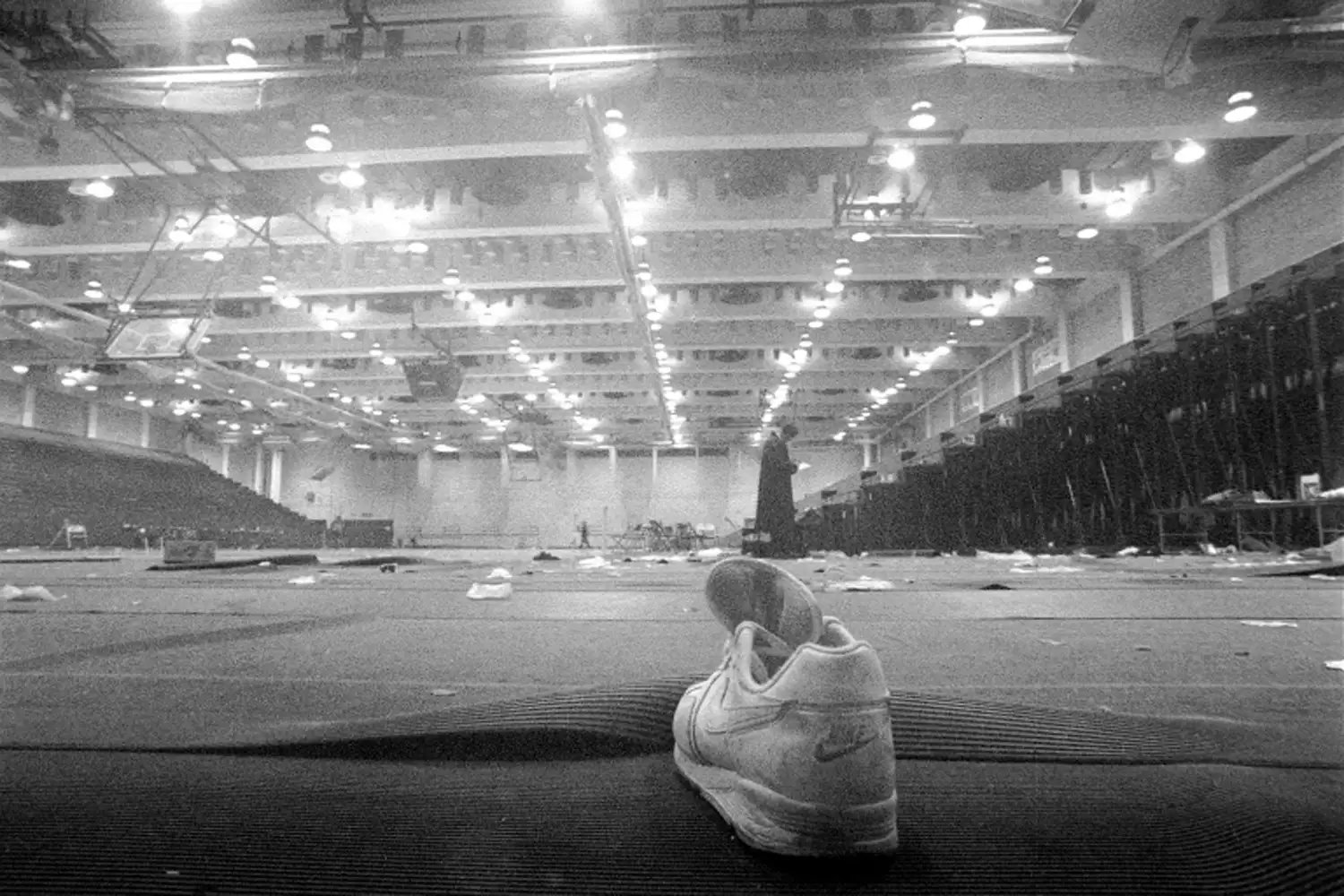
The scene following the fatal stampede at City College of New York (CCNY) during a rap charity basketball game on December 29, 1991.
David Handschuh/New York Daily News via Getty
On that fateful day, organizers Combs and Heavy D, who passed away in 2011, had anticipated a successful charity basketball game featuring multiple well-known musicians, including Run-DMC, Jodeci, and Boyz II Men. Part of the proceeds were designated for an AIDS charity.
The overwhelming popularity of the event attracted thousands to the college, far exceeding the facility’s capacity. As early as 5 p.m., hundreds were already in the gym, with thousands more outside waiting to enter. Prior to the game, eager attendees rushed the lobby seeking access to the gym via a staircase.
However, the doors at the staircase did not lead into the gymnasium but merely opened back into the lobby, creating further congestion. After an agonizing wait of 15 minutes, panic broke out as individuals became crushed in the ever-growing mass of people. The tragedy unfolded as the game started at 7 p.m., leading to nine fatalities.
Who Were the Victims of the City College Stampede?
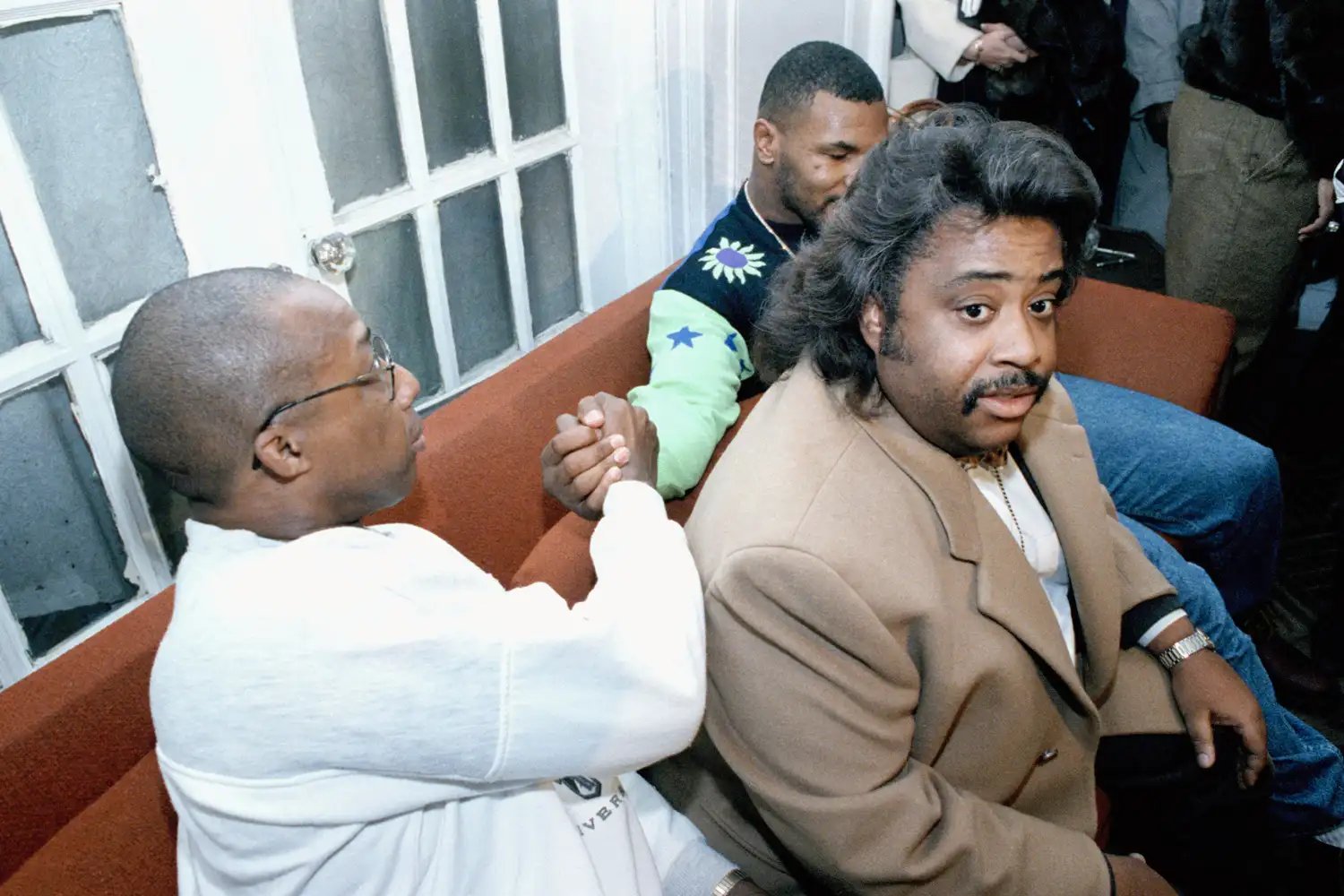
Mike Tyson shakes hands with Frank Boone behind Rev. Al Sharpton at a news conference on December 31, 1991 in New York.
Bebeto Matthews/AP Photo
Tragedy struck as paramedics responded to the scene, treating victims who suffered from suffocation and crushing injuries. Eight individuals were pronounced dead on-site, while one person succumbed to their injuries at a hospital shortly after. Approximately 30 individuals sustained serious injuries.
The deceased included five individuals from the Bronx: 28-year-old Darren Brown, 24-year-old Yul Dargan, 19-year-old Laytesha Heard, 17-year-old Leonard Nelson Jr., and 20-year-old Dirk Swain. Three other victims—26-year-old Charisse Ann Noel, 15-year-old Jabaal Rainey, and 20-year-old Sonya Williams—came from different neighborhoods in New York City, including Harlem, Brooklyn, and New Rochelle.
The last victim was 20-year-old Dawn McCaine from Brooklyn, who tragically died after being removed from life support at St. Luke’s Hospital, where she was reported to have been “unconscious and unresponsive” due to suffocation during the stampede.
How Was Diddy Involved in the City College Stampede?
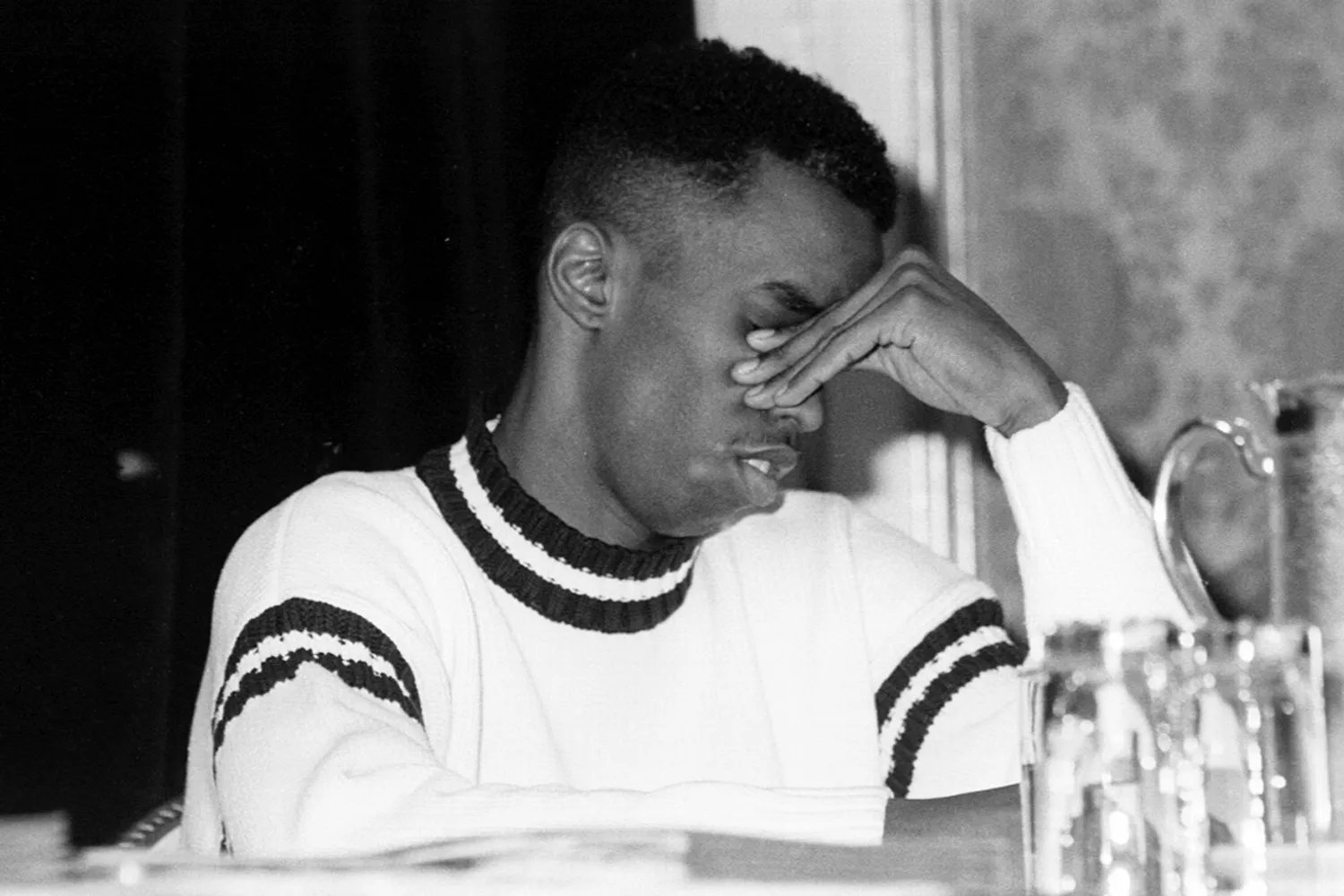
Sean Combs during a press conference on January 2, 1992 in New York.
Clarence Sheppard/New York Daily News via Getty
At the time of the incident, Combs was just 22 years old and a relatively unknown music producer aspiring to break into the industry. Collaborating with Heavy D, the duo promoted the “first annual Heavy D and Puff Daddy Celebrity Charity basketball game,” utilizing local radio stations and promotional strategies that positioned the event as the must-attend occasion of the season.
Attendee Jason Swain, whose brother Dirk was among the deceased, remarked that the promotion was so pervasive that “if you didn’t know about that event, something was wrong with you.” Tim Patterson, a childhood friend of Combs, noted that they marketed the event as though it were taking place in a much larger venue than City College’s 2,700-seat capacity.
In the aftermath of the tragedy, there was public outcry regarding responsibility. Combs held a press conference addressing the calamity, expressing his deep regret and asserting the importance of ensuring such an event would never occur again.
“My dream for this evening was to bring a positive program to my people and my community. Whatever must be done, must be done to ensure that this never, ever, happens again,” he stated, according to the Netflix series Sean Combs: The Reckoning.
In a testimony given in 1998, Combs noted that the tragedy was something he “deals with every day of [his] life,” and expressed a great deal of empathy for the families affected, emphasizing that “the pain that the families deal with” far surpassed his own.
Reflecting on the incident later, Combs indicated that the tragedy inadvertently elevated his profile in the music industry, admitting that his rise to fame stemmed from these unfortunate events.
Was Diddy Involved in Lawsuits After the Stampede?
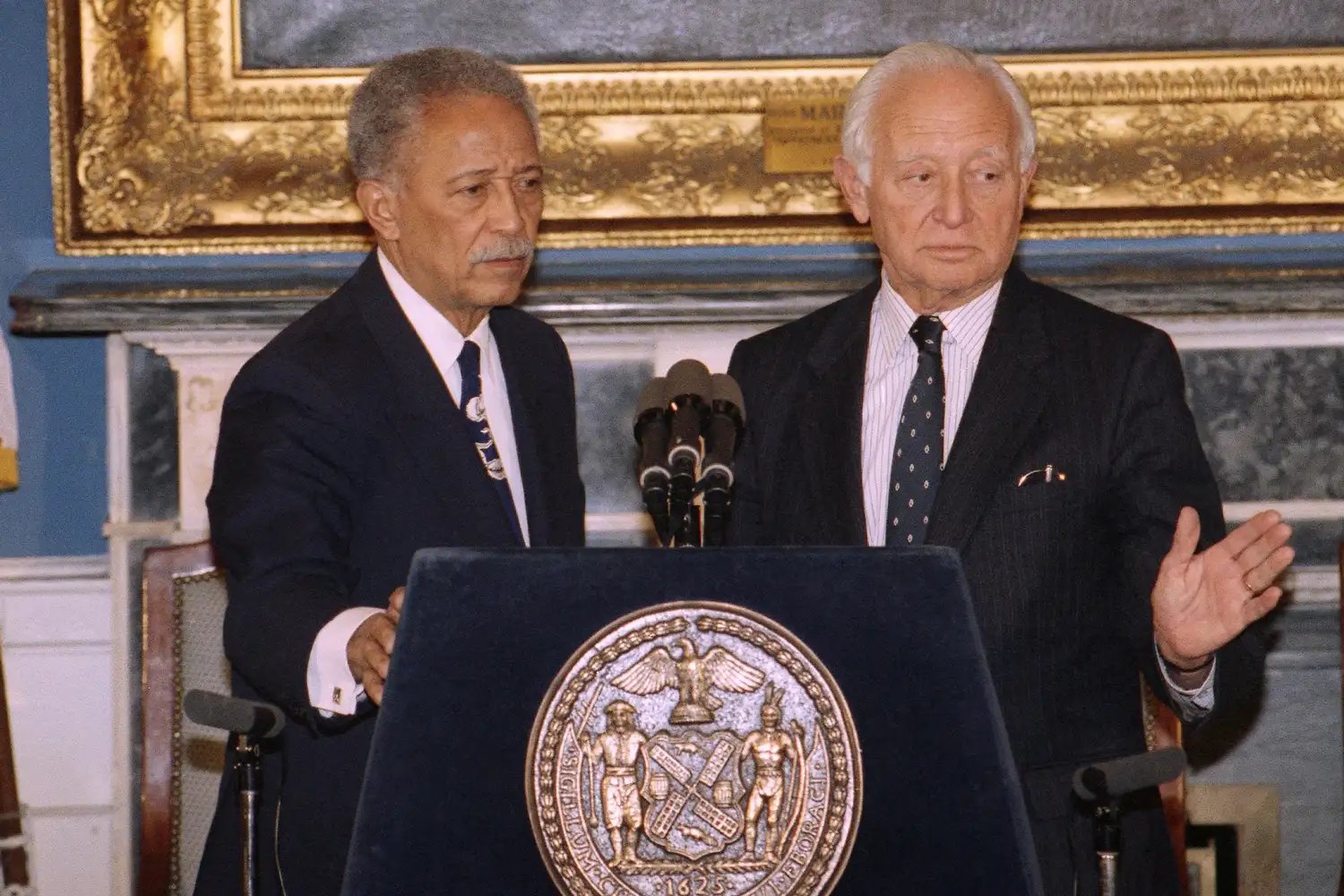
New York City Mayor David Dinkins and Deputy Mayor Milton Mollen release a report on a stampede at City College on January 15, 1992 in New York.
Luis Ribiero/AP Photo
Following an investigation by authorities, no criminal charges were filed in connection with the stampede. However, Combs and Heavy D faced several civil lawsuits initiated by the victims’ families over the years.
Various familial claims were filed against Combs, Heavy D, the college, and New York State. In March 1998, a judge resolved these cases for a total of $3.8 million, with Combs responsible for approximately 20%, amounting to $750,000, while the remainder was covered by the state, Heavy D, a security firm, and New York City.
Subsequently, a judge ruled that Combs and Heavy D were 50% liable for the incident, attributing their actions as a proximate cause of the injuries and deaths, while also placing some measure of responsibility on New York State for its role in managing the college.