

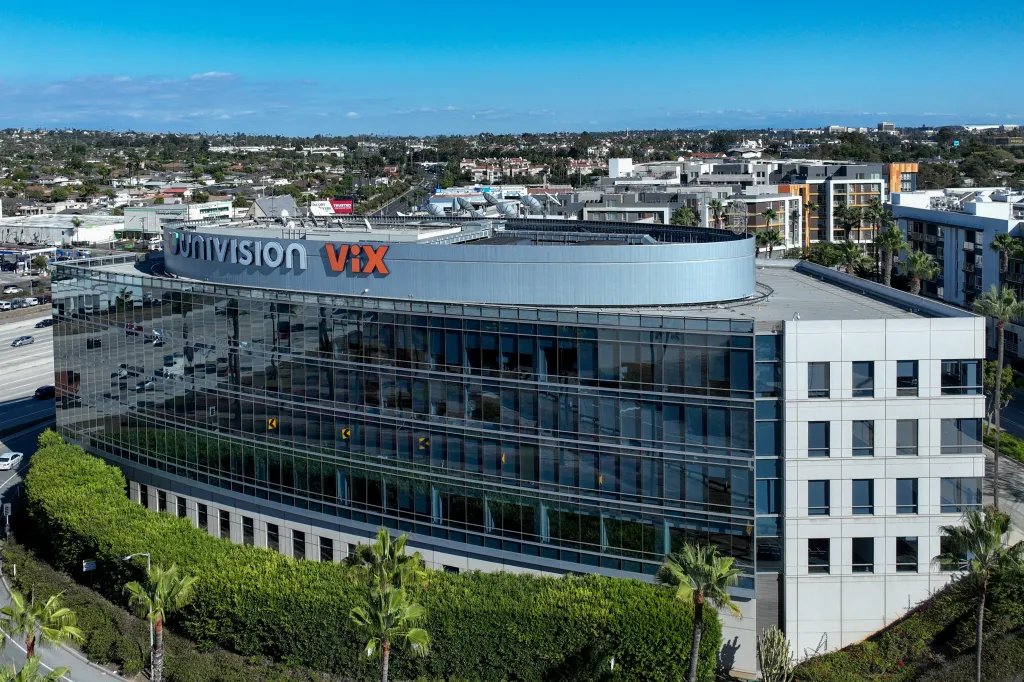
TelevisaUnivision’s Q1 Revenue Holds Steady as CEO Daniel Alegre Cautions About Summer Competition from World Cup
TelevisaUnivision Reports Mixed First-Quarter Results Amid Competitive Challenges
TelevisaUnivision has released its first-quarter results, highlighting a complex financial landscape as CEO Daniel Alegre cautioned about increasing competition from World Cup soccer broadcasts on rival networks in June and July.
In the U.S. and Mexico, total revenue saw a modest increase of 5%, reaching $1.075 billion. However, the company reported a 6% decline in adjusted operating income before depreciation and amortization (OIBDA), totaling $323.3 million. U.S. advertising revenue also took a hit, dropping 12% to $309.9 million.
On a positive note, subscription and licensing revenue in the U.S. rose by 12% year-over-year, amounting to $384.7 million. The streaming service Vix played a crucial role in this growth, compensating for decreases in linear viewership. Alegre noted that Vix’s premium offering and higher average rates significantly contributed to the uptick. A new carriage agreement with Disney’s Hulu + Live TV also added to the revenue boost, while content licensing in Mexico benefited from increased demand for sports rights.
During a recent earnings call, Alegre addressed concerns regarding the impact of the ongoing Iran War, indicating it has wounded consumer spending without yet affecting advertising revenue. However, he pointed to the World Cup as a notable challenge, as TelevisaUnivision holds exclusive broadcasting rights for 104 World Cup matches in Mexico, while Telemundo and Fox retain the Spanish and English-language rights, respectively, in the U.S.
With the World Cup presenting a formidable competitive landscape, Alegre acknowledged, “We are facing some of the challenges of a softer sports slate.” He anticipated that these challenges would become more pronounced in the second and third quarters, particularly due to the intense competition surrounding the tournament. Categories like quick-service restaurants, automotive, and technology are expected to face increased pressure, he noted.
In response to these challenges, Alegre emphasized a strategy focused on cultivating growth in less sensitive categories, such as pharmaceuticals and financial services. He remarked, “We knew it was going to be a challenging 2026 in the U.S. ad market.”