
Tarik Saleh and Industry Experts Discuss Navigating Censorship and Political Pressure at Les Arcs Industry Village
Panel on Cinema and Resistance Highlights Pushback Against Governmental Suppression
At the Les Arcs Film Festival, Egyptian-Swedish director Tarik Saleh discussed the far-reaching consequences of his ban from Egypt due to his provocative Cairo Trilogy. This trilogy critically examines police, religious, and political corruption within Egypt, a subject that has not only drawn ire from the Egyptian government but also influenced his filmmaking journey abroad.
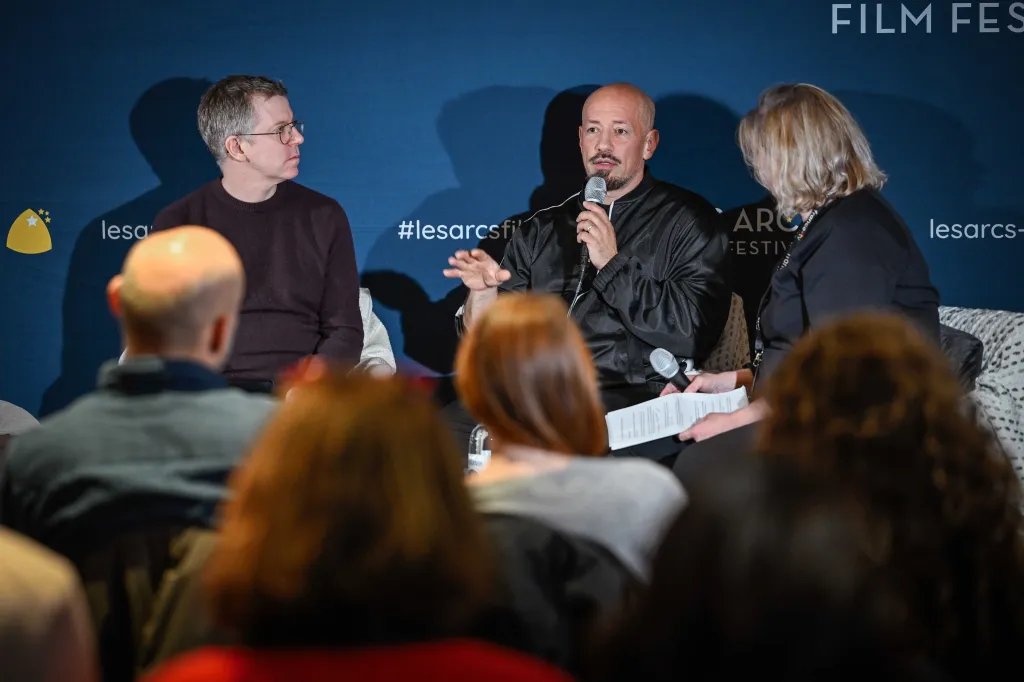
During a panel on cinema and resistance, Saleh highlighted how disapproval from President Abdel Fattah El-Sisi’s regime impacted his work beyond Egyptian borders. Joining him on the panel were his long-time French distributor and producer Alexandre Mallet-Guy, CEO of Memento Distribution, and sales agents Jean-Christophe Simon of Films Boutique and Margot Hervée from Totem Films.
Simon and Hervée shared their experiences collaborating with Iranian dissident filmmakers Mohammad Rasoulof and the duo Maryam Moqadam and Behtash Sanaeeha, both of whom have faced significant challenges due to their critical views of the Iranian regime.
Reflecting on his own experiences, Saleh recounted how he was driven out of Egypt just before filming The Nile Hotel Incident, which won the Grand Jury Prize at Sundance in 2017. This film, set against the backdrop of Egypt’s 2011 revolution, addresses the real-life murder of singer Suzanne Tamim and the subsequent attempts to shield a powerful real estate tycoon implicated in her death.
Although the film does not directly reference El-Sisi, who came to power through a military coup in 2013, its themes rattled the authorities. Saleh recalled a turning point on the eve of production, stating, “We had cast the whole film and just one week before we were going to start shooting, we were at a lunch at the Swedish embassy in Cairo… my producer got the phone call. There were a few Swedish journalists at this lunch, so she couldn’t speak openly. She just said to me, ‘Tarik, we have to leave.’ And I said, ‘Leave the lunch? And she said, ‘No, we have to leave the country now.’”
After contacting a local producer who looked visibly shaken, Saleh learned he had one week to exit Egypt or risk being unable to leave safely. Since that moment, he has not returned to his homeland. Subsequent films in the trilogy, Cairo Conspiracy and Eagles of the Republic, were filmed in Turkey after complications arose with filming in Morocco.
Saleh noted that Morocco had originally welcomed him for Eagles of the Republic, a project that began with an agreement made when he served on the jury at the Marrakech Film Festival in 2023. However, after the script was submitted to the Interior Ministry, which is standard practice for sensitive projects, he was informed that shooting would not be permitted.
Mallet-Guy indicated that securing funding for Saleh’s films within the MENA region has proven elusive. “We were quite naive at the beginning. We thought we could get some money from the Doha Film Institute or from the Red Sea Film Festival, but the script was too sensitive,” he explained. Fortunately, European funding sources have supported the endeavor.
Eagles of the Republic premiered in competition at Cannes in May but has not been featured in MENA film festivals, a situation Saleh describes as “painful.” He suggested that El-Sisi’s favorable standing among Western leaders complicates his position. “You have to understand that El-Sisi is the favorite dictator of the West… sometimes I even get jealous of my Iranian friends because everyone hates Iran, so you’re popular when you make films that criticize Iran,” he added, half-jokingly.
The panel also highlighted the struggles of Iranian filmmakers. Simon reminisced about his collaboration with Rasoulof, who was unable to attend the Berlinale Golden Bear awards in 2020 due to a travel ban. Rasoulof was arrested in July 2022 for signing a petition urging security forces to show restraint during protests. He was released on a temporary basis due to health issues but remains under house arrest.
In response to these challenges, Simon took considerable precautions while raising funds for The Seed of the Sacred Fig, stating that only about 30 people knew of the project’s existence. The secrecy was deemed essential to safeguard the film’s production and the safety of its participants.
The film premiered at Cannes following Rasoulof’s escape from Iran, an event the panelists believe provided crucial protection for dissident filmmakers. Hervée detailed the precarious situation faced by the directors of My Favourite Cake, who received threats from Iranian authorities just before their film’s world premiere at the Berlinale.
As the directors face ongoing risks in Iran, Hervée emphasized the vital role the international film community plays in their continued safety, highlighting the psychological toll that constant threats bring. "They have this suspended sentence… It’s like a sword of Damocles over their heads. But it could have been worse," she noted.
The conversation underscored the urgent realities faced by filmmakers in oppressive regimes and the solidarity within the international film community that may offer a degree of protection against such governmental hostility.