
Sierra Nevada’s April Snowpack Falls to Unprecedented Low 수준
California’s April Snowpack at Record Low
As of Wednesday, California’s Sierra Nevada snowpack was measured at 0% of the average for April, marking the second lowest level on record, according to the California Department of Water Resources.
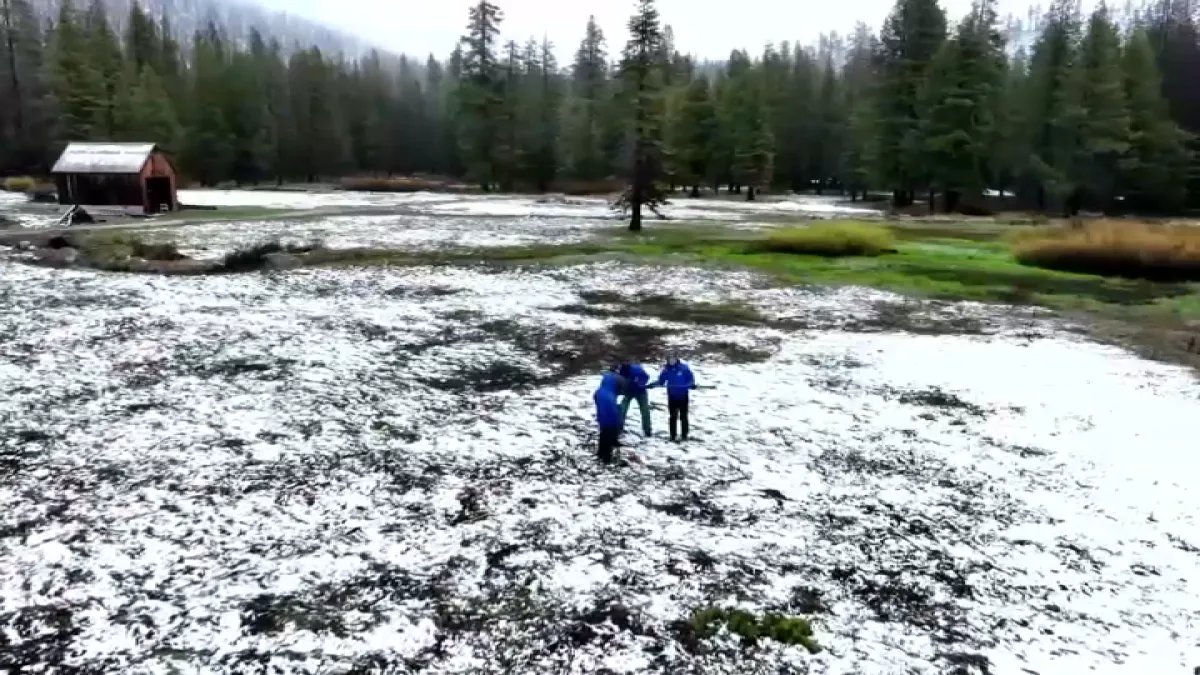
Officials reported virtually no measurable snow during the fourth snow survey of the season conducted at Phillips Station. They attributed this significant decrease to record-high temperatures in March and rain at higher elevations, which contributed to the rapid melt of an already below-average snowpack.
"Today, our survey recorded zero inches of water content and zero inches of depth, which puts us at 0% of average for this particular location," said Andy Reising from the department. Utilizing automated snow sensors, officials later determined that the statewide snowpack stands at just 18% of the average.
In contrast, the snow survey from December 2025 indicated a snow depth of 24 inches, with water content at 50% of the average.
The preliminary findings are concerning, particularly as April is historically the peak month for snow accumulation at Phillips Station. "The snow melt that we saw in March looked more like we would typically see in later April or even May," Reising explained.
These snowpack surveys are crucial for water managers statewide, providing essential data to assess future water availability from melting snow to replenish reservoirs. Currently, California’s reservoirs are full, but this may only sustain the state’s water supply for the year. Traditionally, accumulated snow melts from late April through July, feeding the state’s rivers, streams, and reservoirs, as noted by Karla Nemeth, director of the Department of Water Resources.
"We need to use our water supplies more than once through significant investment in water recycling, and we need to use it more efficiently," Nemeth said. "And that’s the future we have in California."
While additional snow is forecast for early April, officials remain doubtful that it will significantly compensate for the earlier snowmelt.