

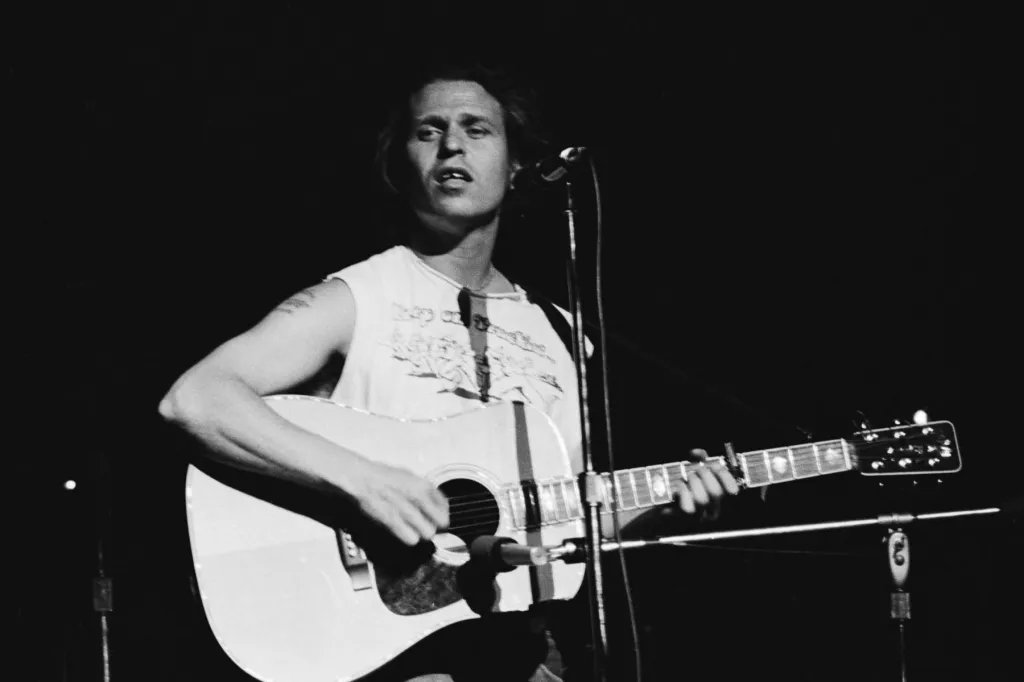
Remembering Country Joe McDonald of Country Joe and the Fish, Who Passed Away at 84
Trending on Billboard
Country Joe McDonald, the influential counterculture musician known for his Vietnam War protest anthem “I-Feel-Like-I’m-Fixin’-to-Die Rag,” has died at the age of 84. The song emerged as a defining piece of the 1960s protest movement.
According to his wife, Kathy, McDonald passed away at his home in Berkeley, California, due to complications related to Parkinson’s disease. His death was reported on Monday, March 9.
Born Joseph Allen McDonald on January 1, 1942, in Washington, D.C., he gained prominence as the frontman of Country Joe and the Fish, a psychedelic rock band that rose to fame in the mid-1960s.
The band became known for its politically charged lyrics, aligning closely with the anti-war movement. McDonald’s most famous song, “I-Feel-Like-I’m-Fixin’-to-Die Rag,” became a rallying cry for Vietnam War protesters.
The song achieved global recognition during McDonald’s solo performance at the 1969 Woodstock festival, where he led the crowd in the now-iconic “Fish Cheer,” a call-and-response chant that encouraged attendees to spell out an expletive before breaking into the anthem.
Reflecting on the song decades later, McDonald noted that its message targeted political leaders rather than the soldiers fighting the war. “The important thing about the Fixin’ to Die Rag was that it had a new point of view that did not blame soldiers for war,” McDonald told Street Spirit in 2016. He added, “It just blamed the politicians, and it blamed the manufacturers of weapons. It didn’t blame the soldiers.”
He elaborated, “Someone who was in the military could sing the song, and the attitude is, ‘Whoopee, we’re all going to die.’ Most peace songs of the era blamed the soldiers for the war.”
Country Joe and the Fish released their debut album, Electric Music for the Mind and Body, in 1967, which helped establish them in the San Francisco psychedelic rock scene alongside contemporaries such as Jefferson Airplane and the Grateful Dead.
Two of the band’s albums charted in the top 40 of the Billboard 200 during the late 1960s, solidifying their place in the music landscape, even as peers like Jefferson Airplane and Grateful Dead enjoyed broader commercial success.
After the band dissolved in the 1970s, McDonald continued his musical career as a solo artist, releasing numerous albums that spanned folk, rock, and political themes. His 1986 album, Vietnam Experience, revisited the cultural impact of the war that influenced much of his early work.
Before launching his music career, McDonald served in the U.S. Navy from 1959 to 1962. He moved to the San Francisco Bay Area in 1965 and co-founded Country Joe and the Fish in Berkeley with guitarist Barry “The Fish” Melton. Although he peaked commercially during the late 1960s, McDonald remained active in music for decades, performing at festivals and writing songs that reflected on war, politics, and social change.
Country Joe McDonald’s music became integral to the late 1960s protest-song tradition, with artists increasingly leveraging popular music as a vehicle for political expression. Alongside icons like Joan Baez and Bob Dylan, McDonald helped shape the soundtrack of the anti-war movement, using satire and sharp political commentary to voice a generation’s frustrations with the Vietnam War.