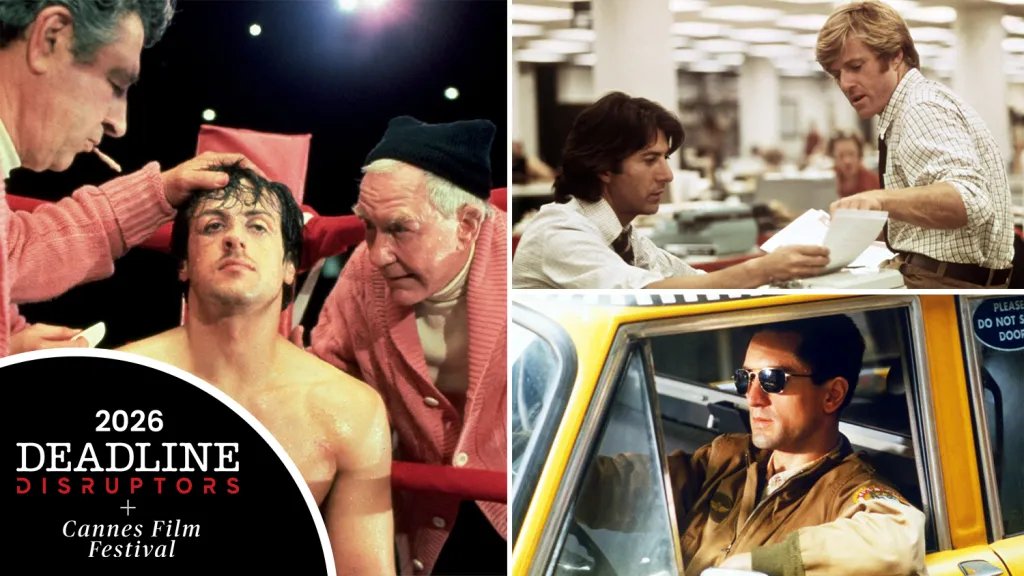
Reflecting on ‘All The President’s Men’ at 50: Insights from Key Players on Today’s Political Challenges
Reflecting on the Enduring Impact of All the President’s Men After 50 Years
All the President’s Men, the landmark film about the Watergate scandal, remains a pivotal work in cinematic history, emphasizing the significance of investigative journalism. Michael Britton, an associate producer of the film, considers its importance, stating, “We saw this movie as something that had a different level to it. It was monumental. Most movies are movies — they’re entertainment — but this felt important.”
Released in 1976, the film, directed by Alan J. Pakula and based on the book by journalists Bob Woodward and Carl Bernstein, stars Robert Redford and Dustin Hoffman as the intrepid reporters who uncovered the scandal leading to President Richard Nixon’s resignation. Praised for its meticulous portrayal of the investigative process, the film garnered eight Oscar nominations and won four, alongside a robust box office return of approximately $70 million against a modest budget of $5-8 million.
Reflecting on the film’s legacy, Ann Hornaday, a veteran film critic for The Washington Post, remarked that it encapsulates the Watergate affair’s essence, describing it as a piece of collective memory that resonates with audiences even today. Jake Tapper, CNN’s lead anchor, shared a personal connection to the film, which he believes made complex political dynamics accessible to the public.
Central to All the President’s Men’s accessibility was Redford, who played a crucial role in its development. Hornaday noted, "Bob is the ultimate disruptor," highlighting Redford’s dedication to independent filmmaking and his commitment to socially relevant storytelling. Britton recalls a sense of danger during the film’s production, recalling the tension surrounding the Watergate story and a constant fear of sabotage.
Redford’s passion for the narrative was sparked by conversations with Washington journalists during the promotion of his 1972 film, The Candidate. He acquired the film rights to Woodward and Bernstein’s book ahead of his co-star Hoffman, ultimately finding a home for the project at Warner Bros. after it was initially declined by Paramount.
In discussing the film’s production, Redford emphasized a conscious effort to avoid partisanship or glorification of the press, focusing instead on the disciplined work of the two reporters. Michael Britton noted the contrasting styles of Redford and Hoffman during filming, describing moments of tension between the two actors as they worked to find a unified performance.
The authenticity of All the President’s Men is frequently cited as critical to its success. According to Hornaday, Pakula and Redford maintained a close dialogue with Woodward and Bernstein throughout production, ensuring that every detail resonated with reality. This dedication extended to the film’s set design, characterized by meticulously recreated newspaper articles and a vigorous newsroom atmosphere.
Oscar-winning composer David Shire faced initial challenges in creating the film’s score but found inspiration after discussions with Pakula about the emotional stakes of the journalists’ quest for truth. Reflecting on the film’s significance today, Hornaday observed that the patterns of deceit seen during Watergate have evolved into a more widespread challenge, echoing concerns about modern threats to democracy.
As the film celebrates its 50th anniversary, actor Mark Ruffalo pointed to its relevance in light of contemporary media consolidation, warning that the integrity of storytelling may be at risk in today’s environment. Tapper further noted that the film serves as a powerful reminder of the necessity for journalists to uphold factual integrity, even amidst political and ideological pressures.
All the President’s Men continues to resonate, underscoring the vital role of journalism in safeguarding democracy and illuminating the relentless pursuit of truth in an increasingly complex media landscape.