


Patrick Mahomes’ ACL Injury: Insights from a Surgeon on Healing and Recovery
Patrick Mahomes.
Credit :
Jamie Squire/Getty
Key Highlights
- Patrick Mahomes sustained a knee injury during the Kansas City Chiefs’ game against the Los Angeles Chargers on December 14.
- The quarterback underwent surgery the following day to address a torn ACL and LCL.
- Orthopedic surgeon Dr. Yair Kissin provides insights into Mahomes’ injury and recovery timeline.
In the closing moments of the Kansas City Chiefs’ December 14 game against the Los Angeles Chargers, Patrick Mahomes collapsed in visible pain, clutching his left knee. An MRI later confirmed that the 30-year-old quarterback had sustained a torn ACL.
Just a day after the injury, Mahomes underwent surgery to repair his ACL and was also found to have a torn LCL, according to multiple reports.
The ACL, or anterior cruciate ligament, plays a crucial role in knee stability, while the LCL, known as the lateral collateral ligament, also contributes to knee support.
Speaking to reporters, Dr. Yair Kissin, vice chairman of orthopedic surgery at Hackensack University Medical Center, discussed the nature of Mahomes’ injury and the expected recovery trajectory.
After reviewing footage from the game, Dr. Kissin noted that Mahomes’ injury appeared to be non-contact. It seemed to occur when the quarterback’s leg locked while attempting to evade a tackle from Chargers defensive lineman Da’Shawn Hand.
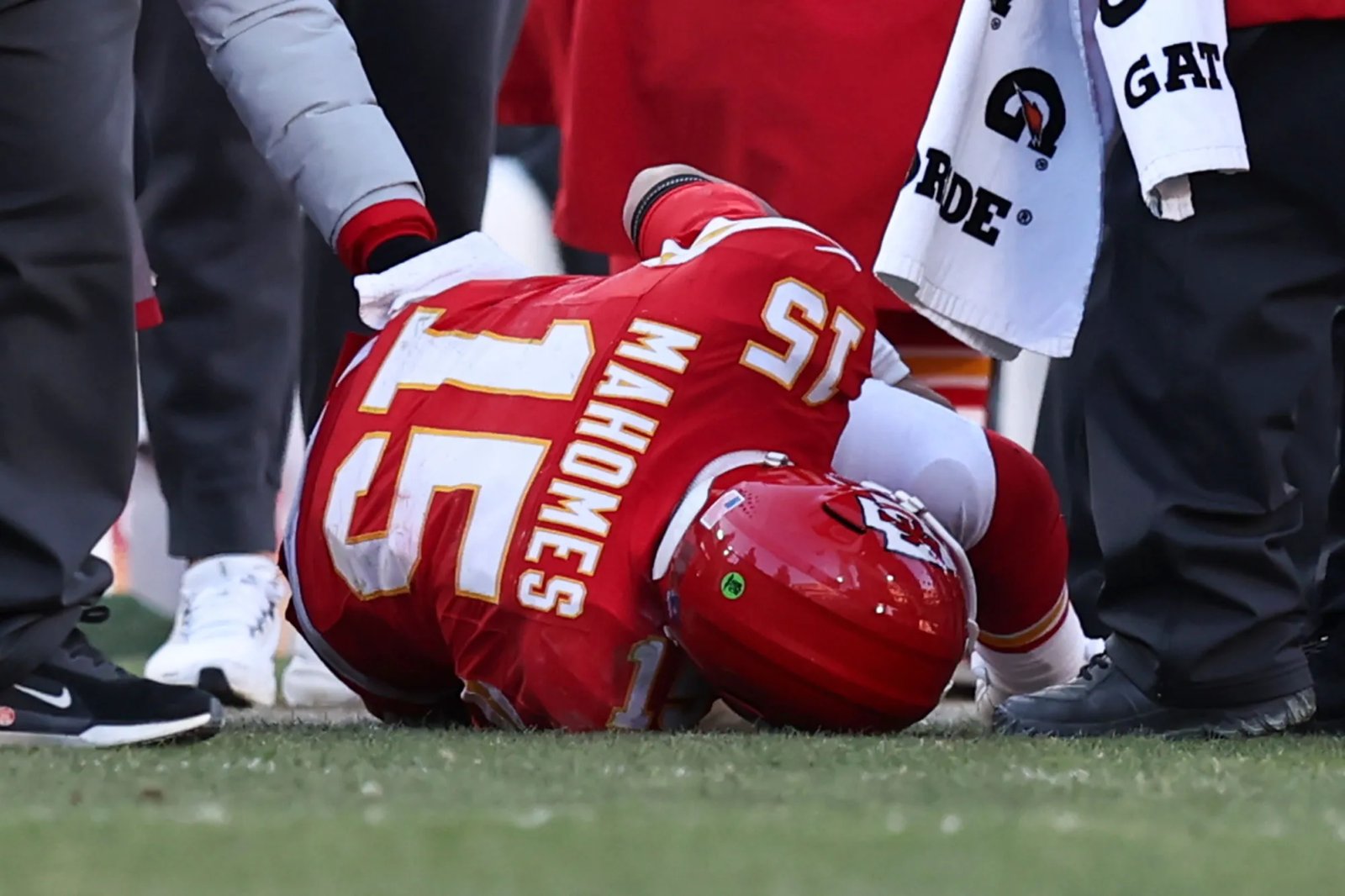
Patrick Mahomes after ACL injury.
Scott Winters/Icon Sportswire via Getty
“There was another player nearby, but nobody made contact with that knee,” Dr. Kissin explained. “So it’s likely classified as non-contact, which is typical for many ACL tears. The foot plants, while the rest of the body continues to move, leading to such injuries, particularly in football where quarterbacks frequently change direction.”
Dr. Kissin further remarked, “The way his knee bowed outward during the injury likely added stress to the LCL. An ACL and LCL tear makes complete sense under these circumstances.”
While Dr. Kissin is not part of Mahomes’ treatment team, he noted that he typically allows swelling to subside for one to two weeks before conducting ACL repair surgery in his athletic patients. Surgeries performed while the knee is swollen can complicate recovery, he cautioned.
However, he acknowledged that professional athletes operate on a different timeline than non-professionals, which likely contributed to Mahomes undergoing surgery merely a day after the injury.
“These athletes often have multimillion-dollar contracts and need to recover as quickly as possible. Thus, early surgery is not seen as malpractice; in fact, it is commonly accepted to expedite the healing process and avoid excessive inflammation,” he said.

Patrick Mahomes.
Kevin Sabitus/Getty
Post-surgery, recovery from a torn ACL typically spans nine to 12 months. Dr. Kissin elaborated that the first four to six weeks usually involve the patient using crutches, focusing on range of motion for the initial two to three months.
Subsequently, patients transition to strengthening exercises before engaging in sport-specific training. Although the baseline recovery window is nine months, the extent of Mahomes’ LCL injury could prolong this timeframe.
“In addition to a second ligament injury, it’s essential to assess the overall alignment and weight-bearing capacity, as these factors could further stress the LCL and extend recovery time,” he explained. “This may mean Mahomes could be on crutches for a longer duration.”
Dr. Kissin emphasized that while Mahomes has the advantage of state-of-the-art resources available to professional athletes, he still faces a significant recovery journey ahead.
“Nobody is superhuman,” Dr. Kissin asserted. “While we may perceive athletes as extraordinary on-screen, being healthy and fit does not guarantee a faster healing process.”
He added, “There’s a common misconception that elite athletes are superhuman. However, they experience challenges similar to those of everyday individuals. Professional athletes may possess unique motivation and intensity, but their recovery timelines can mirror those of the general public.”