
Nexstar CEO Perry Sook Critiques DirecTV Amid Tegna Merger Discussions, Warns That a Handful of Companies May Soon Dominate Local TV
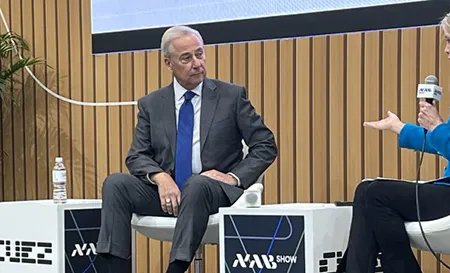
In his first public remarks since a federal judge halted Nexstar’s merger with Tegna, Nexstar CEO Perry Sook directed criticism toward DirecTV, a key plaintiff challenging the $6.2 billion deal. Speaking with Inside Edition host Debra Norville during the NAB Show in Las Vegas, Sook expressed skepticism over claims that Nexstar represents a “broadcast behemoth.”
“The idea that anyone, Nexstar included, would be a ‘broadcast behemoth’ – to me, that term is kind of an oxymoron, given who we compete against,” Sook stated. He pointed out that Amazon, Google, and Meta are all multitrillion-dollar companies, while even DirecTV, an adversary in the legal battle, is twice Nexstar’s size. “So [saying] we’re the ‘behemoth throwing our weight around in this marketplace’ doesn’t really reflect the reality,” he added.
Sook further criticized DirecTV for its negotiating tactics, claiming the company has a history of undermining its partners. He noted that 83% of retransmission disputes resulting in service blackouts in recent years have involved DirecTV systems. Additionally, he highlighted the political dimension of the lawsuit, mentioning that six of the eight state attorneys general participating in the case are up for election, suggesting their motives may be influenced by election year cynicism regarding the Nexstar-Tegna deal.
In discussing industry consolidation, Norville remarked on Nexstar’s growth from a single radio station in Scranton, Pennsylvania, to the largest owner of TV stations nationwide. Sook referenced FCC Chairman Brendan Carr’s characterization of the local broadcast sector as being at a “break-glass moment,” predicting that “two or three companies” will ultimately dominate local TV.
The legal challenge stems from Nexstar’s announcement on March 20 that it had finalized the merger, shortly after the FCC Media Bureau lifted restrictions on federal ownership caps. If permitted, the combined Nexstar-Tegna entity would reach 80% of U.S. households, considerably exceeding the current cap of 39%.
When asked about the timeline for resolving the merger’s legal challenges, Sook acknowledged that the company does not control the schedule but confirmed they are appealing the judge’s ruling to the Ninth Circuit appellate court. “It will play out over a series of months here,” he noted, expressing confidence in their case. “We have confidence that we will prevail on the facts and on the law and we’ll be vigorous in our defense.”