
Middle East Tensions Rise: How the Gulf Film and TV Industry is Responding to Change
As tensions escalate in the ongoing U.S.-Israeli air campaign against Iran, film and television professionals in the Gulf region are expressing concern over the potential for further conflict.
In recent days, the implications of Iranian retaliation have been felt across the Gulf. Countries including the United Arab Emirates, Qatar, Saudi Arabia, Bahrain, Kuwait, and Oman have reported Iranian attacks primarily targeting U.S. military bases and oil and gas facilities.
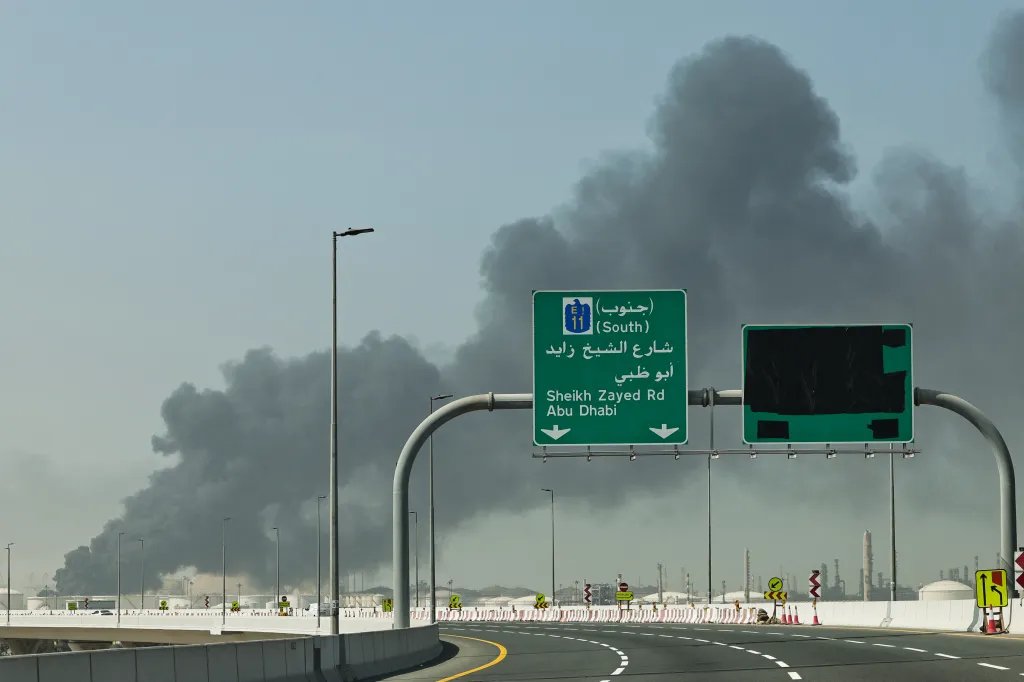
Over the weekend, three individuals lost their lives in the UAE due to debris from intercepted missiles, with significant damage recorded at major airports in Abu Dhabi and Dubai, as well as the luxury Fairmont Hotel in Dubai’s The Palm area.
Despite the turmoil, local professionals are attempting to maintain a semblance of normalcy. “Shops and offices are open. People are also working from home, but there are cars and people on the streets, although it does feel quieter out there,” noted a Dubai-based professional on Monday afternoon.
“It’s just a shock, because for most people living in the Gulf we see it as a very safe place,” they added, resonating with many expats who often feel more secure in cities like Doha or Dubai compared to London or Paris. “It’s unprecedented.”
According to a statement from the Emirati Ministry of Defence on Sunday, Iran has launched 165 ballistic missiles toward the UAE since hostilities began; 152 were intercepted, while 13 fell into the sea. Additionally, two cruise missiles were intercepted, alongside 541 drones, of which 506 were destroyed and 35 caused material damage. Attacks continued into Monday.
Amidst these developments, the Dubai Duty Free Tennis Championships proceeded without interruption, although some players remain stranded in the country as flights have been suspended.
In neighboring Qatar, Iranian attacks have targeted the U.S. Al Udeid Air Base, natural gas facilities, and Doha Hamad International Airport.
Saudi Arabia experienced blasts reported east of Riyadh over the weekend, with debris from an intercepted Iranian drone damaging the Ras Tanura oil refinery on Monday.
“For now, it’s safe to say production is not affected, especially in Saudi. There’s disruption to travel, but hopefully this will pass soon,” commented one industry executive.
Production for Alik Sakharov’s military epic Unbroken Sword is reportedly on schedule at PlayMaker Studios near Riyadh, which is currently employing 450 crew members.
A significant concern remains the fate of hundreds of thousands of international travelers currently in the Gulf, as most flights have been suspended since Saturday and are not expected to resume until at least March 3.
Longer Term Implications
The conflict unfolds during a quieter period for the Gulf, coinciding with Ramadan, which runs from February 17 to March 19 this year. The month is characterized by shorter workdays and is traditionally associated with family gatherings around the evening Iftar meal.
If the situation persists, the entertainment sector may face pronounced challenges during the Eid Al Fitr holidays on March 19, which usually sees heightened activity at cinemas and other entertainment venues.
While residents currently adopt a “keep calm and carry on” mentality, industry stakeholders are increasingly worried about the conflict’s long-term effects on the film and television industries that the UAE, Qatar, and Saudi Arabia have made substantial investments in recent years.
The Gulf’s film festival season peaks in the fourth quarter of the year, with events like Qatar’s Doha Film Festival and Saudi Arabia’s Red Sea Film Festival scheduled for November and December, respectively. However, several spring events face uncertainty due to the ongoing conflict.
The status of Qatar’s Doha Film Institute’s Qumra talent and project event, set for March 27 to April 1, remains in question, with prominent guests including Gael Garcia Bernal and Diego Luna.
Upcoming sporting events in Qatar, such as the Qatar Football Festival and the Finalissima between Argentina and Spain on March 27, are also under review.
Furthermore, the conflict emerges just months after Qatar intensified its efforts to become a significant player in the film industry, highlighted by a 50% cash rebate announced last December to attract new projects.
The potential for disruptions is not limited to the entertainment sector; questions linger over the status of Formula 1’s Gulf races, including the Bahrain Grand Prix on April 10-12 and Saudi Arabia’s Jeddah Grand Prix on April 17-19.
A pressing concern is the threat the conflict poses to the Gulf’s oil and gas production, a vital element of the region’s economy despite ongoing diversification efforts.
On Monday, QatarEnergy announced a temporary halt in liquefied natural gas (LNG) production following Iranian attacks on its facilities, while the situation at Saudi Arabia’s Ras Tanura oil refinery has similarly affected operations.
The onset of the U.S.-Israeli campaign against Iran coincided with Paramount’s significant acquisition of Warner Bros. Discovery for $110 billion, a deal reportedly supported by investors from Saudi Arabia, Qatar, and the UAE.
If the conflict persists, the Gulf region’s capacity to invest in media and entertainment could be severely impacted.