

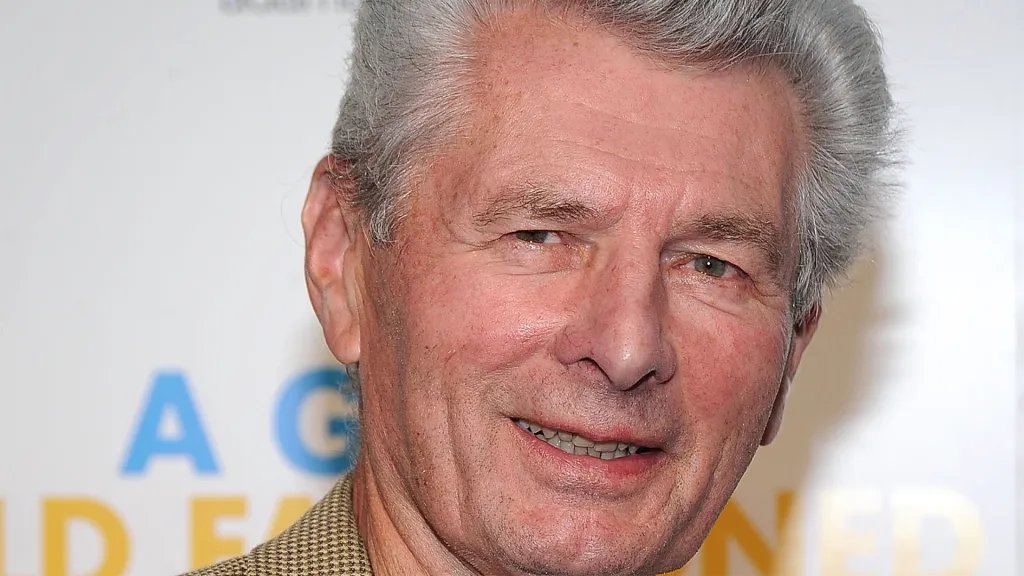
Meyer Gottlieb, Renowned Film Producer and Holocaust Survivor, Passes Away at 86
Obituary: Meyer Gottlieb, Celebrated Film Producer and Holocaust Survivor, Passes Away at 86
Meyer Gottlieb, a Holocaust survivor and prominent figure in the film industry, has died at the age of 86. Gottlieb was known for serving as the longtime chief of Samuel Goldwyn Films, where he produced notable films including Master and Commander: The Far Side of the World and the 2013 remake of The Secret Life of Walter Mitty.
Born in Poland in 1939, Gottlieb’s early years were marked by the upheaval of World War II. His family fled from the Nazis, enduring months on the run. In a 2016 interview with The Hollywood Reporter, he recounted a traumatic memory from his childhood when he witnessed his father’s departure to fight the Germans, after which he would never see him again. "I have no memories of joyous events," Gottlieb said. "The first real memories of a childhood I have are after I came to America."
In 1978, Gottlieb partnered with Samuel Goldwyn Jr. to revive The Samuel Goldwyn Company and became its president and COO in 1988. Following its acquisition by Orion Pictures and MGM in the 1990s, he established Samuel Goldwyn Films in 2000. Under his leadership, the Culver City-based company specialized in independent and foreign films, producing and distributing hundreds of works, including The Big Blue, Me Without You, and The Count of Monte Cristo.
Gottlieb’s impact extended beyond commercial success; he aimed to convey deeper messages through his films. "The truth of the matter is that the weapons of massive destruction are not bombs—they’re hatred, intolerance and bigotry," he remarked.
In addition to Master and Commander and The Secret Life of Walter Mitty, Gottlieb’s producing credits included the 2001 film Tortilla Soup and the 1990s television series Flipper. He was also instrumental in promoting Rosenstrasse, a 2003 drama directed by Margarethe von Trotta about the protests in Berlin by non-Jewish women against the detainment of their Jewish husbands during World War II.
Reflecting on his experiences as a Holocaust survivor, Gottlieb stated, "As a [Holocaust] survivor, you have to prove that there is a reason for your existence. You are driven to justify the fact that you survived what others did not. And part of that justification is to do something that will help repair the world."