

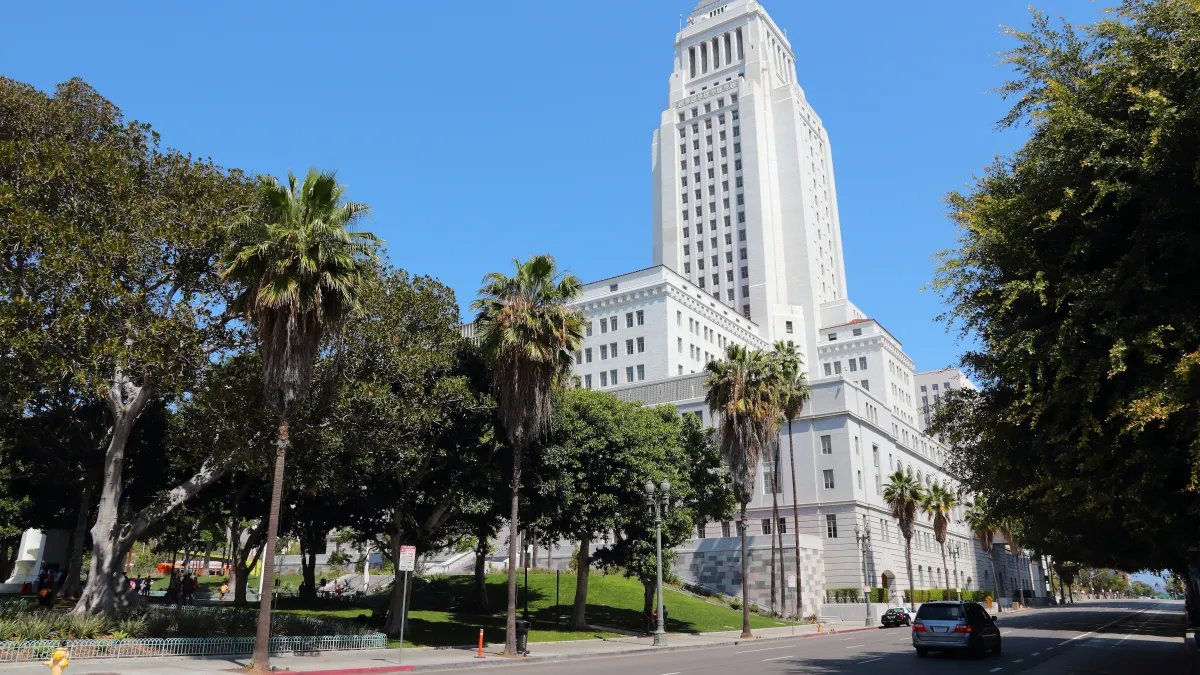
Los Angeles City Faces a Budget Shortfall of $200 Million
Los Angeles Projected to Face Budget Shortfall Amidst Economic Challenges
As the city of Los Angeles approaches the end of the 2025-26 fiscal year, officials anticipate a deficit that could surpass $200 million, despite general fund revenues aligning with budget expectations. The city Controller’s Office disclosed these insights on Thursday.
The annual Revenue Forecast Report attributed this financial outlook to a range of economic pressures, including the January 2025 wildfires, ongoing tariffs, geopolitical instability, and strict federal immigration enforcement. While revenues are projected to finish the year at or slightly below the adopted budget—approximately $25 million short of original estimates—there remains a sense of resilience within the city’s economy.
"Although revenues are expected to remain flat with the budget throughout the current fiscal year and go slightly up next fiscal year, the city must enact better controls and accountability measures on overspending and massive liability payouts," city Controller Kenneth Mejia emphasized in a statement. He urged that revenue growth must either match or exceed spending to prevent short-term solutions like layoffs and hiring freezes.
The report indicates a modest expected increase of 1% in tax revenue for fiscal year 2026-27. Mejia acknowledged the collaborative efforts of the Mayor’s Office and the Charter Reform Commission, which are working on formalizing a two-year budget process and a capital infrastructure program.
The forecast highlights notable declines in specific revenue streams, including an 18% decrease in transient occupancy tax revenue, also known as the hotel tax, which fell by $18 million. A 100% drop in special parking fees, totaling $37 million, and a 62% reduction in federal grant funding, equating to $29 million, were also reported. The downturn in hotel tax revenue can be partly attributed to decreased tourism, influenced by heightened immigration concerns and broader political issues.
In contrast, the report predicts a 7% increase in revenue from utilities—approximately $48 million—due to raised fees for garbage collection and sewer services, along with increased demand. Additionally, Los Angeles will receive $22 million in one-time aid from the state to offset property tax losses related to the Palisades Fire.
Projected revenue from the business tax is expected to surpass estimates by around 3%, or $27 million, while special funds are increasingly being used to support city positions in light of budget constraints.
The report also notes that economic conditions may shift significantly over the next 16 months, as major events like the World Cup and the 2027 Super Bowl loom on the horizon. Mejia’s office estimates an overall tax revenue increase of $107 million, or 1%, for the upcoming fiscal year, although certain revenue streams, including hotel tax and departmental receipts, are expected to outpace figures from the 2025-26 fiscal year.
However, there are concerns regarding the lack of state funding in 2026-27 to compensate for property tax losses due to the Palisades Fire. The report anticipates that federal grant funding and franchise income taxes will also be lower than the current fiscal year’s amounts.
Looking ahead, hotel tax revenues are projected to rise by 3.5%, or $11 million, contingent upon whether major global events attract tourism. State officials have indicated declines in tourism from significant international markets, including Canada and Mexico, as a result of existing federal policies.
The report also mentioned the potential for an additional annual revenue boost of $22 million to $44 million from the hotel tax if voters approve related measures on the impending June ballot.
Mejia reiterated the need for a long-term, strategic approach to ensure fiscal sustainability through transparency and accountability in budgeting practices.