
Kristen Stewart and Imogen Poots Share Their Thoughts on the Impact of ‘The Chronology of Water’
Kristen Stewart’s Directorial Debut Takes Audiences on a Deep Dive
Kristen Stewart’s first film as a director, The Chronology of Water, promises to linger in viewers’ minds long after the credits roll. This emotionally charged adaptation aims to explore the depths of human experience through the lens of its complex protagonist.
In a promotional interview, actress Imogen Poots shared her powerful reaction upon receiving the emotionally intense script. "I was completely enthralled," she said, noting that Stewart’s involvement as both the adapter and director added weight to her excitement. "It’s different these days… It’s hard to grab hold of someone and turn them around to you," Poots explained, emphasizing Stewart’s unique vision. She remarked on the character’s relatable struggles, specifically her inconsistencies and the challenges faced by women when encountering a landscape often dominated by unrealistic representations. “Many people are left out of relating to what’s on the screen in front of them,” she observed.
Stewart addressed the nuances of adapting the underlying themes of the source material. "The book is an internal landscape," she explained, highlighting how the narrative reflects the protagonist’s intricate inner world. “It just didn’t feel like a book that was for other people,” she added, expressing pride in the storytelling depth that allows for a communal sharing of experiences.
The film’s raw portrayal of intimacy also raised questions about societal expectations. Poots noted how Lidia’s character, shaped by her turbulent past, illustrates both vulnerability and strength. “Attempting to get close to what that is on camera is also vulnerable,” she stated. Stewart underscored the importance of capturing genuine human experiences through innovative filming techniques. “I was really obsessed with accomplishing a first-person perspective that didn’t feel hokey,” she said, explaining her focus on immersion and emotional authenticity.
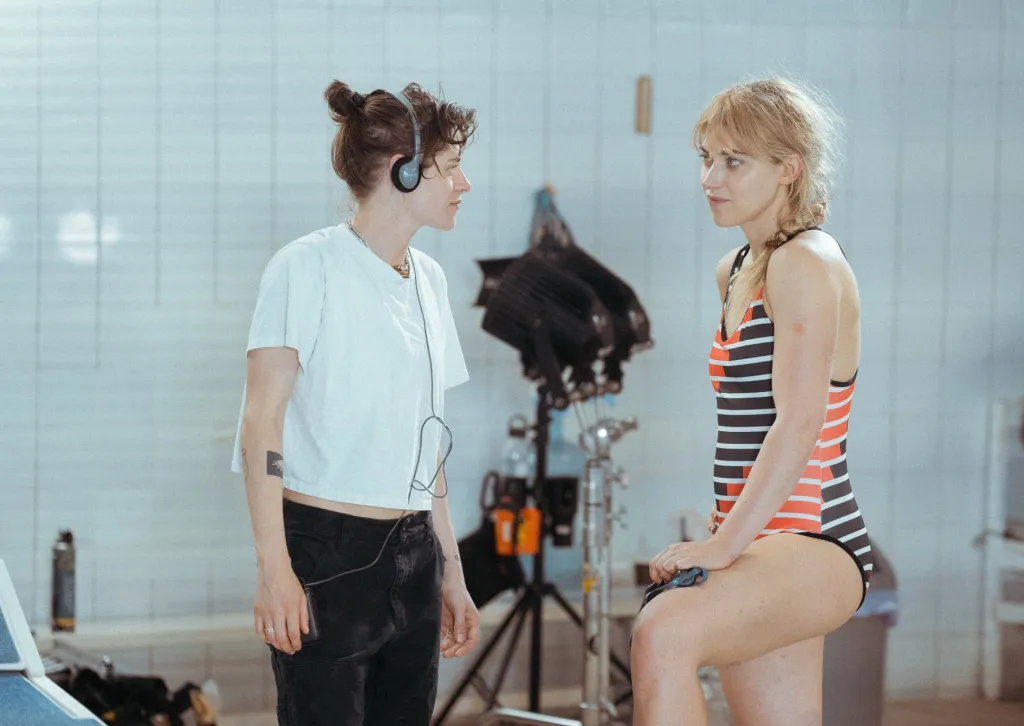
The physical preparation for the role was equally demanding. Poots spoke candidly about her rigorous training, which included extensive swim lessons and weight training, to embody Lidia fully. “Understanding what your body is capable of is cool,” she remarked, emphasizing the juxtaposition of strength and fragility in her character.
Stewart praised Poots’ dedication, even revealing that the actress endured significant physical challenges during training. “Imogen got two hernias while training for this and didn’t tell me about it,” Stewart said. Such perseverance, they both agree, enriches the film’s portrayal of the character’s journey.
As the conversation turned reflective, both artists considered the potential impact of their work. “Let’s make more films like the movies that we all miss and adore,” Poots stated, advocating for narratives that prioritize genuine storytelling over formulaic tropes. Stewart echoed her sentiments, encouraging audiences to challenge conventional ideas of identity: “It’s about daring to think for yourself.”
Ultimately, The Chronology of Water seeks to resonate on a personal level, inviting viewers to reflect on their own experiences while navigating the complexities of life. Poots encapsulated this ambition succinctly: “It’s raw, messy, and badass. It’s epic and mundane,” leaving audiences with a renewed sense of reflection and connection.
This interview has been edited for length and clarity.