

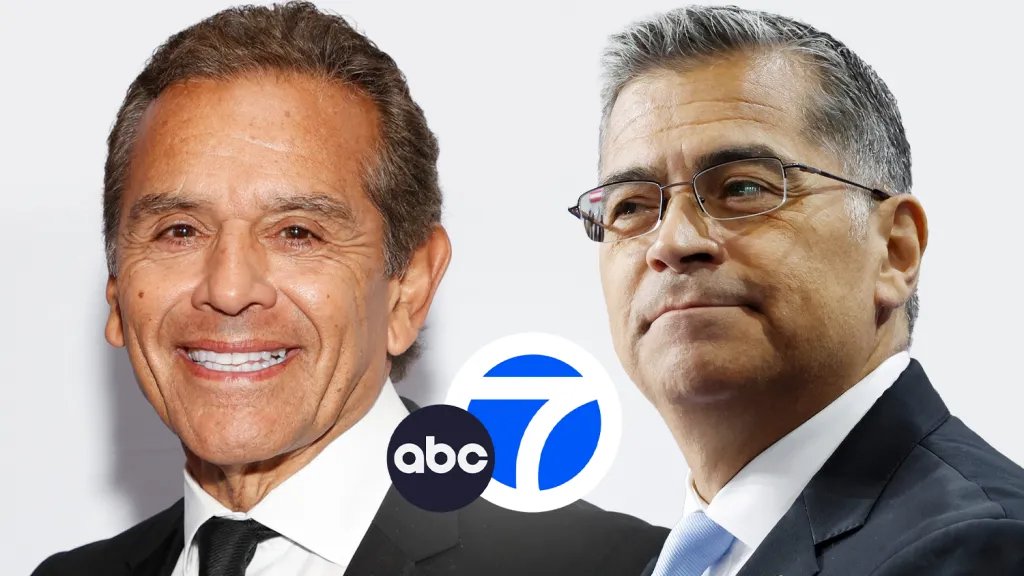
KABC and USC Respond to Legal Challenges from Former LA Mayor Over Gubernatorial Debate Exclusion; Former California Attorney General Warns of Consequences
Tensions Rise Over Exclusion from California Gubernatorial Debate
The upcoming gubernatorial debate in California, scheduled for March 24, has ignited controversy, particularly surrounding the exclusion of former Los Angeles Mayor Antonio Villaraigosa. Villaraigosa’s absence from the debate, organized by KABC and the University of Southern California (USC), has drawn sharp criticism, including from former federal Health and Human Services Secretary Xavier Becerra.
Attorney Eric M. George, representing Villaraigosa, has formally demanded the inclusion of the former mayor in a letter addressed to USC and KABC. “The very ‘Candidate Debate Criteria and Formula’ published by Professor Christian Grose… establish precisely why Mayor Villaraigosa must be included in the debate,” George stated. He argues that the decision to exclude Villaraigosa lacks justification and emphasizes that the selection criteria considered fundraising, polling, and time in the race.
George set a deadline for the inclusion of Villaraigosa by the close of business on Thursday, cautioning that failure to do so could result in legal action. ABC has declined to comment on the matter or its potential implications for the debate, which is set to be moderated by ABC7 Los Angeles’ Marc Brown.
As it stands, the confirmed candidates include Rep. Eric Swalwell, former Rep. Katie Porter, billionaire Tom Steyer, San Jose Mayor Matt Mahan, and GOP contenders Steve Hilton and Chad Bianco. Villaraigosa, along with Becerra, former State Controller Betty Yee, and State Superintendent of Public Instruction Tony Thurmond, did not meet the set criteria for participation.
A spokesperson for USC clarified that Dr. Christian Grose developed the criteria independently, and noted that no USC administration officials were involved in its creation or approval.
The debate’s exclusion of several prominent candidates, particularly people of color, comes at a critical time for California Democrats. Recent polling indicates a fragmented race without a clear frontrunner as the June 2 primary approaches, heightening concerns that Republicans may capitalize on this opening. Becerra, who also raised concerns about diversity in his own correspondence, labeled the criteria as “weighted in favor of wealthy candidates,” alleging that it appeared to favor certain candidates over others.
In a public post, Villaraigosa pointed out flaws in the criteria. “They manipulated the criteria… we need every qualified candidate on that stage. It’s as simple as that,” he remarked.
Recent polls show Swalwell and Hilton leading the pack, with Swalwell at approximately 17% support, closely followed by Hilton at about 14%. Villaraigosa, according to a February poll cited by George, holds 5%, outpacing Mahan, who garnered 3%.
The looming gubernatorial debate highlights the importance of representation and the engagement of diverse voices in California’s political landscape. As candidates prepare for a contentious race, the focus remains on ensuring a fair and inclusive discussion leading up to the primary.