

How Production Design, Cinematography, Editing, Costume Design, and Music Shaped Guillermo Del Toro’s Vision for Frankenstein
Guillermo del Toro Brings "Frankenstein" to Life: A Dream Project Realized
Acclaimed director Guillermo del Toro has finally realized his vision for "Frankenstein," a project rooted in his passion for Mary Shelley’s classic novel. The film follows scientist Victor Frankenstein as he creates a humanoid being, allowing del Toro to explore themes of creation and humanity through his unique lens.
“This was his dream masterpiece and the summit of his triptych — the creature of The Shape of Water, the creature of Pinocchio, and the creature of Frankenstein,” remarked composer Alexandre Desplat, emphasizing the film’s significance in del Toro’s career.
Cinematographer Dan Laustsen recalled hearing about del Toro’s fascination with "Frankenstein” during their work on Mimic. “He talked about that as his dream project," Laustsen said. "I read and love the book, but then I got the screenplay, and it was something different. That’s Guillermo del Toro’s way to look at the world, and that’s what I love.”
Del Toro made an early decision to shift the story’s setting from the late 18th century to the 1850s. This change also influenced the creative direction of the film. Desplat noted, “We didn’t want it to be a ‘period score’…but there had to be something that’s connecting us with that time.” Rather than relying on traditional period music, he aimed for a modern interpretation that emphasizes the film’s fantastical elements.
The production team, led by production designer Tamara Deverell, conducted extensive research on the medical and scientific technology available in the 1850s. Deverell stated, “Guillermo insisted we go to the Hunterian Museum, which wasn’t even open at the time,” allowing them access to invaluable resources.
Desplat and Deverell approached the film’s aesthetic from different angles; while Deverell embraced period influences, Desplat sought a contemporary score. Costume designer Kate Hawley, drawing inspiration from Shelley’s text and del Toro’s vision, focused on the film’s rich themes, utilizing color to evoke its gothic qualities.
Collaboration was key in crafting the color palette. Hawley explained that the storylines — The Creature’s, Victor’s, and the Arctic — informed the visual coherence, with the Arctic depicted in cool whites and pale blues symbolizing a state of limbo.
Deverell described the underlying inspiration for the Arctic scenes: “We had this Caspar David Friedrich painting of an ice field that Guillermo just loved,” capturing the essence of isolation.
Hawley further emphasized the film’s emotional tones, linking Victor’s narrative with a stark black and white palette, punctuated by vivid "pigeon blood" red to symbolize key moments. In contrast, Elizabeth’s story unfolded with ethereal greens, reflecting her more whimsical nature.
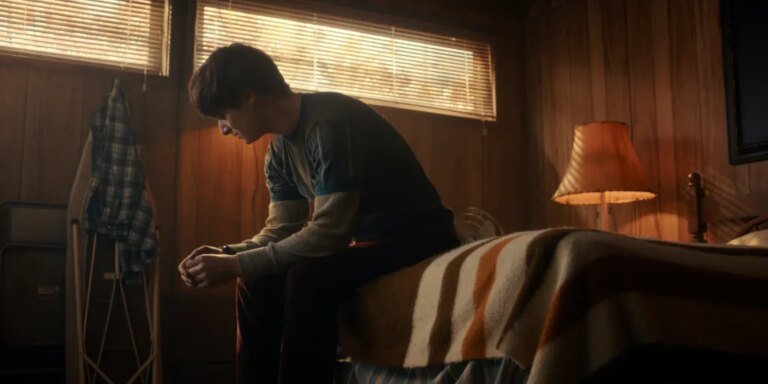
Laustsen’s cinematography played a critical role in shaping the film’s emotional landscape. He remarked, “At the beginning, the relationship was very romantic, and later in the story, when everything’s getting a bit tenser, we are going away from the warm light.” This shift in lighting reflected evolving character dynamics.
The Creature’s clothing and appearance were thoughtfully designed to convey his emotional journey. Hawley noted, “The first stage of his wardrobe was a coat remnant from a dead man on the Crimean battlefield,” symbolizing the amalgamation of memories that define The Creature.
Desplat aimed to capture the emotional fragility of the characters through the score, opting for the violin to portray their deeper sensations. “All of these characters are seeking love, so the violin would really convey to the audience the emotions,” he explained.
The film’s emotional weight also resonated deeply with editor Evan Schiff, who found himself “emotionally exhausted” during crucial scenes. Notably, he highlighted a pivotal moment of forgiveness between The Creature and Victor, requiring intense investment in the actors’ performances.
Schiff noted the unique collaboration with del Toro, who was present daily in the editing room during production. “By the time the shoot wrapped, our cut was much more advanced than normal,” he remarked, underscoring the efficiency of their iterative process.
As del Toro’s long-held dream comes to fruition, "Frankenstein" promises to be a powerful exploration of empathy, creation, and the human experience, with a team of dedicated artists bringing their visions to life.