
Hollywood’s Changing Perspective on Women’s Stories: A Look at the Return of Films Featuring Emotional Struggles, According to Former Channel 4 Drama Executive
Concerns Raised Over Representation in Hollywood and High-End Television
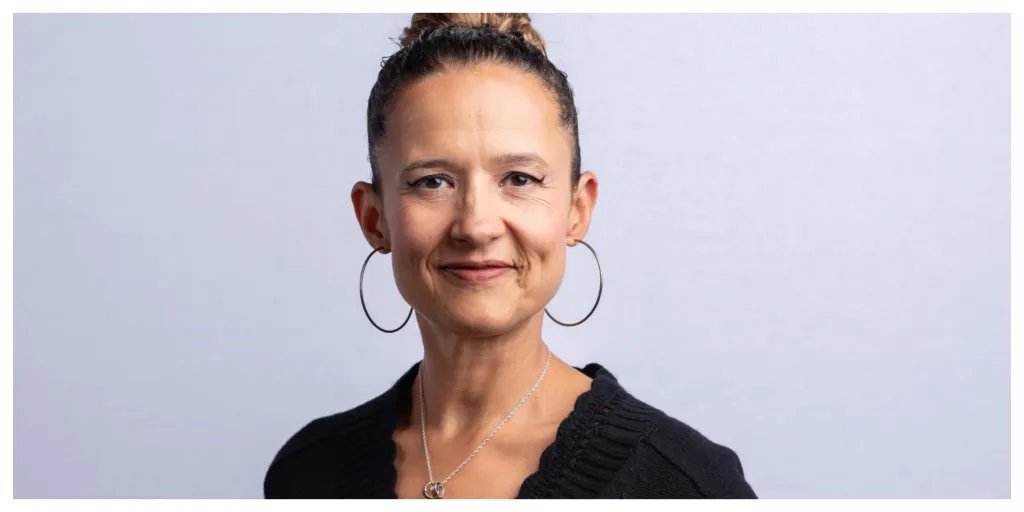
Caroline Hollick, a former drama director for Channel 4 and current executive at North Road, expressed her discontent with the current state of representation in Hollywood and high-end television during a panel at the Series Mania festival. Hollick asserted that the industry is regressing, particularly in terms of diversity and inclusion initiatives, stating, “Hollywood and high-end TV are taking steps backwards in terms of the quality of representation we are seeing.”
Hollick’s comments centered on a resurgence of negative stereotypes, especially concerning portrayals of women. She highlighted her apprehension over the trend of films depicting women experiencing nervous breakdowns, emphasizing the need for more nuanced storytelling. “I am more concerned about high-end TV and Hollywood taking steps backwards not only in terms of taking down DEI initiatives but in terms of the quality of representation we are seeing,” she remarked.
Despite acknowledging the presence of “incredible female film directors,” Hollick noted a disconcerting trend at a recent film festival, where approximately four or five films focused on women dealing with mental health issues. “It’s not that they’re not beautifully made and performed, but we have to be vigilant in the stories we are telling about women,” she said.
On the television front, Hollick pointed out a specific show, which closely resembled Sky and Peacock’s The Day of the Jackal, criticizing its treatment of female characters. “The male lead ran around Europe shooting people and had a hot wife at home living in Spain,” she said. “The female lead went back home to her husband who tapped his watch and said, ‘What time do you call this?’ Obviously, I’m paraphrasing but if you dig deep into female representation in that show we should be doing better than that.”
Hollick attributed the decline in quality to a “risk-averse environment,” where commissioners often revert to established writers—predominantly white, middle-class men. She urged the industry to adopt a “female version of The Secret Agent,” the acclaimed Brazilian film, advocating for at least 50% of creative roles to be filled by women to help combat the perpetuation of cultural stereotypes.
Addressing the broader context of negative portrayals, Hollick compared the current situation in microdrama to the evolution of slasher horror films from the 1980s. “That took 40 years, and I think people are already making microdramas more representative,” she noted. She pointed to Issa Rae’s Awkward Black Girl as an example of a diverse web series that successfully captured audiences, emphasizing the need for legacy media to adapt to modern viewing habits.
Elizabeth Le Hot, CEO of France’s Adami, contributed to the discussion, criticizing AI’s role in amplifying stereotypes. “AI amplifies stereotypes on a massive scale. They are based on decades-old, biased representations of women and, as a result, they do not challenge the biases. They recycle the stereotypes of the past,” she stated.
Nadine Marsh-Edwards, a BAFTA-nominated producer, also spoke on the panel, emphasizing the importance of holding creators accountable for inappropriate content. She commended Netflix’s forthcoming adaptation of Pride and Prejudice for its innovative approach, stating, “We have to ask for higher standards. If we don’t watch certain shows then they won’t get made again. We have to come up with storylines that are a bit broader.”
The Series Mania forum began today and will conclude on Thursday, featuring prominent figures such as Russell T. Davies, Hugo Blick, Disney Europe’s Angela Jain, and HBO’s Sarah Aubrey, who are set to address the festival in the coming days.